Why the Shape of Your Coffee Pouch Says More Than You Think
We've spent years helping roasters and specialty brands make this exact call, so consider this your shortcut through the noise. We'll compare flat bottom, stand-up, and gusset styles on looks, function, and shelf appeal.
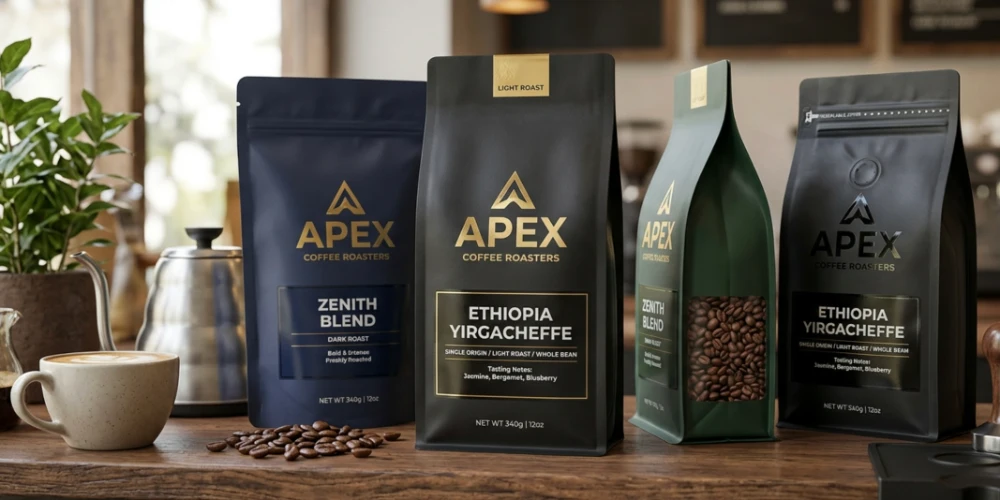
Meet the Three Main Players
Each shape carries its own personality. Understanding what they communicate is half the battle.
Flat Bottom (Box Pouch)
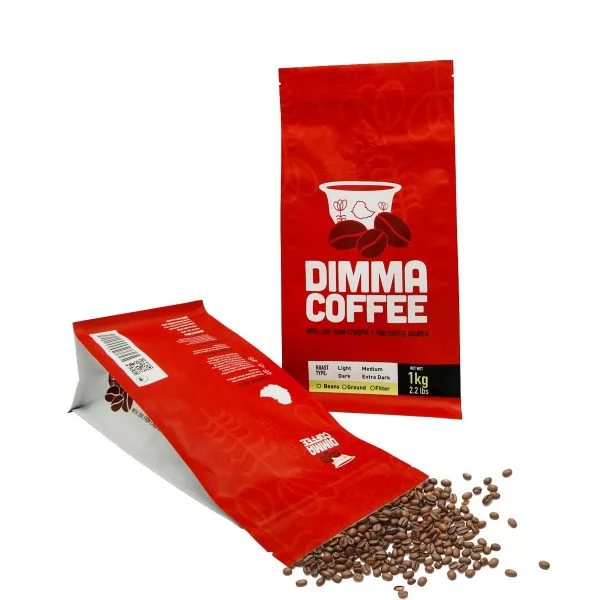
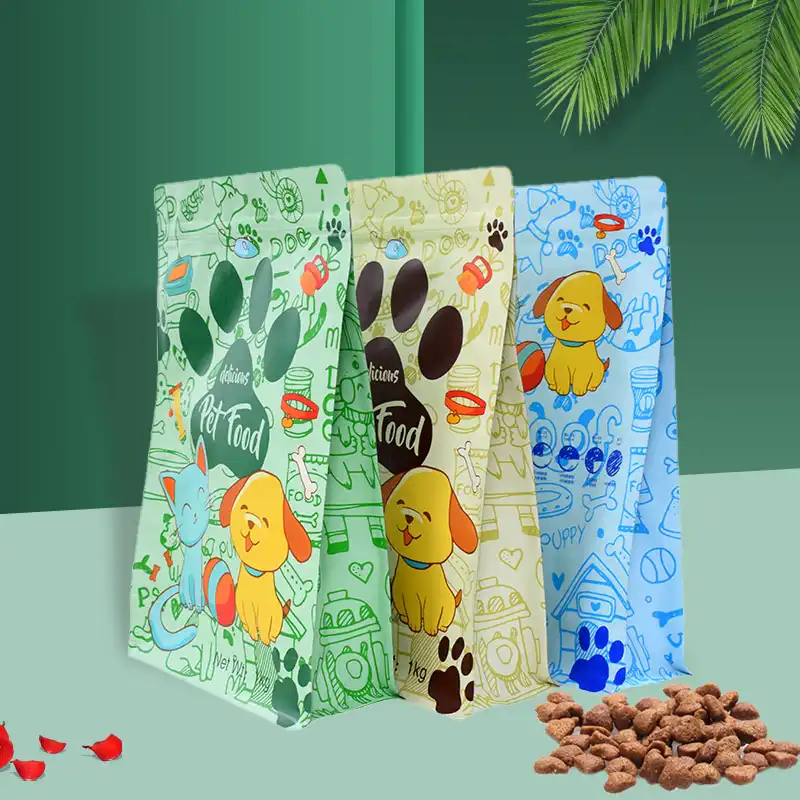
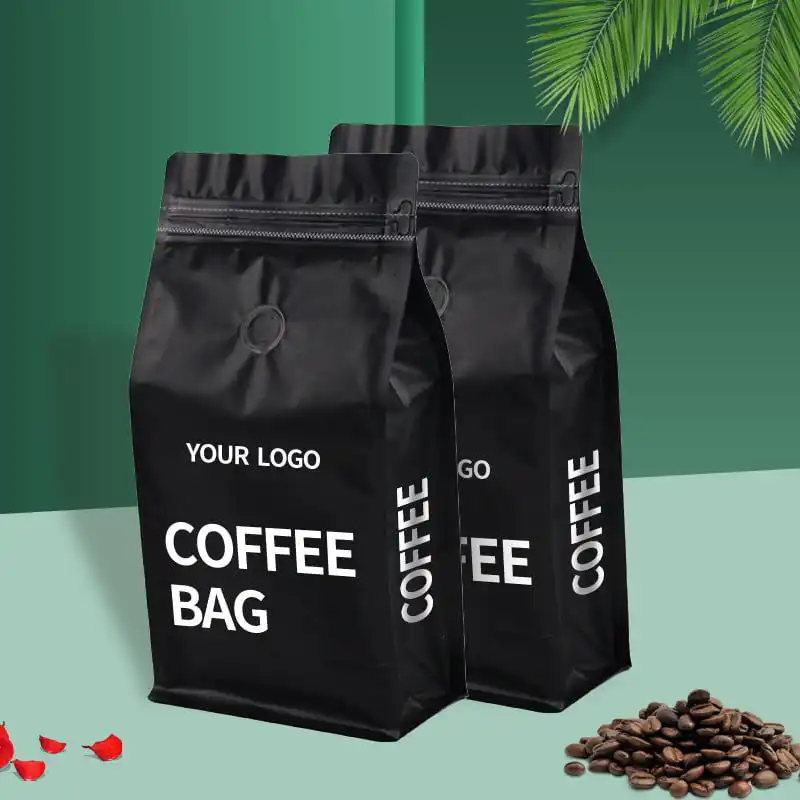
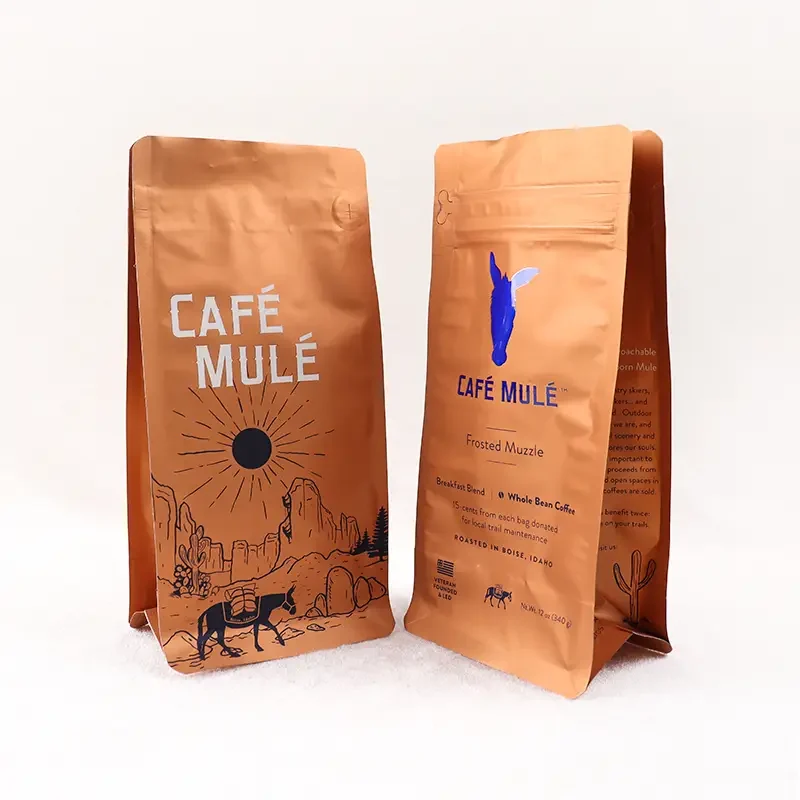
This is the format you see on most third-wave roaster shelves. It stands upright on a square base, has crisp side panels, and looks almost like a small box. The result feels structured and intentional.
Five printable panels mean your logo, story, and tasting notes all get real estate. For brands chasing a refined, boutique look, this is usually the front-runner.
Stand-Up Pouch
The classic resealable coffee pouches most people recognize. A rounded bottom gusset lets it stand, while the front face gives you a generous canvas for bold graphics.
It's versatile, friendly, and widely loved by single-origin and blended brands alike. Slightly softer in shape than flat bottom, it reads approachable rather than ultra-premium.
Side Gusset Bag
The traditional coffee shape — tall, narrow, with folds along both sides that expand as you fill it. It's the format roasters used for decades, often finished with a tin tie at the top.
Gusset styles carry heritage. They whisper "old-school roastery" and pair beautifully with kraft materials for a rustic, honest vibe.
Which One Actually Looks Premium?
Here's the honest answer: it depends on the story you're telling. But there are clear patterns.
Flat bottom bags consistently test as the most "premium-feeling" because their rigid structure mimics fine packaging in cosmetics and confectionery. The square base gives them weight and presence on a shelf.
Stand-up pouches feel modern and clean — great for direct-to-consumer brands selling online. Gusset bags lean nostalgic and craft-forward, which is its own kind of premium when paired with the right material.
| Shape | Premium Perception | Best For | Shelf Presence |
|---|---|---|---|
| Flat Bottom | Highest — structured, boutique | Specialty & gift roasts | Stands tall, square base |
| Stand-Up | Modern & clean | Online & everyday blends | Strong front face |
| Side Gusset | Heritage & rustic | Traditional roasters | Tall, slim profile |
Looks Aren't Everything: Protecting the Coffee Inside
A gorgeous bag that lets your beans go stale is a wasted investment. Premium feel has to be backed by performance.
Coffee is alive — it off-gasses CO₂ for days after roasting and degrades fast when exposed to oxygen. That's why a strong oxygen barrier and aroma retention matter as much as the print.
This is where the one-way degassing valve earns its place. It releases CO₂ without letting air in, keeping that fresh-roast aroma locked tight. We always recommend custom coffee bags with valve for any roast you plan to seal soon after production.
Quick freshness checklist:
- High oxygen-barrier film (foil or metalized layer)
- A degassing valve for freshly roasted beans
- A reliable resealable closure to protect opened bags
- Light-blocking material to prevent flavor breakdown
As a manufacturer that has produced packaging for 20+ years, we've seen brands win on shelf looks but lose on repeat purchases simply because freshness slipped. Don't let that be you.
Material Choices That Shape the Vibe
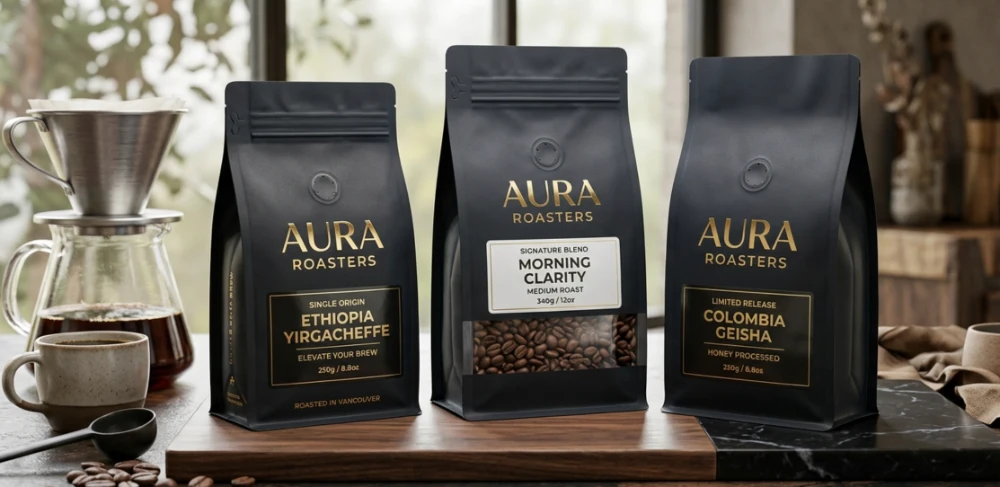
Shape sets the silhouette, but material sets the mood. The same flat bottom bag feels completely different in matte kraft versus glossy white.
Kraft Paper
Earthy, tactile, and honest. Kraft coffee bags with valve are a favorite for craft roasters who want a natural, sustainable signal. The texture alone communicates care.
Matte Finish
Soft-touch matte reads expensive. It reduces glare, photographs beautifully, and feels velvety — a quiet luxury that shoppers notice when they pick it up.
Sustainable Films
Eco-conscious buyers scan for green credentials before they buy. Offering eco friendly custom coffee bags — recyclable or compostable structures — has shifted from "nice extra" to genuine purchase driver in recent years.
Because we hold FDA and ISO 22000 certifications, we help brands match a sustainable material to the right barrier level, so you don't trade freshness for greenwashing.
Matching Shape to Your Brand Story
Let's get practical. Here's how I'd guide a brand depending on where they sell and who they serve.
- Premium gift or specialty: Flat bottom in matte or soft-touch. Five panels for storytelling.
- Online subscription brand: Stand-up pouch — lightweight, ships well, and looks sharp in unboxing photos.
- Traditional roastery: Side gusset with tin tie in kraft for that classic café feel.
- Bold, graphic-led brand: Stand-up gives you the biggest flat front for eye-catching artwork.
Our in-house design team often helps brands who only have a rough logo idea turn it into print-ready artwork that actually pops on shelf. You don't need to arrive with finished files.
Print Quality: The Detail Shoppers Feel Subconsciously
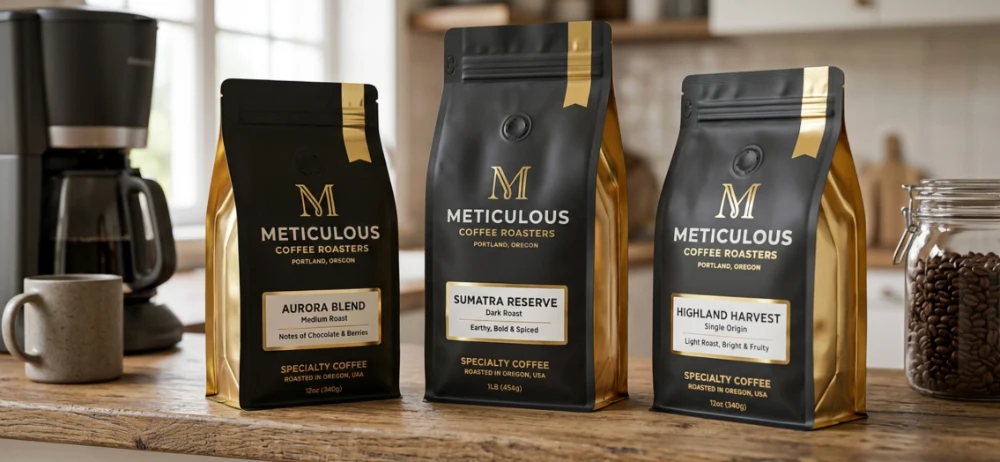
Premium isn't only shape and material — it's crispness of color and texture. Smudged logos or dull tones cheapen even the best structure.
When commissioning custom printed coffee bags with logo, ask about color accuracy, registration, and finish options like spot gloss or embossing. These small touches separate "homemade" from "craft luxury."
In our 6,800㎡ cleanroom facility, custom coffee bag printing is handled under controlled conditions to keep colors consistent batch after batch — important when you reorder and expect the exact same shade.
Functional Extras That Add Perceived Value
Little features make a bag feel thoughtful, and thoughtful reads as premium.
- Resealable zippers: Buyers expect them now. Offering custom resealable coffee bags signals you respect freshness after opening.
- Tin ties: Add a craft, hand-finished touch — especially on gusset styles.
- Easy-tear notches: Smooth opening experience, no scissors needed.
- Window cutouts: Let shoppers glimpse the beans, building trust.
Working with brands across North America, we've found the most common mistake is adding every feature at once. Pick the two or three that match your buyer's habits.
Planning a Bulk Order Without Overcomplicating It
Once shape and material are locked, the next worry is quantity, lead time, and consistency. This is where source-factory production matters.
Brands sourcing coffee packaging bags wholesale should confirm minimum order quantities, sample timelines, and whether artwork files can be reused for future runs. Clarity here prevents costly surprises.
If you're exploring custom coffee bags wholesale for the first time, start with a sample round before committing to a full production run. It lets you feel the material and check print in person.
YLTPACK supports brands from first sketch through repeat orders, and you can reach our team directly via WhatsApp at +86 182 1944 5665 or email [email protected] to talk through your specs.
The Bottom Line
If you want maximum "premium" perception, flat bottom usually wins. If you sell online and want versatile good looks, stand-up is your friend. If heritage and craft are your story, the side gusset delivers timeless charm.
But shape alone won't carry you. Pair the right silhouette with a strong barrier, a degassing valve, smart material, and clean printing — that's the real recipe for packaging that feels luxurious and keeps coffee tasting the way your roaster intended.
Frequently Asked Questions
Which coffee bag shape is the most cost-effective for small brands?
Stand-up pouches typically offer the friendliest balance of looks, function, and order flexibility. They ship efficiently and suit lower volumes, making them a smart starting point before scaling into flat bottom formats.
Do all coffee bags need a degassing valve?
If you seal beans soon after roasting, yes — they release CO₂ for days and need a valve to vent it safely. For pre-ground coffee that has already degassed, a valve is optional but still helps protect aroma.
Can I get a sustainable bag that still keeps coffee fresh?
Absolutely. Recyclable and compostable structures have improved significantly, and the right combination preserves a strong oxygen barrier. We help match material to your shelf life and freshness goals.
How long does custom production usually take?
It varies by design complexity, finish, and quantity. Sampling generally comes first, followed by the main run. Confirm timelines early so they align with your roast and launch schedule.
What information should I prepare before requesting a quote?
Have your desired shape, size, bean weight, material preference, finishes, and rough quantity ready. Even a rough logo sketch is enough — our design team can refine it into a print-ready file.