Why Coffee Bag Pricing Confuses So Many Brands
Working with brands across North America, we've found that the most common mistake is assuming "bigger bag = bigger price" in a straight line. Once you understand the real cost drivers, you'll quote smarter and waste less budget.
What Actually Determines the Price of a Coffee Bag?
Before we look at sizes, here's the truth: the bag size is only one of several inputs. Pricing comes from a stack of factors that interact with each other.
The Core Cost Drivers
- Material structure: More layers (for oxygen barrier and aroma retention) mean higher film cost.
- Bag size and surface area: Larger bags use more film, but the increase isn't linear.
- Print colors and finish: Matte, gloss, spot UV, and metallic foils each add cost.
- Order quantity: Setup costs spread thinner across larger runs.
- Add-ons: Degassing valves, zippers, tin-ties, and windows.
As a manufacturer that has produced packaging for over 20 years, we always tell new brands to map these factors first—before fixating on a single size.
Why Surface Area Matters More Than Weight
A 1kg bag doesn't use four times the material of a 250g bag. Surface area grows slower than volume. So while a kilo bag costs more per unit, the cost per gram of coffee packaged usually drops as size increases.
This is exactly why larger formats feel "cheaper" relative to what they hold.
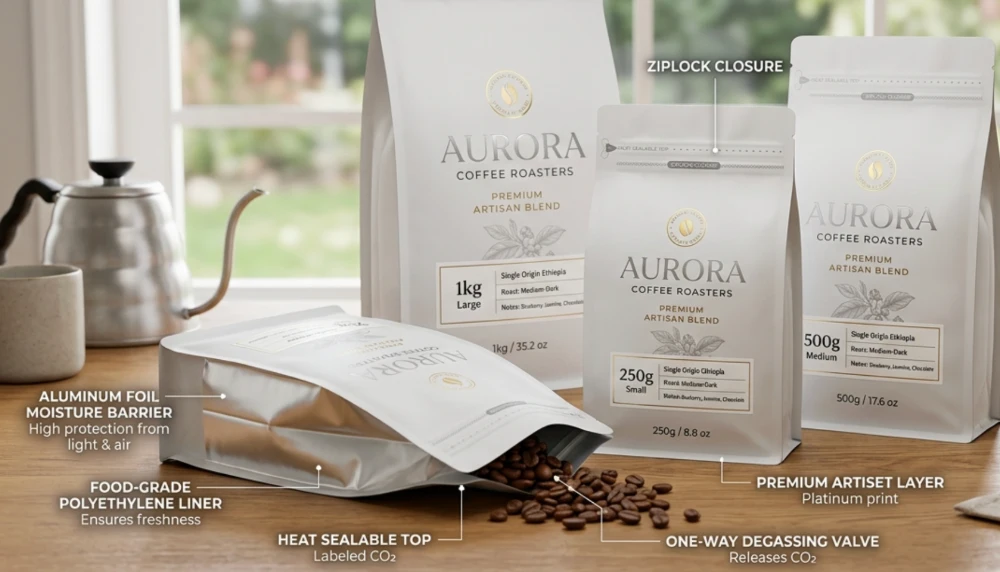
250g vs 500g vs 1kg: A Side-by-Side Cost Logic
Let's compare how the three popular retail sizes behave. The table below uses an index where the 250g bag = 100 as a baseline for material use, so you can see the relationships clearly.
| Factor | 250g Bag | 500g Bag | 1kg Bag |
|---|---|---|---|
| Relative material per bag | 100 | ~155 | ~240 |
| Material cost per gram of coffee | Highest | Lower | Lowest |
| Typical buyer | Retail, gifting, sampling | Everyday home use | Cafés, heavy drinkers, refills |
| Valve needed? | Usually | Yes | Yes |
| Shelf appeal priority | Very high | High | Moderate |
Notice the pattern: a 1kg bag uses only about 2.4× the film of a 250g bag, even though it holds 4× the coffee. That's the efficiency story bulk buyers love.
What This Means for Your Lineup
Many brands offer 250g as their hero retail size, 500g for loyal customers, and 1kg for value seekers and wholesale. Each price tier targets a different shopper, and your packaging spend should reflect that strategy.
How Material Choice Swings the Final Number
Coffee is delicate. Oxygen and moisture are the enemies of flavor, so the film structure is doing a serious job—not just looking pretty.
Common Structures and Their Trade-Offs
- Kraft paper + foil + PE: Strong barrier, premium feel, mid-to-higher cost.
- Matte PET + aluminum foil + PE: Excellent oxygen barrier and aroma retention.
- Recyclable mono-material films: Growing fast; aligns with sustainability goals.
- Compostable kraft: Eco-friendly, often a slight premium.
Because we hold FDA and ISO 22000 certifications, we recommend matching barrier strength to your shelf-life target rather than overspending on layers you don't need.
The Hidden Value of a Good Barrier
A 2023 specialty coffee study noted that freshly roasted beans release CO2 for weeks, which is why degassing valves matter. Choosing the right valve and barrier protects the experience your customer paid for—and protects your reviews.
Why Order Quantity Changes Everything
This is the factor most first-time buyers underestimate. Setup, plate-making, and machine calibration are largely fixed costs. Spread them over 1,000 bags and they sting; spread them over 50,000 and they nearly vanish.
Quantity Behavior at a Glance
| Order Size | Per-Unit Cost Trend | Best For |
|---|---|---|
| Small (sampling run) | Highest per unit | Testing a new SKU |
| Medium | Noticeably lower | Growing brands |
| Large | Lowest per unit | Established lineups |
In our 6,800㎡ cleanroom facility, longer runs also mean fewer changeovers and more consistent print—so quality and cost both improve at scale.
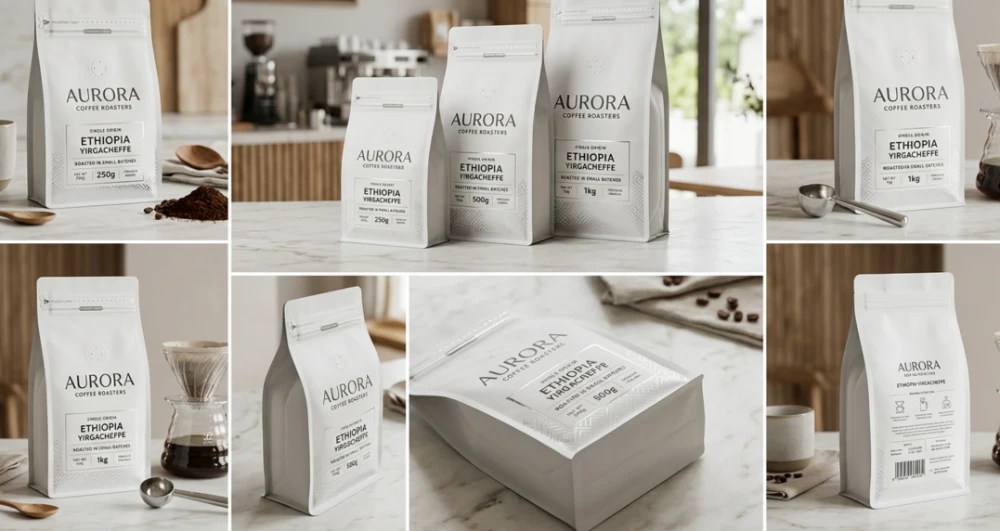
Where Single-Cup Formats Fit Into Pricing
Now let's talk about the format everyone's curious about. Single serve coffee bags use far less material per unit than a 250g pouch, but they require precise dosing, finer filtration, and many more individual units to fill the same volume.
So the cost story flips: each pouch is cheap, but cost-per-gram-of-coffee is the highest of all formats. You're paying for convenience and portion control.
Single-Cup vs Capsules
When weighing single serve coffee bags vs k cups, the bag wins on shipping weight, plastic reduction, and recyclability. K-cups offer machine convenience, but they generate more waste and lock customers into specific brewers.
For brands chasing eco-conscious shoppers, lightweight individual coffee bags are an easier sustainability win.
Drip and Pour-Over Pouches
The hanging-ear style—single serve coffee bags pour over format—has exploded in popularity. These disposable coffee filter bags clip onto a mug, so customers brew fresh without equipment. They cost more per gram but command premium retail pricing.
Add-Ons That Quietly Raise (or Justify) Your Price
Features aren't just expenses—they're sales tools. The trick is choosing ones your customer actually values.
- Degassing valve: Almost mandatory for fresh-roasted whole bean or ground.
- Resealable zipper: Essential for 500g and 1kg multi-use bags.
- Tin-tie: Adds an artisan, craft feel.
- Clear window: Builds trust by showing the roast.
- Spot UV / foil stamping: Premium shelf presence.
Our in-house design team often helps brands who only have a rough idea, turning a vague "I want it to look premium" into a print-ready file that hits the right cost target.
Choosing the Right Size Strategy for Your Brand
Don't just pick a size—pick a purpose. Here's a quick decision framework.
Match Format to Customer Behavior
- 250g: First-time buyers, gifts, and trial. Invest in shelf appeal.
- 500g: Repeat home drinkers. Prioritize resealability.
- 1kg: Cafés and bulk fans. Focus on cost efficiency and durability.
- Portable coffee bags: Travelers and offices. Convenience sells.
If you're hunting for the best single serve coffee bags for travel, lightweight pour-over pouches with strong seals are unbeatable—they survive a backpack and brew anywhere with hot water.
Sustainability as a Pricing Lever
Recyclable and compostable options carry a modest premium, but eco-claims increasingly drive purchase decisions. Our GRS certification supports brands wanting verified recycled content—useful when shoppers scrutinize your sustainability story.
How to Get an Accurate Quote the First Time
Vague requests lead to vague quotes. To compare suppliers fairly, gather these details before reaching out.
- Bag sizes and the formats you need (including any on-the-go coffee bags).
- Target shelf life and whether beans are whole or ground.
- Estimated annual volume and reorder frequency.
- Print colors, finish, and any special features.
- Sustainability goals (recyclable, compostable, recycled content).
Learning how to use single serve coffee bags in your product line—whether sampling kits or subscription boxes—also helps us recommend the right filter style and dosing.
For organic single serve coffee pouches bulk orders, certification documentation matters too, so flag any organic claims early. If you're sourcing organic single serve coffee bags bulk quantities, we can advise on compliant, food-safe materials from the start.
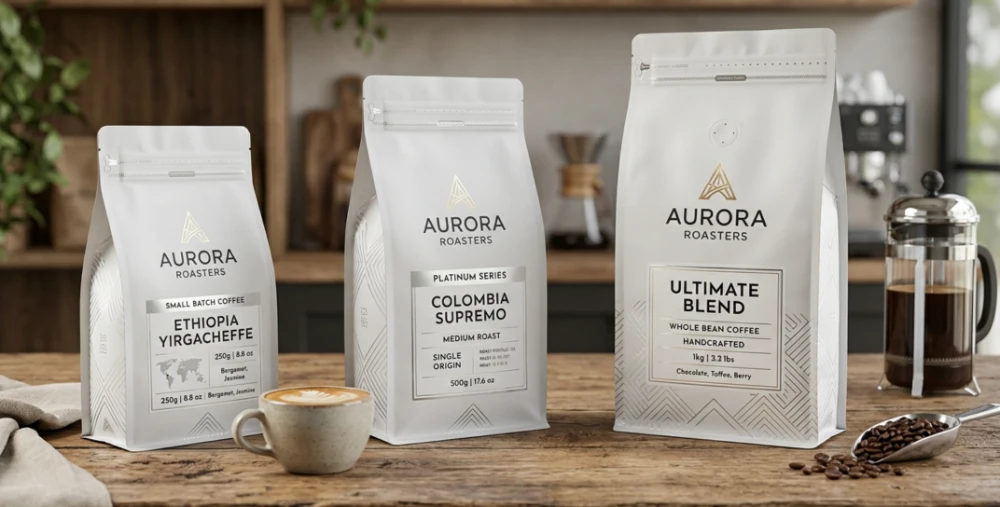
The Bottom Line on Coffee Bag Pricing
Coffee packaging pricing isn't a mystery once you see the moving parts. Size sets the baseline, but material, print, quantity, and features do the heavy lifting. Larger bags win on cost-per-gram, while single-cup pouches win on convenience and premium positioning.
The smartest brands don't chase the lowest number—they match each format to a real customer and protect freshness where it counts. Get those choices right and your packaging becomes a profit center, not just a cost line.
Want a tailored quote or sample? Reach out to YLTPACK at [email protected] or WhatsApp +86 182 1944 5665. With two decades of manufacturing experience and certified, food-safe production, we'll help you balance cost, quality, and shelf appeal.
Frequently Asked Questions
Why doesn't a 1kg bag cost four times more than a 250g bag?
Because material use grows with surface area, not volume. A kilo bag holds 4× the coffee but uses only about 2.4× the film, so the cost-per-gram drops significantly as size increases.
Are single-cup pouches more expensive than a standard bag?
Per unit they're cheap, but per gram of coffee they're the priciest format. You're paying for portion control, convenience, and the extra filtration needed for direct brewing.
Do I really need a degassing valve?
For freshly roasted beans, yes. They release CO2 for weeks after roasting, and a valve lets gas escape without letting oxygen in—protecting aroma and preventing bag bloating.
What's the minimum order to get reasonable pricing?
It varies by format and features, but per-unit cost drops steadily as quantity rises since setup costs are fixed. Share your annual volume and we'll suggest the most efficient run size.
Can I order eco-friendly coffee bags without a huge price jump?
Yes. Recyclable mono-materials and compostable kraft carry only a modest premium, and verified recycled-content options are available. The right choice depends on your shelf-life and sustainability goals.