The Real Cost Question: Are Recyclable Coffee Bags Actually More Expensive?
If you're sourcing packaging for your coffee brand, you've probably landed on this page with one burning question: will switching to sustainable options blow your budget? It's a fair concern, and one we hear constantly from roasters and brand owners shopping for alternatives to traditional foil laminates. The short answer might surprise you—eco friendly coffee bags aren't as expensive as most people assume, and the gap has been shrinking fast.
Let's break it all down so you can make a smart purchasing decision without the guesswork.
Why the "Green Premium" Isn't What It Used to Be
A few years ago, choosing recyclable or compostable packaging meant paying a significant premium—sometimes 40-60% more per unit. That's simply not the reality anymore. According to a 2025 Smithers Packaging Report, the cost differential between conventional multilayer pouches and their sustainable counterparts has narrowed to roughly 10-25% for most formats.
What changed? Three things happened at once:
- Raw material suppliers scaled up production of bio-based films and mono-material structures
- More manufacturers invested in equipment designed for these newer substrates
- Demand from major brands created volume that drove per-unit costs down
As a manufacturer that has produced packaging for 20+ years, we've watched this shift happen in real time. Orders that seemed niche five years ago are now standard runs on our production lines.
Breaking Down the Cost: Conventional vs. Sustainable Options
Rather than throwing vague percentages at you, let's look at what actually drives the cost difference. The table below compares traditional coffee pouches against the most common green alternatives across key cost factors.
| Factor | Traditional Multilayer Pouch | Mono-Material Recyclable | Compostable (PLA/Kraft) |
|---|---|---|---|
| Material Cost | Baseline | 10-20% higher | 15-30% higher |
| Barrier Performance | Excellent (aluminum layer) | Good (EVOH or oxide coating) | Moderate (shorter shelf life) |
| Printing Compatibility | Excellent | Excellent | Good (limited heat tolerance) |
| Minimum Order Flexibility | Low MOQ widely available | Moderate MOQ | Moderate-to-high MOQ |
| Consumer Perception | Neutral | Positive | Very Positive |
| End-of-Life Disposal | Landfill (non-recyclable) | Curbside recycling | Industrial compost |
The takeaway? Material cost is higher, but it's rarely the deal-breaker people expect. The real cost drivers are order volume, bag format, and whether you need special features like degassing valves or resealable zippers.
What Actually Drives the Price Up (And How to Control It)
Order Volume Matters More Than Material Choice
Here's something most suppliers won't tell you upfront: the single biggest factor in your per-unit cost isn't whether you pick recyclable or conventional material. It's your order quantity. A small run of 5,000 traditional bags can easily cost more per unit than a 50,000-unit order of plant-based coffee bags, simply because setup costs get spread across more units.
For brands just starting out, biodegradable coffee bags for small business orders are increasingly accessible. Many factories now offer runs starting at 10,000 units for sustainable materials, compared to the 20,000+ minimums that were standard just a couple of years ago.
Bag Structure and Features
Adding a degassing valve, tin tie, or resealable zipper adds cost regardless of material type. Compostable coffee packaging with valve options requires sourcing valves made from compostable plastics, which do carry a slight premium. But the per-valve cost difference is negligible at scale—usually fractions of a cent per bag.
Stand-up pouches cost more than flat-bottom or three-side-seal formats. Side gussets cost less than box-bottom styles. These structural choices impact your budget far more than the "green vs. conventional" material decision.
Custom Printing and Design
Custom printed eco friendly coffee bags use the same rotogravure or digital printing processes as conventional ones. The cost difference in printing is essentially zero. What varies is the finish—some bio-based films have a more matte, natural appearance that actually appeals to specialty coffee consumers.
Our in-house design team often helps brands who only have a rough idea of their artwork translate that into print-ready files optimized for flexible packaging. This step prevents costly reprints and wasted material, which matters even more when you're working with premium substrates.
The Hidden Costs of NOT Switching
Focusing purely on per-unit material cost misses the bigger picture. Here are costs that don't show up on a purchase order but absolutely hit your bottom line:
- Lost retail shelf space: Major retailers in the EU and North America are implementing sustainable packaging requirements. If your bags don't qualify, you lose distribution.
- Customer churn: A 2025 McKinsey consumer survey found 67% of coffee buyers under 40 actively consider packaging sustainability before purchasing.
- Regulatory risk: The EU's Packaging and Packaging Waste Regulation (PPWR) and similar legislation in Canada mean non-recyclable formats may face extended producer responsibility fees.
- Brand repositioning costs: Switching later means redesigning, re-certifying, and re-educating your customer base—all of which cost more than doing it right the first time.
When you factor these in, the "premium" for sustainable coffee packaging often becomes a net savings over a 2-3 year horizon.
Oxygen Barriers and Freshness: Can Green Bags Actually Perform?
This is the question that keeps roasters up at night. Coffee is uniquely demanding—it releases CO₂ after roasting, absorbs moisture and odors, and degrades rapidly when exposed to oxygen. Traditional aluminum-lined bags handle all of this beautifully. Can recyclable alternatives keep up?
The honest answer: mostly yes, with some trade-offs.
- Mono-material PE or PP structures with EVOH barrier layers deliver oxygen transmission rates suitable for 6-9 month shelf life. That works for most retail coffee.
- Metallized mono-material films provide even better barrier properties while remaining recyclable in many curbside programs.
- Compostable options (PLA/PBAT/kraft combinations) typically offer 3-6 month shelf life. Suitable for direct-to-consumer brands with fast inventory turnover.
Because we hold FDA and ISO 22000 certifications, we routinely test oxygen and moisture transmission rates on every substrate we offer. This means you're not guessing about shelf life—you're getting data before committing to a full production run.
Choosing the Right Format for Your Business
Not every sustainable option suits every business model. Here's a practical framework:
| Your Situation | Recommended Format | Why |
|---|---|---|
| Selling through retail (grocery, specialty stores) | Mono-material recyclable stand-up pouch | Meets retailer requirements, strong shelf presence, good barrier |
| Subscription/DTC with fast turnover | Compostable kraft-based pouch | Aligns with eco-conscious subscriber base, sufficient shelf life |
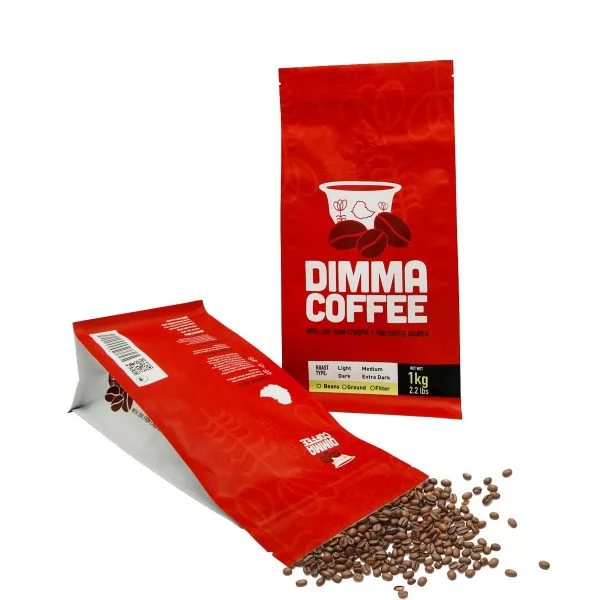
| Wholesale/bulk (1kg+ bags) | Recyclable flat-bottom bag with valve | Structural stability for larger fills, degassing capability |
| Home roasters selling at farmers markets | Biodegradable pouches with tin tie | Lower MOQ, approachable format, strong sustainability messaging |
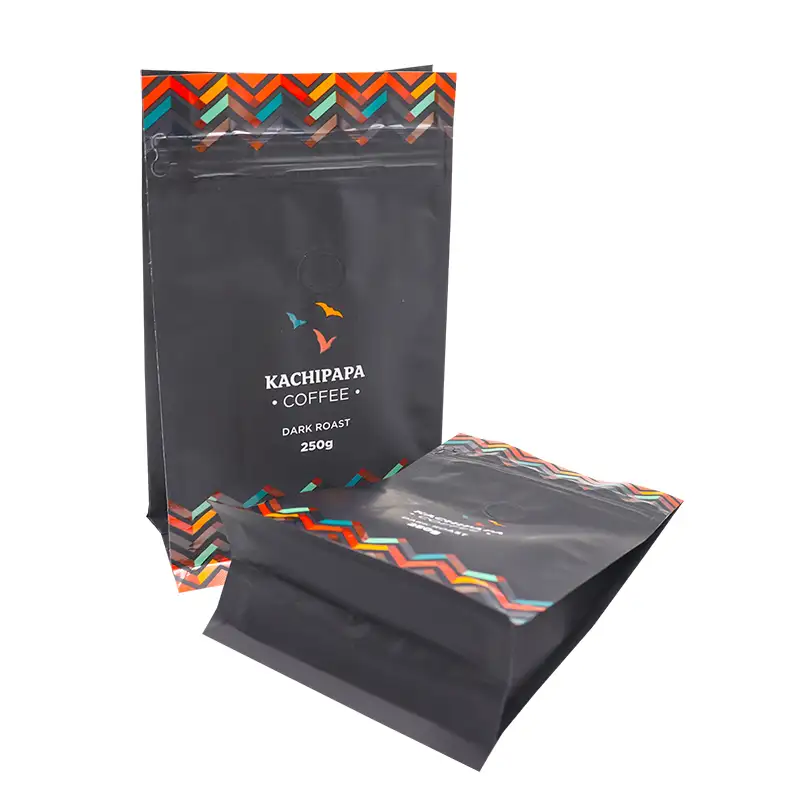
If you're a home roaster scaling up, the best eco friendly coffee bags for home roasters are typically smaller format stand-up pouches in 250g or 340g sizes with a simple tin-tie closure. They're cost-effective to produce in smaller quantities and communicate craft quality.
Wholesale Pricing: What to Expect When Ordering at Scale
Brands looking to buy eco friendly coffee bags wholesale should understand how volume pricing tiers typically work. While we don't publish fixed prices (every order is custom-quoted based on specifications), here's the general pattern:
- 10,000-30,000 units: Modest premium over conventional options. Setup costs are a larger proportion of total spend.
- 30,000-100,000 units: The sweet spot where sustainable materials become highly competitive. Per-unit costs drop meaningfully.
- 100,000+ units: Near cost-parity with traditional bags in many formats. Some recyclable structures actually come in slightly cheaper than complex multilayer laminates.
Working with brands across North America and Europe, we've found that the most common mistake is over-specifying packaging at the start. Ordering a complex bag structure with every possible feature drives cost up unnecessarily. Starting with a clean, well-designed pouch and adding features as your volume justifies them is almost always the smarter approach.
What to Look for in a Packaging Supplier
Since you're evaluating options, here's a practical checklist to use when comparing potential partners:
- ☑️ Can they provide material certifications (compostability, recyclability, food safety)?
- ☑️ Do they offer sample runs before you commit to a full order?
- ☑️ Is there an in-house design team, or do you need to bring print-ready files?
- ☑️ What's their MOQ for sustainable materials specifically?
- ☑️ Do they manufacture in a certified cleanroom environment (critical for food-contact packaging)?
- ☑️ Can they provide oxygen and moisture barrier test data for their substrates?
At YLTPACK, our 6,800㎡ cleanroom facility is specifically configured for food-grade flexible packaging production. That matters because contamination control during manufacturing directly affects the safety and shelf performance of your finished bags—something that's easy to overlook when comparing quotes.
The Bottom Line: Is It Worth the Switch?
Let's wrap this up honestly. Yes, recyclable and compostable coffee packaging still costs slightly more than conventional multilayer bags—typically 10-25% at moderate volumes. But that gap continues to close. And when you factor in consumer preference, regulatory direction, and the actual cost per bag (often just a few cents difference), it's rarely the barrier people imagine.
The real question isn't "can I afford to switch?" It's "can I afford not to?"
If you're ready to explore what sustainable packaging looks like for your specific coffee product, reach out to our team. We'll walk you through material options, provide samples, and give you a custom quote based on your actual specifications—no generic pricing, no pressure.
Get in touch: WhatsApp +86 182 1944 5665 | Email [email protected]
Frequently Asked Questions
Are recyclable coffee bags as durable as traditional aluminum-lined ones?
Modern mono-material recyclable structures are engineered for puncture resistance and seal strength comparable to conventional bags. The main trade-off is slightly lower barrier performance, but metallized versions close that gap significantly. For most retail shelf-life requirements (6-9 months), they perform well.
Can I get compostable bags with a degassing valve?
Yes. Compostable valves made from PLA and other certified materials are available. They function identically to standard one-way valves, allowing CO₂ to escape without letting oxygen in. The valve itself is compostable along with the bag, so the entire package goes into industrial compost.
What's the minimum order quantity for sustainable coffee pouches?
This varies by supplier, but at YLTPACK, our minimums for biodegradable and recyclable formats typically start around 10,000 units. For fully custom-printed orders with specific colors and finishes, MOQs may be slightly higher. We're happy to discuss your volume needs and find a workable solution.
How do I know if a bag is truly recyclable and not just greenwashing?
Look for third-party certifications. Recyclable packaging should be tested per local recycling stream standards (such as the APR Design Guide in North America or RecyClass in Europe). Ask your supplier for material composition data and certification documents. A reputable manufacturer will provide these without hesitation.
Will sustainable packaging affect how my coffee tastes or smells?
When properly specified, no. The key is matching barrier properties to your product's needs. A well-designed recyclable pouch with appropriate oxygen and moisture barriers preserves aroma and freshness just as effectively as traditional packaging. We recommend requesting barrier test data and, if possible, running a shelf-life trial with your specific roast before committing to full production.