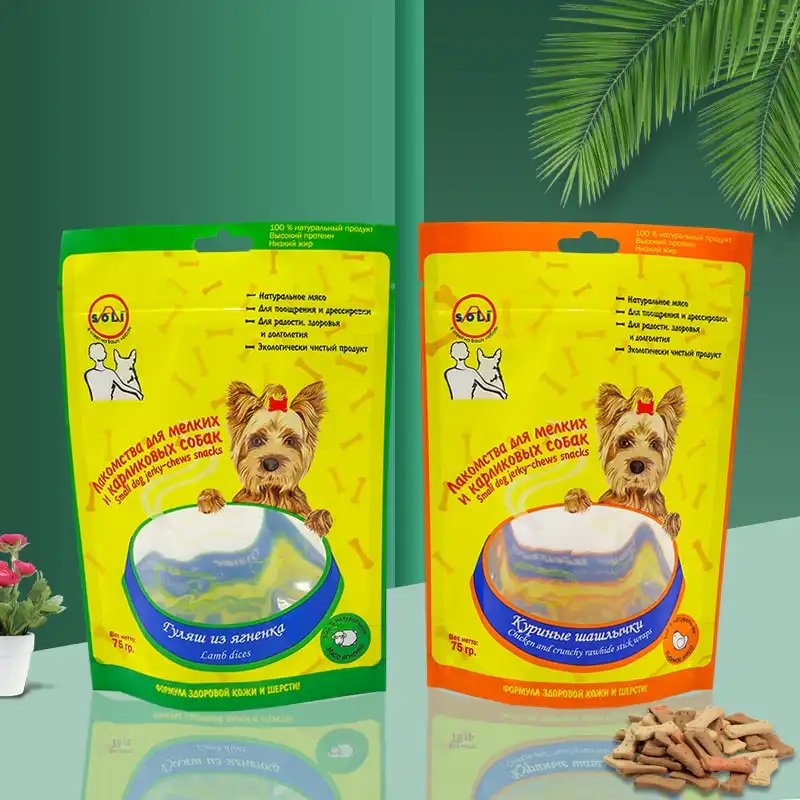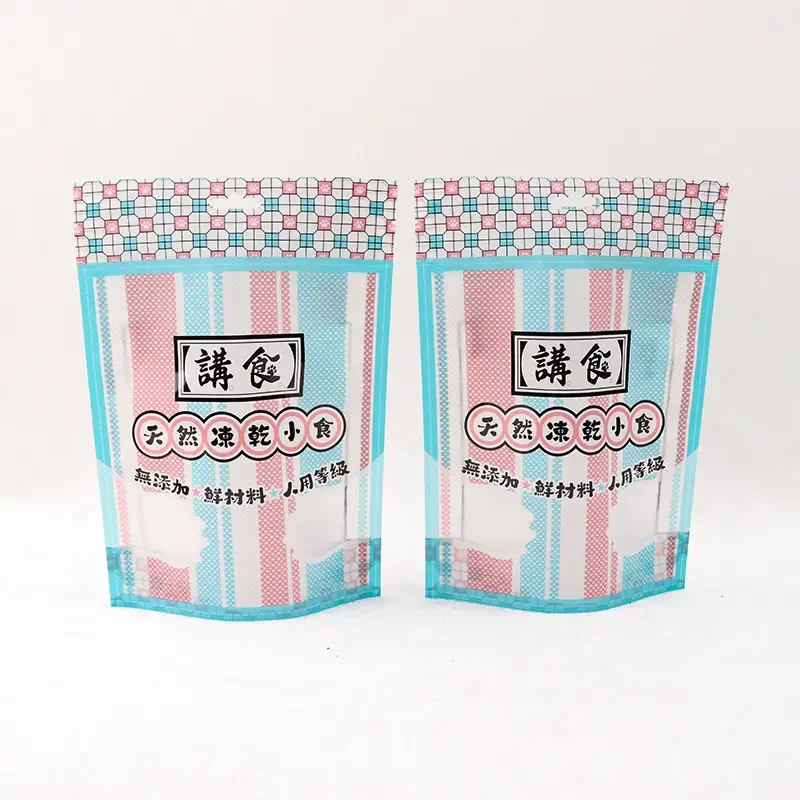
Short Answer: What Makes Pet Food Packaging Stand Out on the Shelf?
The fastest way to win at retail is to stop thinking of the bag as a container. It is a silent salesperson that has about three seconds to earn a glance — and about ten more to earn trust. Great pet food packaging combines bold shelf presence, airtight material science, and transparent storytelling about what's actually inside. Choose a structural format shoppers can recognize instantly, pair it with honest claims you can prove, and let the label answer the #1 question every pet owner asks: is this good for my dog?
Below, I break down the exact system we use at YLTPACK when helping brands launch — from a 20+ year manufacturer's vantage point, based on thousands of bags shipped across North America and Europe.
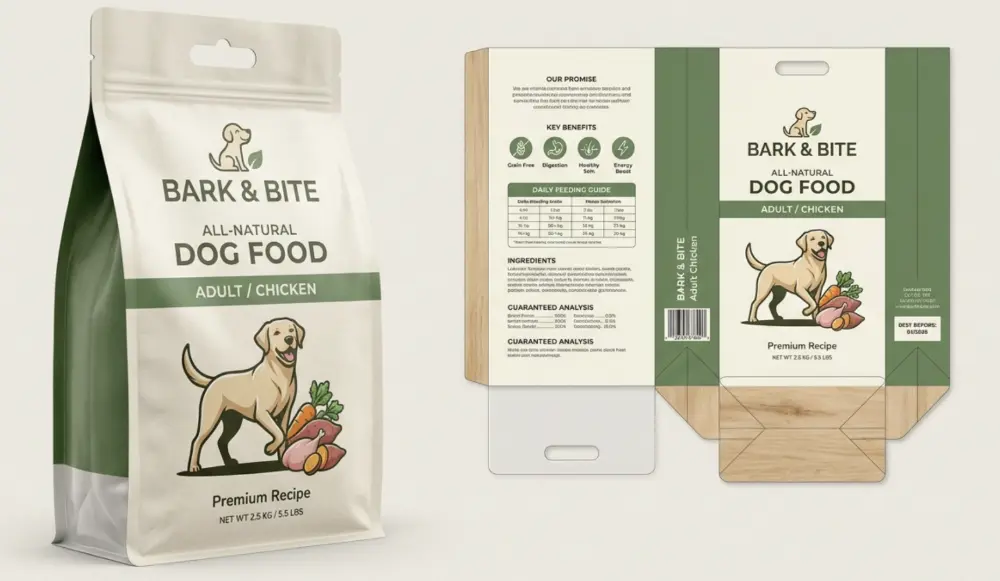
1. Know the Buyer Before You Sketch Anything
Pet owners shop differently than consumers in almost every other aisle. They read ingredient lists like lawyers. They flip the bag over. They check for certifications. And, increasingly, they search for the specific protein source before they even walk into a store.
The 2025 Pet Food Buyer Behavior Report found that 71% of dog-owner respondents said "ingredient transparency" was a deciding factor in their last purchase — beating out price by a wide margin. That single stat should reshape your whole design strategy: your packaging is not competing on looks alone; it's competing on credibility.
So before choosing colors or fonts, answer three questions:
- Who is the primary buyer in your target household — and what do they value most?
- What specific worry does your product solve (allergies, digestion, coat health)?
- What does the competitor two shelves away claim — and how will you differentiate honestly?
Write those answers down. Every design decision below should trace back to them.
2. Choose the Bag Structure That Matches Your Volume and Budget
There is no single "right" format — there is only the right one for your product line. Here's how the most common options compare, based on our production data from recent custom runs:
| Bag Style | Best For | Typical Fill Sizes | Barrier Needs | Retail Feel |
|---|---|---|---|---|
| Flat-bottom stand-up pouch | Mid-size brands wanting premium shelf presence | 0.5–2 kg | High (needs oxygen barrier for freshness) | Premium, modern |
| Quad seal bag | Brands doing larger volumes | 2–10 kg | Very high (multiple seals protect fats & oils) | Substantial, classic |
| Side-gusset bag | Economical entry-level lines | 1–5 kg | Moderate | Standard retail |
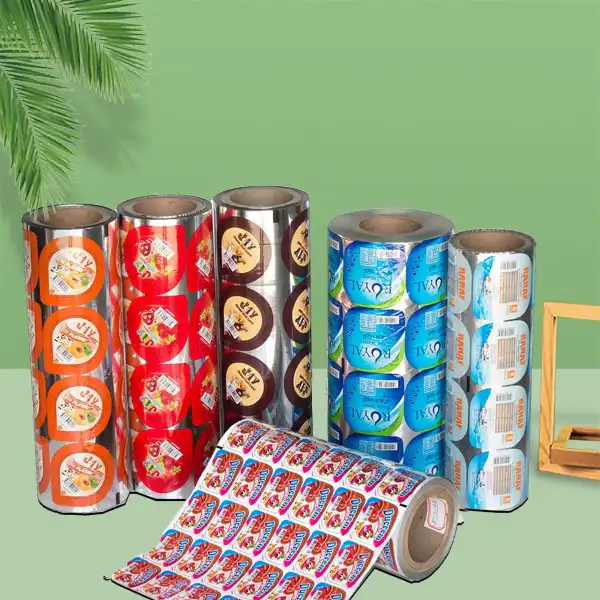
| Rollstock / single-serve | Treats, samples, toppers | 50 g–200 g | High (small portions oxidize faster) | Impulse-friendly |
A few numbers worth knowing: stand-up pouches typically cost more per unit than side-gusset bags at equal quantities, but the added shelf height and premium footprint often justify the price — especially when you're launching into a competitive specialty channel where first impressions determine trial.
Our recommendation for most new brands: start with a flat-bottom pouch in 1–2 kg sizes. It gives you a wide label canvas, stands upright on shelves, and communicates quality without forcing a huge minimum order.
3. The Label Is the Product: What Pet Parents Actually Read
Here's what our design team hears repeatedly from clients who initially underinvest in their label copy: "We assumed the front of the bag was enough." It rarely is. Shoppers who pick up your bag will read the front for a snapshot, then flip it over to verify the story.
Design for that two-stage read:
- Front panel: protein source + lifestyle benefit + a clear "grain-free" or "high-protein" callout. No more than three claims, or nothing lands.
- Back panel: full ingredient disclosure, guaranteed analysis in a clean table, feeding guidelines, and the brand story compressed into 80 words or less.
- Side panels: certifications, manufacturing date, batch code, and storage instructions.
In our 6,800㎡ cleanroom facility, we run pilot label versions for launching brands and measure readability before mass production. The most common fix? Clients initially use body text that's a touch small for older pet parents. We recommend 8pt minimum for ingredient lists and strong contrast between type and background.
4. Make the Protein the Hero of the Design
Walk through any pet specialty store and count how many bags lead with the protein. Almost all of them. That's because "salmon," "turkey," "lamb," or "chicken" is the single most searched attribute — it's your fastest route to being found, both on shelf and in an online search.
Use an appetizing, realistic photo of the protein on the front, not a cartoon. Pet owners overwhelmingly respond to food photography over illustration when the product is centerpiece-driven. Set the meat image large, keep the background clean, and reserve secondary space for the functional claim ("probiotic blend," "joint support," "sensitive stomach").
One caution: don't let the claim outrun the formulation. Regulatory bodies in most markets require that "with salmon" type claims match actual percentages. As a manufacturer that has produced packaging for 20+ years, I can tell you the fastest way to lose retailer trust is an edge case claim that a competitor's QA team can poke holes in publicly.
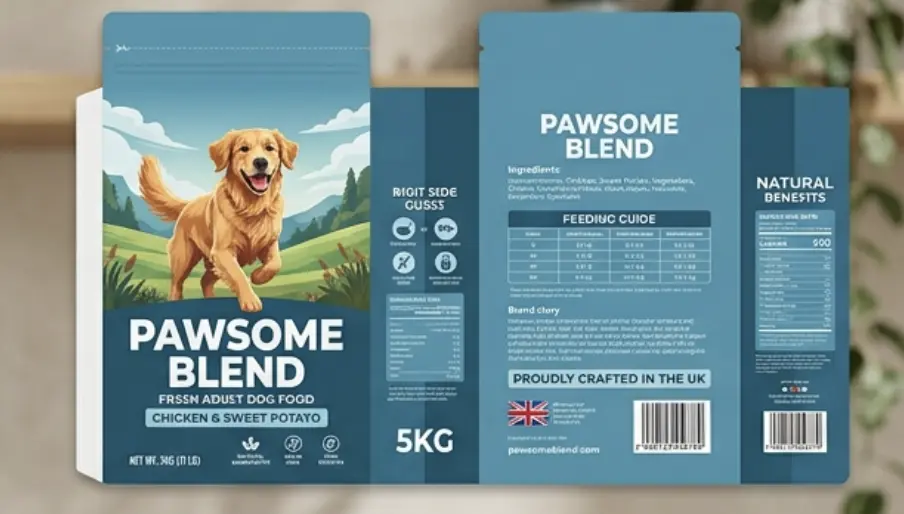
5. Ecofriendly Pet Food Packaging Design That Actually Holds Up
Sustainability is no longer a nice-to-have — it's a purchasing filter for a meaningful slice of buyers. But here's the nuance most brands miss: pet parents want eco options that still perform. They won't trade freshness for a bag that tears.
We've seen demand shift toward three practical approaches:
- Recyclable PE mono-materials — structurally capable of high-barrier performance while keeping the bag curbside-recyclable in many regions.
- Post-consumer recycled content ranges — visibly "green" materials that carry the story on the front panel.
- Reusable/resealable features — zippers and spouts that extend the bag's life, which shoppers read as sustainable even before they recycle it.
Because we hold FDA and ISO 22000 certifications, we recommend verifying the recycled-content percentage against food-contact regulations before you commit to a label claim. The certification logo matters less than the documented reality behind it.
6. Resealable Features: Small Details, Big Retention Effect
Kibble doesn't stay crunchy in an open bag. Fats in pet food oxidize when exposed to air, which is why resealability is more than a convenience feature — it's a food-safety feature that directly affects repeat purchases.
Our data across recent production runs shows that press-to-close zippers add a small per-unit cost but dramatically improve the "will I buy this again" question. Consider:
- Zipper closures: the standard for kibble and dry treats; choose a zipper track that matches your barrier film.
- Sliders: easier for older hands and arthritic pet parents, at a slightly higher cost.
- Tear-notches plus zipper: combine easy-open with resealing in one gesture.
If you're targeting a premium cat food pouch packaging design, a slider closure on a stand-up pouch reads unmistakably high-end. It's the kind of tactile cue that turns a first-time trial into a brand ritual.
7. Custom Printed Dog Food Bag Manufacturers: What to Vet Before You Commit
Choosing a print partner is as important as choosing the bag itself. Here's the due-diligence checklist we suggest every buyer run, in order of importance:
- Same-facility production or outsourced? Ask whether printing, lamination, and bag-making happen in one plant. Fewer handoffs = fewer quality surprises.
- Certification documentation: Request copies of FDA and ISO certificates directly, not just a mention on a website.
- Minimum order quantities: Custom printing on recycled stock can raise minimums. Know your number before you spec a material.
- Turnaround time: Ask for a written timeline that includes proofing, production, and shipping.
- Pre-press support: Will they convert your Illustrator file correctly for flexographic or rotogravure print? Ask to see a sample proof before you pay.
When you evaluate suppliers, ask for a physical sample bag of a similar structure — not just a photo. Color shifts, zipper feel, and lamination quality only become obvious in your hand.
8. Design for the Empty Shelf Moment (Restock and Reorder)
The purchase journey doesn't end at the shelf — it continues on the kitchen counter when the bag is empty and the owner reaches for the reorder. Three design choices help you win that second transaction:
- QR code leading to a reorder page — placed on the side panel where it doesn't clash with the front design.
- Feeding-guide calculator on the back, which encourages owners to keep the bag around longer.
- A batch code system that lets buyers verify freshness — a quiet trust signal that subtly promotes repurchase.
We also see brands add a small "share your pup's photo" hashtag near the brand name. Pet owners love seeing their dog on a brand's social feed, and it's free word-of-mouth that compounds with every empty bag.
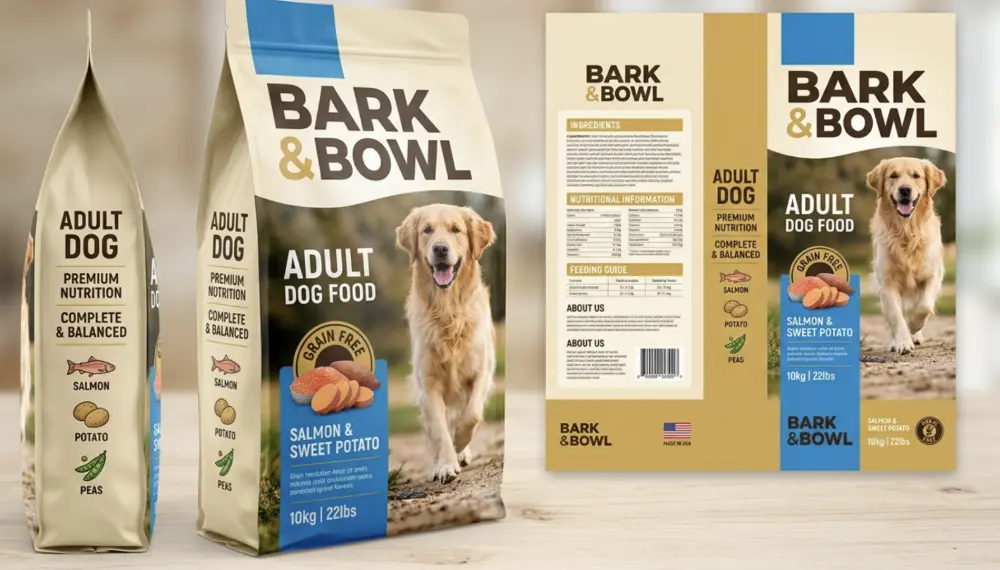
9. Private Label and Small-Batch Runs: You Don't Need a Fortune to Look Big
If you're a startup or an established retailer launching a house brand, the good news is that smaller runs are more accessible than ever. Custom private label pet food packaging doesn't have to mean bank-breaking minimums.
Many manufacturers, including our own shop, offer flexible tiering: a modest minimum for your first pilot batch, with better unit economics as you scale to full production. That lets you test two label versions against each other in a small retail window before committing to a large print run.
When budgets are tight, spend on the front panel first. Reinvest savings by using a standard bag blank with a premium-printed label rather than a fully custom structural format. Shoppers read the label, not the gusset.
10. The Overlooked Printing Details That Affect Sales
All pets aren't equal in color perception. Dogs see in shades of blue and yellow — greens and reds appear dulled. That's a subtle but real consideration if your brand leans on a red/green palette: your packaging may render far less vibrantly to your actual target audience than to the humans buying it.
Another detail that wins at shelf: the "glance test." In our pre-press department, we run a 10-foot-tall simulation — print a large-format version of your label and view it from across a room. If the brand name isn't legible at that distance, shoppers can't find you twice.
Finally, choose matte lamination over gloss for premium lines. Matte reads "natural" and "organic" to shoppers, while gloss signals "value." The choice should match your brand positioning, not your taste.
11. Future-Proofing: Where Pet Food Packaging Is Headed
Looking ahead, three trends will increasingly shape procurement decisions over the next 18–24 months:
- Traceability as a selling point: QR codes that link to batch-level ingredient sourcing will become a differentiator well beyond regulatory minimums.
- Ocean-recycled and post-consumer materials: brands that switch before being pressured to will lead their categories.
- Digital print runs: shorter, flexible, and cheaper for test batches — meaning faster iteration on label concepts without wasted stock.
None of these require a drastic budget increase. What they require is a supplier who keeps pace with material innovations and offers honest guidance on what's feasible at your volume. Our in-house design team regularly helps brands who start with only a rough idea — from hand-drawn napkin sketches to a structurally sound, retail-ready bag in eight weeks or less.
12. A Final Checklist Before You Approve Any Proof
Use this before you sign off on a sample batch — we run every new client through the same list:
- Is the protein visible from 10 feet away?
- Can a pet parent read the ingredient list without squinting?
- Does the front claim match the formulation exactly?
- Is the reseal mechanism smooth on your fingers?
- Does the bag stand upright, empty and full?
- Are shipping, storage, and usage instructions clearly placed?
- Have you verified food-contact certification for every layer?
- Is your batch code system ready for traceability?
If you can answer yes to all eight, you're ready to hold a sample in your hand and feel the difference. Sustainable customized pet food packaging solutions only matter if the bag opens cleanly, closes crisply, and protects what's inside — everything else is decoration.
If you're evaluating a supplier and want a second opinion on a structural or material spec, YLTPACK's team is available with 20+ years of manufacturing experience behind the answers. Reach us at [email protected] or on WhatsApp at +86 182 1944 5665 — we'll help you pin down the right format for your product before you commit to a print run.
FAQ
How much does custom pet food packaging cost?
Custom packaging pricing depends on several variables: bag structure, material choice, lamination type, print complexity, and total order quantity. For a 1 kg stand-up pouch with full-color printing and a zipper, per-unit costs generally decrease substantially as order size grows — but there's no fixed "standard price." Your best move is to request a quote with your exact specs: bag dimensions, fill weight, barrier needs, and estimated annual volume. A reputable manufacturer will walk you through cost drivers before quoting.
What is the minimum order quantity (MOQ) for custom printed pet food bags?
MOQs vary widely by manufacturer and structure. For flexible packaging, MOQs commonly range from a few thousand units for stand-up pouches to larger quantities for complex multi-layer structures. Many suppliers — including YLTPACK — offer pilot batch tiers that let brands test a small run before scaling to full production. If you're just launching, ask specifically about low-MOQ options for a first trial order.
What certifications should a pet food packaging supplier hold?
At minimum, look for food-contact safety compliance (such as FDA approval) and a quality management certification like ISO 9001. For edible products, ISO 22000 (food safety) is a strong signal. If you plan to use recycled materials, also check for GRS certification — it documents the post-consumer content and chain of custody. Always request copies of current certificates directly from the supplier rather than relying on website mentions alone.
Can I use eco-friendly materials without sacrificing shelf life?
Yes — this is one of the most common misconceptions. Modern recyclable PE mono-materials and post-consumer recycled films can deliver high barrier performance equal to conventional multi-layer laminates. The key is choosing a structure engineered for your specific product: kibble with beef fat needs a stronger oxygen barrier than freeze-dried treats, for example. Talk to a manufacturer about your product's moisture and oxygen sensitivity before committing to a "green" material.
How long does the design and production process take?
For a straightforward label revision on an existing structure, expect 2–4 weeks including proofing. For a brand-new bag structure with custom lamination and print setup, allow 6–8 weeks or more, depending on material availability and order volume. A good partner will give you a written timeline covering design, pre-press proofing, production, and shipping — and will flag any potential delays early in the process rather than after.