Let's Talk About That Open Bag of Kibble Sitting in Your Pantry
As someone who has spent over 15 years studying packaging performance, I want to walk you through what really happens inside that bag — and why the material wrapped around your dog's dinner matters more than you'd guess.
So, How Long Does Opened Dry Dog Food Actually Last?
The short version: most opened kibble stays fresh for about 4 to 6 weeks when stored properly. After that, fats begin to oxidize, vitamins degrade, and the food loses both flavor and nutrition. Your dog might still eat it, but it's nowhere near its peak.
That timeline shifts dramatically depending on a few factors. Let's break it down so you know exactly what you're working with.
| Storage Condition | Freshness Window (Opened) | Main Risk |
|---|---|---|
| Original bag, rolled & clipped | 4–6 weeks | Slow oxidation |
| Airtight container (kibble in original bag inside) | 6–8 weeks | Minimal |
| Poured loose into a bin | 2–3 weeks | Fat residue & rancidity |
| Warm, humid pantry (above 80°F) | 1–2 weeks | Mold & spoilage |
Notice the loose-bin trap? Pouring kibble straight into a plastic tub feels tidy, but those leftover oils coat the container and turn rancid, contaminating every fresh batch you add. Keep the food in its original bag — the bag is built to protect it.
Why the Bag Itself Is the Real Hero (or Villain)
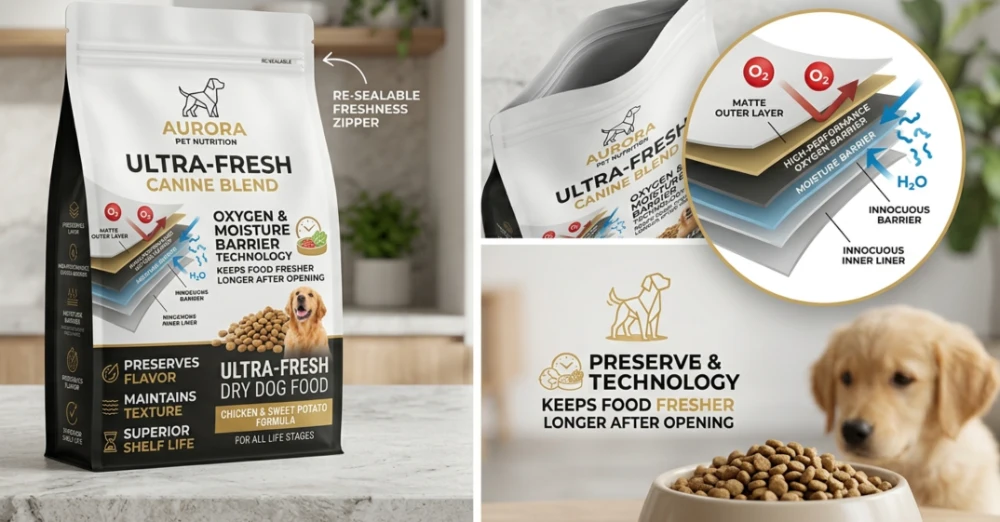
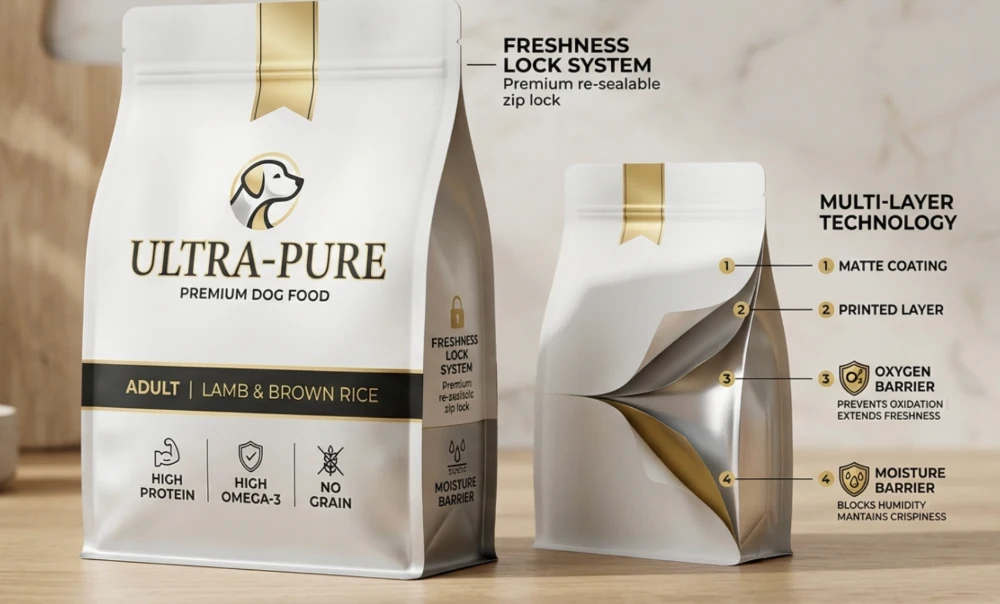
Here's where my industry background kicks in. The bag isn't just a container — it's a barrier system. A well-made kibble bag blocks three enemies: oxygen, moisture, and light. Get the barrier wrong, and your "4–6 weeks" can shrink to days.
Working with brands across North America, we've found that the most common mistake is choosing a flashy-looking bag with poor barrier properties. It photographs beautifully and fails the moment it's opened.
The Three Things a Good Kibble Bag Must Do
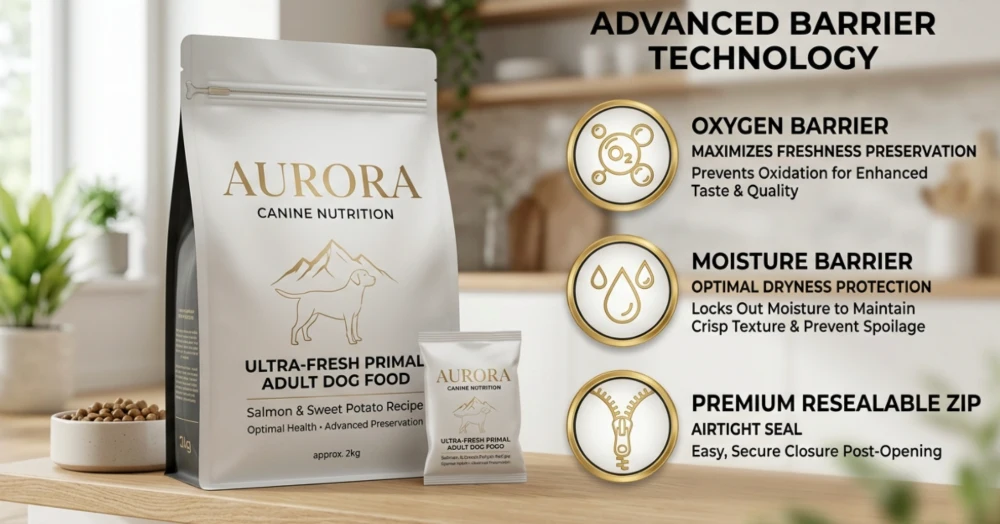
- Oxygen barrier: Slows the fat oxidation that causes rancid smells and nutrient loss.
- Moisture barrier: Keeps humidity out so mold never gets a foothold.
- Resealability: A press-seal or fold-and-clip closure beats a flimsy single fold every single time.
That resealable feature is the unsung hero. A bag that genuinely re-closes can add weeks of shelf life simply by limiting how much air sneaks back in after each scoop.
The Sustainability Question Every Pet Brand Is Now Facing
Pet owners today read labels like detectives. They care about ingredient transparency — and increasingly, they care about what the package does to the planet after it's empty. That's pushing the entire industry toward greener materials without sacrificing freshness.
The challenge? Traditional high-barrier bags often use mixed plastics that are tough to recycle. The good news is that eco-friendly pet food bags have come a long way, and you no longer have to choose between protection and responsibility.
Greener Material Options Worth Knowing
| Material Type | Barrier Strength | End-of-Life |
|---|---|---|
| Mono-material recyclable PE | High | Curbside recyclable |
| Kraft paper + compostable liner | Medium-High | Home/industrial compost |
| PLA-based bio-films | Medium | Industrial compost |
| Post-consumer recycled blends | High | Partially recyclable |
For a brand testing the waters, compostable dog food packaging built around a kraft-paper structure offers a great balance — strong protection, a natural look, and a story your customers love to share.
Matching Packaging to Your Brand's Stage and Goals
Not every brand needs the same solution. A startup launching its first product line has different priorities than an established label rolling out across hundreds of stores. Let me map it out.
For New and Small Brands
If you're early-stage, flexibility matters more than huge volume. Look for sustainable pet food packaging materials for small businesses that allow lower minimums and quick design tweaks. Our in-house design team often helps brands who only have a rough sketch turn it into a shelf-ready pouch.
For Growing and Established Brands
Once you're scaling, consistency becomes everything. You need a partner whose barrier performance stays identical from the first run to the hundred-thousandth. As a manufacturer that has produced packaging for 20+ years, we've learned that reliability at scale is what protects both freshness and reputation.
What to Look for in a Packaging Partner
Choosing who makes your bags is just as important as the design. Here's a quick checklist I share with brands evaluating their options.
- Food-safety credentials: Because we hold FDA and ISO 22000 certifications, we recommend always verifying these before signing anything — they confirm the materials are safe for direct food contact.
- Clean production environment: In our 6,800㎡ cleanroom facility, contamination control is built into the process, which matters enormously for anything your pet eats.
- Material transparency: A trustworthy maker explains exactly what's in each layer and how to dispose of it.
- Design support: Look for a team that helps with structure, not just printing.
If you're sourcing biodegradable pet food packaging suppliers, ask them to share barrier-test data, not just glossy mockups. Real numbers separate serious makers from order-takers.
Beyond Dogs: The Same Rules Apply Across Pet Categories
Everything we've covered about freshness and barriers applies to other pet products too. Cat parents are just as label-savvy, which is why eco-friendly cat food packaging solutions follow the same oxygen-and-moisture logic.
Smaller treat lines benefit from recyclable cat food pouches that keep portions fresh while staying easy to reseal. And for premium kibble brands, recyclable pet food pouches manufacturers can now deliver high-barrier stand-up bags that still meet recycling standards — something that was genuinely hard to find a few years ago.
Practical Tips to Keep Your Dog's Food Fresh Right Now
Whether you're a pet owner or a brand founder, these habits make an immediate difference:
- Always store food in its original bag — the barrier is doing real work.
- Press out excess air and reseal the bag after every use.
- Keep the bag in a cool, dry spot away from sunlight.
- Buy a bag size you'll finish within 6 weeks of opening.
- Never mix new kibble into old residue.
Follow these and you'll squeeze every bit of nutrition and flavor out of that bag before it fades.
The Bottom Line
Opened dry dog food generally lasts 4 to 6 weeks at its best, and the quality of the bag is the single biggest factor in that timeline. For brands, the exciting part is that you can now protect freshness and embrace responsible, plastic-free pet food packaging at the same time — no trade-off required.
If you're exploring options like compostable dog food bags wholesale or simply want guidance on matching the right material to your product, our team at YLTPACK is happy to talk it through. Reach out anytime via WhatsApp at +86 182 1944 5665 or email [email protected] — we'll help you weigh freshness, cost, and sustainability with real data, not guesswork.
Frequently Asked Questions
Can I store dry dog food in the freezer to make it last longer?
Yes, freezing can extend shelf life, but seal the kibble in an airtight, moisture-proof bag first. Condensation is the enemy — let portions return to room temperature before serving to avoid clumping and spoilage.
Is it safe to keep kibble in a plastic storage bin?
Only if you keep the food inside its original bag and place that bag in the bin. Pouring kibble directly into the bin lets old fat residue build up on the walls, which turns rancid and spoils future batches.
How can I tell if opened dog food has gone bad?
Trust your nose first — a sour, paint-like, or sharply rancid smell is the clearest sign. Also watch for moisture, mold, clumping, or any insects. When in doubt, throw it out.
Do eco-friendly bags protect kibble as well as regular plastic ones?
Modern recyclable and compostable structures can match conventional bags on oxygen and moisture barriers. The key is the layer construction, so always ask your supplier for barrier-test results before committing.
What bag size should my brand offer for the freshest experience?
Aim for sizes customers can finish within about six weeks of opening. Offering both small and family-size options helps shoppers match purchase volume to their pet's appetite, keeping every serving fresh.