Picking the wrong pouch format can quietly drain six figures from your annual packaging budget — or cost you shelf space at a major retailer. If you're sourcing flexible packaging in bulk, the choice between flat bottom bags and stand up pouches is rarely about looks alone. It's about fill speed, barrier performance, cost per unit, and how your product wins the 3-second shelf glance.
This guide breaks down both formats with real procurement data, side-by-side specs, and a decision framework built for buyers ordering 1,000+ units.
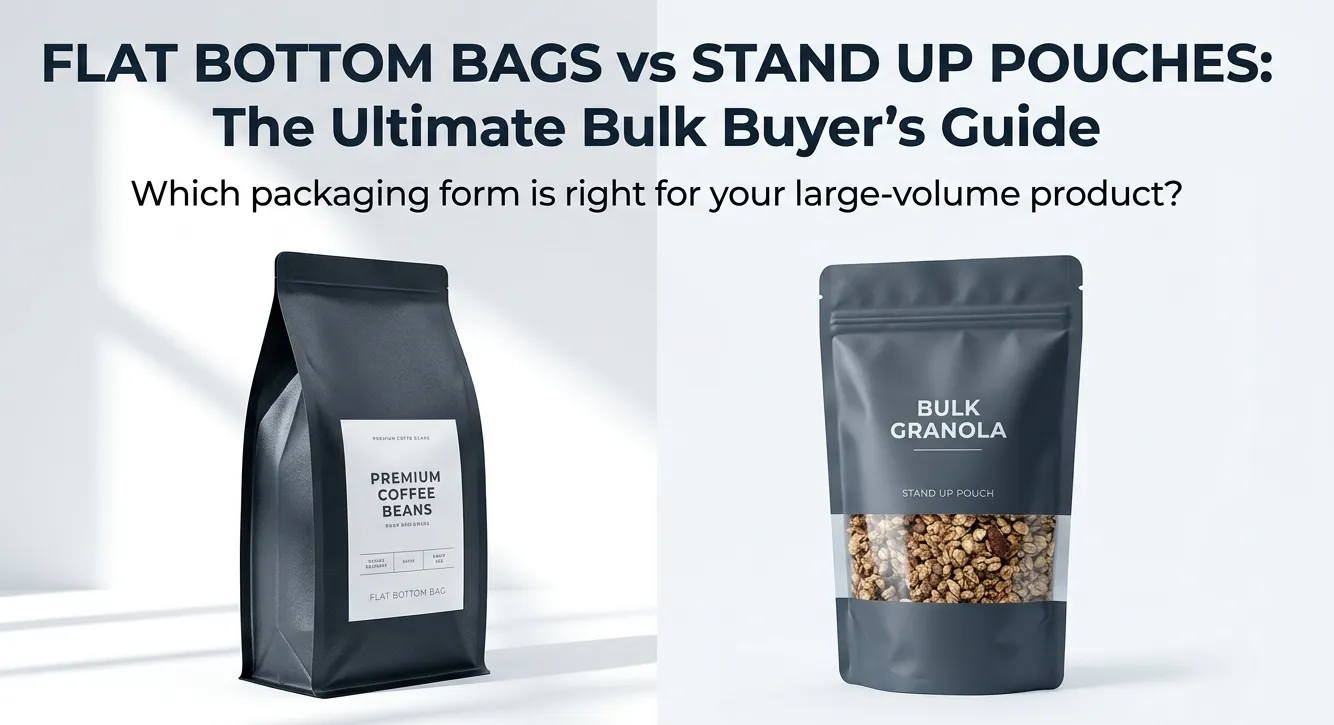
Quick Comparison Table – Flat Bottom Bags vs Stand Up Pouches
Short on time? Here's the snapshot most procurement managers ask for first.
| Feature | Flat Bottom Bag | Stand Up Pouch |
|---|---|---|
| Structure | 5-panel, square block bottom | 3-side seal + bottom gusset (doypack) |
| Capacity Range | 100g – 5kg | 30g – 2kg |
| Print Surfaces | 5 (front, back, 2 sides, bottom) | 2 (front, back) |
| Typical MOQ | 10,000 units | 5,000 units |
| Shelf Appeal | Premium, rigid feel | Lightweight, flexible |
| Lead Time | 25–35 days | 20–30 days |
| Best For | Coffee, pet food, protein powder | Snacks, supplements, liquids |
What Are Flat Bottom Bags?
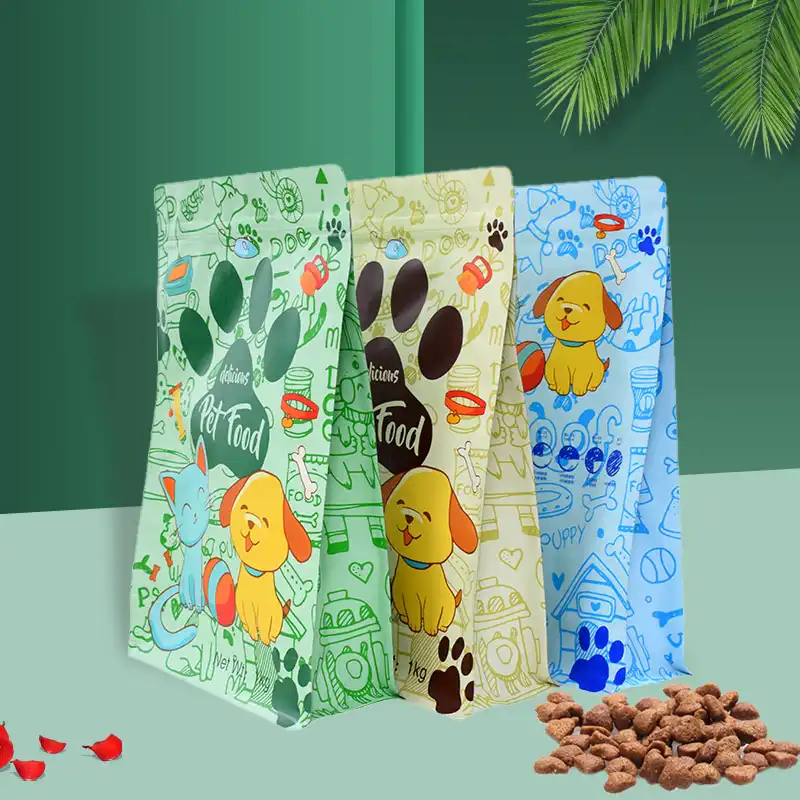
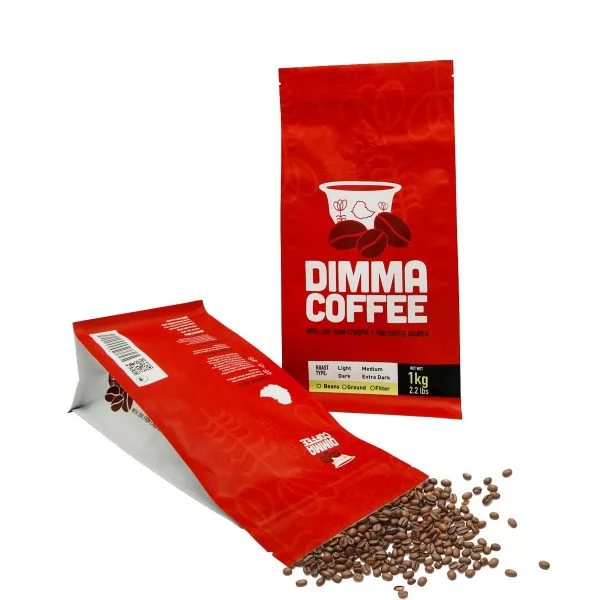
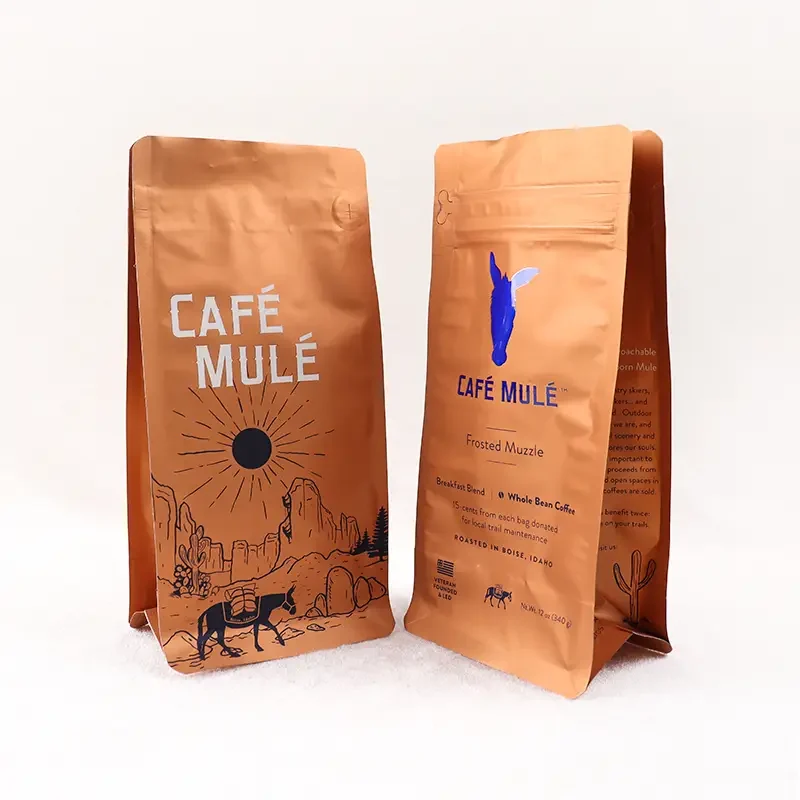
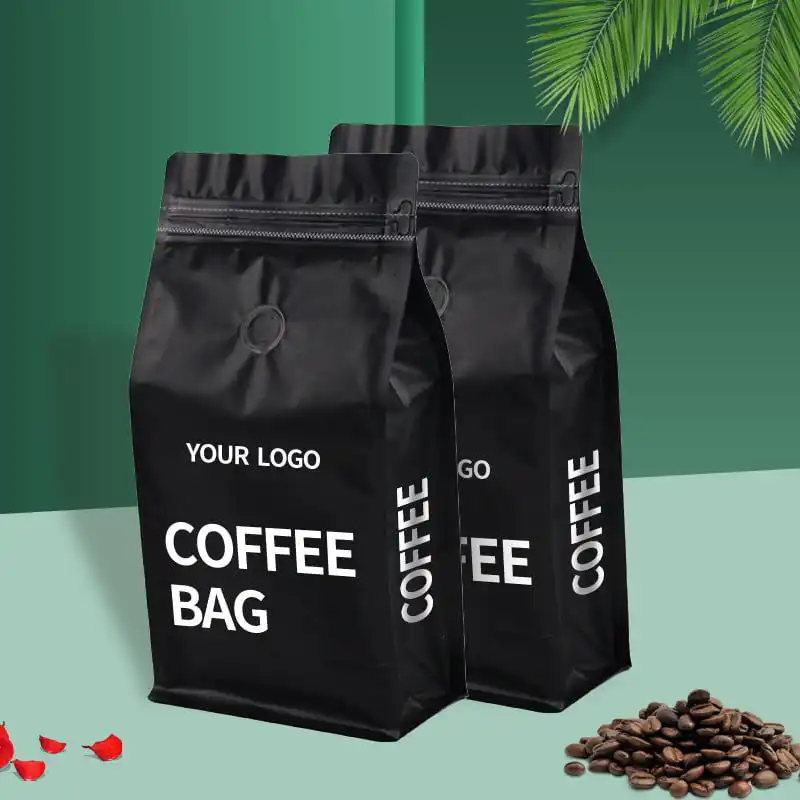
Flat bottom bags — also called box pouches or quad seal bags — sit upright with a rigid square base. They mimic the silhouette of a rigid box while keeping the cost benefits of flexible film.
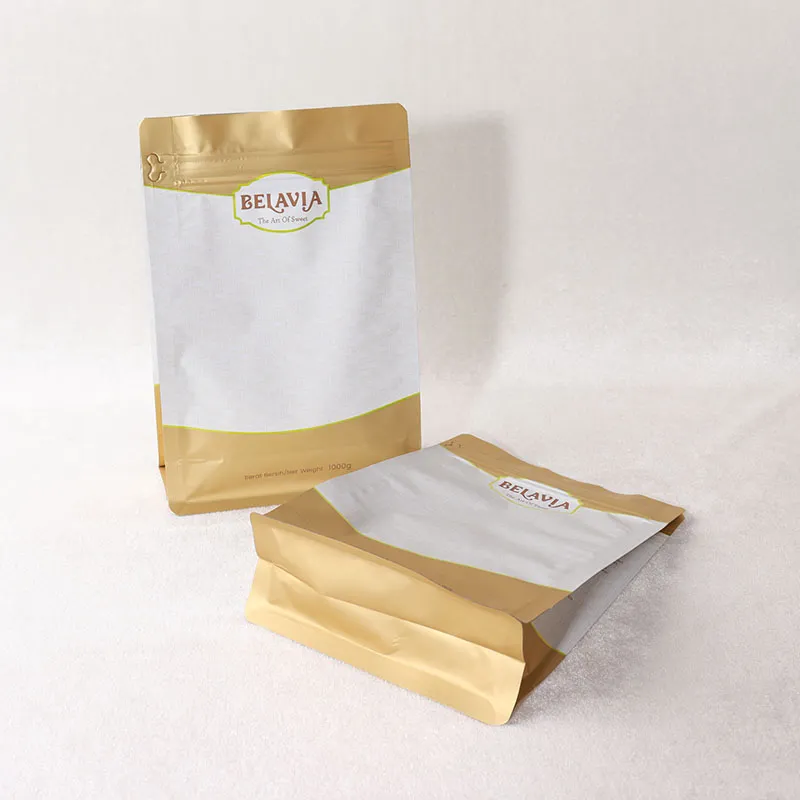
Structure & Gusseted Pouch Design
The 5-panel gusseted pouch design gives you four vertical seal lines and a flat bottom that distributes weight evenly. This means the bag stands without tipping, even at 2kg+ fills.
Brands get five printable surfaces, which translates to roughly 60% more branding real estate than a typical doypack.
Common Materials & Barrier Film Bags Options
- Kraft paper laminates — natural, premium look for coffee and tea
- PET/AL/PE — high-barrier film bags for oxygen-sensitive products
- Compostable PLA/Kraft — for brands with sustainability claims
- Mono-PE recyclable — meets EU and California recyclability mandates
Typical Industries Using Flat Bottom Bags
Specialty coffee, dry pet food, whey and plant protein, premium loose-leaf tea, and granola brands lean on this format. The rigid base supports degassing valves and tin ties without warping.
What Are Stand Up Pouches?
Stand up pouches (doypacks) are the workhorse of flexible packaging — fast to fill, cheap to ship flat, and proven at retail since the 1960s.
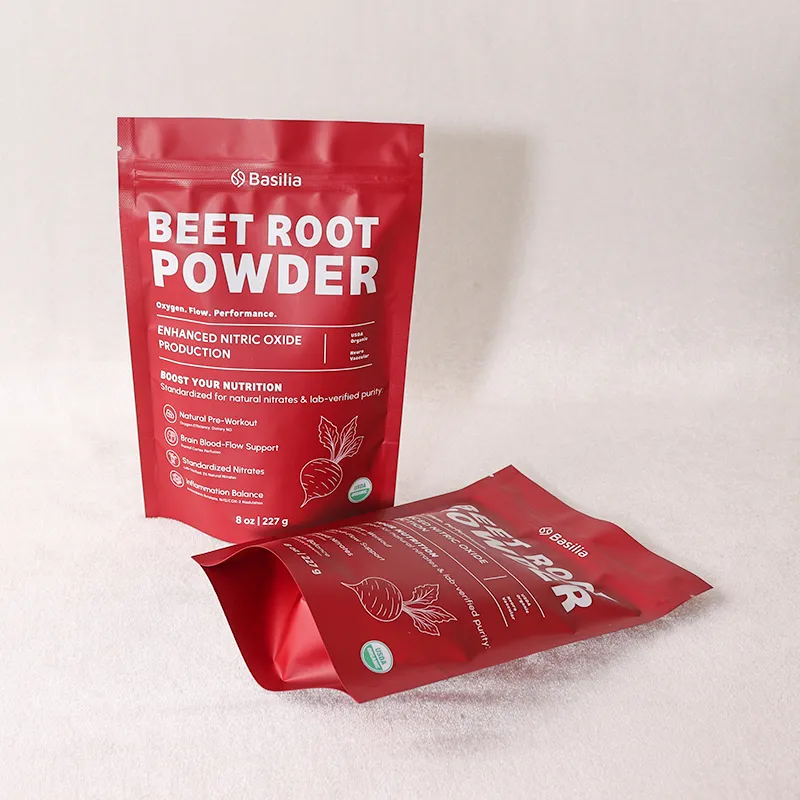
Structure & Resealable Zipper Pouches
The 3-side seal with a bottom gusset opens up when filled and stands on a curved base. Resealable zipper pouches, spouts, tear notches, and hang holes are standard add-ons.
Material Configurations
Buyers can specify matte or gloss finishes, transparent windows, holographic effects, or recyclable mono-PE. Aluminum-foil laminates remain the go-to for products needing 18+ months of shelf life.
Typical Industries Using Stand Up Pouches
Snacks, candy, gummies, vitamins, powdered drinks, liquid detergents, and sample-size promotional packs. The format scales beautifully from 30g sachets to 1kg family bags.
Head-to-Head: Flexible Packaging Comparison
Shelf Presence Packaging & Branding
Nielsen retail data shows packaging with 4+ visible facings increases shopper attention by up to 30%. Flat bottom bags deliver this naturally; stand up pouches need bolder front-panel design to compete.
If your product faces forward on a shelf, stand up pouches are fine. If it's stocked from multiple angles or stacked, flat bottom wins.
Capacity & Fill Volume
| Product Weight | Flat Bottom Bag | Stand Up Pouch |
|---|---|---|
| 30g – 100g | Oversized | Ideal |
| 100g – 500g | Good | Ideal |
| 500g – 1kg | Ideal | Good |
| 1kg – 2kg | Ideal | Marginal |
| 2kg – 5kg | Ideal | Not recommended |
Filling Line Compatibility
Stand up pouches run at 60–120 BPM (bags per minute) on most rotary fillers. Flat bottom bags average 40–80 BPM and often require dedicated tooling — a $15K–$50K capex for new lines.
Barrier Performance & Shelf Life
| Structure | OTR (cc/m²/day) | WVTR (g/m²/day) | Shelf Life |
|---|---|---|---|
| PET/PE | 50–80 | 5–8 | 3–6 months |
| PET/AL/PE | <0.1 | <0.1 | 18–24 months |
| Kraft/PLA compostable | 30–50 | 10–15 | 4–8 months |
| Mono-PE recyclable | 20–40 | 3–6 | 9–12 months |
Sustainability & Recyclability
Both formats are now available in mono-material PE and PP structures that meet How2Recycle and CEFLEX guidelines. Brand owners like Unilever and Nestlé have set 2025–2030 mandates pushing suppliers toward recyclable laminates — worth factoring into any 3-year procurement plan.
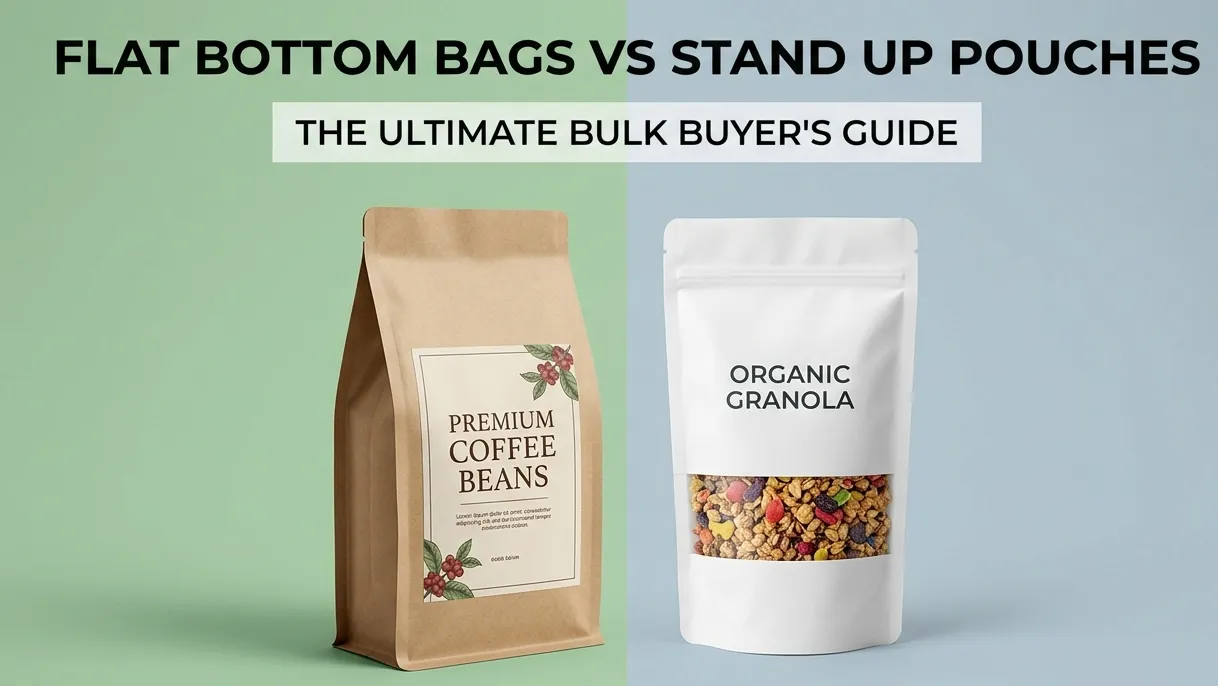
Pros and Cons Summary Table
| Pros | Cons | |
|---|---|---|
| Flat Bottom Bag | Premium shelf appeal, 5 print surfaces, holds 2kg+, supports valves | Higher cost, slower fill speed, longer lead time |
| Stand Up Pouch | Lower cost, faster filling, lower MOQ, lighter to ship | Less shelf stability, only 2 print panels, capacity limits |
How to Choose – Decision Framework for Bulk Buyers
Match Format to Product Weight & Density
Under 500g and free-flowing? Stand up pouch. Over 500g, dense, or granular (coffee beans, kibble)? Flat bottom bag.
Match Format to Retail Channel
Big-box retail with eye-level shelving rewards flat bottom bags. E-commerce and subscription boxes favor stand up pouches because they ship flat and reduce dimensional weight charges.
Budget vs Brand Premium Positioning
Premium ($15+ retail) products almost always justify the flat bottom upcharge. Mass-market and value-tier SKUs win with stand up pouches.
MOQ, Lead Time & Tooling Cost Considerations
Plate and tooling fees for digital print can be as low as $300; rotogravure cylinders run $150–$300 per color. Always confirm whether tooling is amortized into unit price or billed separately.
Real-World Case Studies
Specialty Coffee Brand – Switching to Flat Bottom Bags
A US-based roaster switched 12oz SKUs from doypacks to kraft flat bottom bags with degassing valves. Result: +22% sell-through at independent grocers within two quarters, attributed to improved shelf presence and a perceived premium positioning.
Vitamin Brand – Stand Up Pouches Reducing Cost by 31%
A supplement company moved 60-count gummy SKUs from rigid PET jars into matte stand up pouches with child-resistant zippers. Packaging cost dropped 31%, and freight per pallet improved 4x due to flat-pack shipping.
Pet Food Startup – Hybrid Strategy
A DTC pet food brand uses flat bottom bags for 2kg and 5kg retail SKUs and stand up pouches for 100g sample/trial packs. The hybrid strategy cut overall packaging spend by 18% while maintaining premium shelf identity.
Why Source With YLTPACK
YLTPACK has manufactured custom flexible packaging since 2005, supplying coffee roasters, pet food brands, and supplement companies across 40+ countries. Every order is built to spec — your dieline, your barrier structure, your finish.
- Free sample kits — physical samples shipped to your door before you commit
- ISO 22000 and FDA certified — food-safe production lines
- Fully custom — size, material, print, zipper, valve, spout
- Quote within 24 hours from a real packaging engineer
Email [email protected] with your specs or product photos to start a project.
FAQ
Which is cheaper for bulk orders?
Stand up pouches are typically 30–45% cheaper per unit than flat bottom bags at the same order volume, mainly because they use less film and simpler tooling.
Can both formats include resealable zippers and valves?
Yes. Both support press-to-close zippers, slider zippers, child-resistant closures, one-way degassing valves, and tear notches. Flat bottom bags also accommodate tin ties and spouts.
What is the minimum order quantity (MOQ) for custom printing?
Standard MOQ is 10,000 units for flat bottom bags and 5,000 units for stand up pouches with full custom printing. Digital print options can lower MOQs to 1,000–3,000 units.
Which format is more eco-friendly?
Both are available in recyclable mono-PE and compostable structures. Stand up pouches generally use less material per gram of product, while flat bottom bags can carry more product per shipment, lowering transport emissions.
Which holds more weight – flat bottom or stand up pouch?
Flat bottom bags handle up to 5kg comfortably thanks to the rigid square base. Stand up pouches are best capped at around 2kg before structural stability suffers.
Lead time for custom designs?
Standard lead time is 25–35 days for flat bottom bags and 20–30 days after artwork approval for stand up pouches. Sampling typically takes 7–10 days.
Ready to Source the Right Pouch?
Stop guessing on packaging specs. Get physical samples, transparent pricing, and engineering input before you place a PO.