Why Bag Size Is the First Decision You Should Get Right
If you're sourcing pet care packaging for the first time, this guide walks you through exactly what size fits each weight tier. We'll cover dimensions, fill behavior, and the small details that quietly affect cost and shelf appeal.
As a manufacturer that has produced packaging for 20+ years, we've watched brands learn these lessons the hard way. Let's save you that trouble.
How Bag Size Actually Works: It's Not Just About Weight
Here's something newcomers often miss: bag size isn't determined by weight alone. Kibble density, piece shape, and bag style all change how much volume a given weight occupies.
A 1kg bag of dense, small-pellet adult kibble takes far less room than 1kg of light, air-puffed puppy food. So before locking dimensions, you need your product's bulk density (grams per liter).
The Three Variables That Decide Your Bag
- Net weight — what the customer pays for (1kg to 15kg here).
- Bulk density — how tightly the product packs.
- Bag style — flat pouch, stand-up pouch, or gusseted block-bottom bag.
Working with brands across North America, we've found that the most common mistake is choosing a size from net weight alone and ignoring density. The result? Bags that sag, slump, or won't stand.
Bag Size Recommendations: 1kg to 15kg Quick Reference
The table below gives a practical starting point. These assume average dry-food density (roughly 400–500 g/L). Adjust up if your product is fluffier, down if it's denser.
| Net Weight | Recommended Style | Approx. Dimensions (W × H × Gusset) | Typical Use Case |
|---|---|---|---|
| 1 kg | Stand-up pouch | 180 × 280 × 80 mm | Treats, small-breed kibble, trial sizes |
| 2 kg | Stand-up pouch | 210 × 320 × 90 mm | Single-dog monthly supply |
| 3 kg | Stand-up / flat-bottom | 240 × 360 × 100 mm | Mid-size breeds, subscription packs |
| 5 kg | Flat-bottom (box) pouch | 260 × 400 × 120 mm | Premium retail, multi-dog homes |
| 7.5 kg | Flat-bottom or quad-seal | 300 × 460 × 140 mm | Value retail shelving |
| 10 kg | Quad-seal / gusseted bag | 340 × 540 × 150 mm | Bulk buyers, breeders |
| 15 kg | Heavy-duty gusseted bag | 400 × 620 × 170 mm | Warehouse clubs, large-breed bulk |
Treat these as a baseline, not gospel. Send us your kibble sample and target weight, and we'll calculate exact dimensions so your fill line looks full without wasting film.
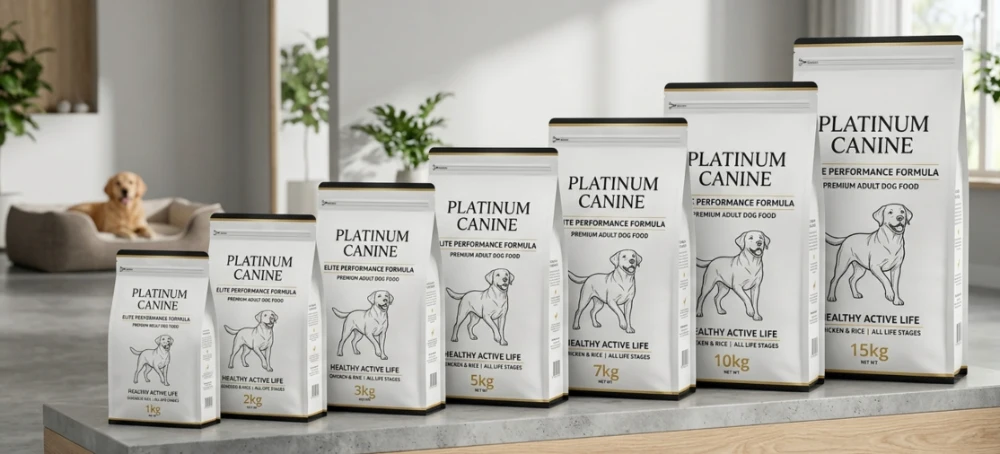
Choosing the Right Bag Style for Each Weight Tier
Style matters as much as size. The wrong format makes a quality product feel cheap — and a clever format makes a small bag look premium.
1kg to 3kg: Stand-Up Pouches Win
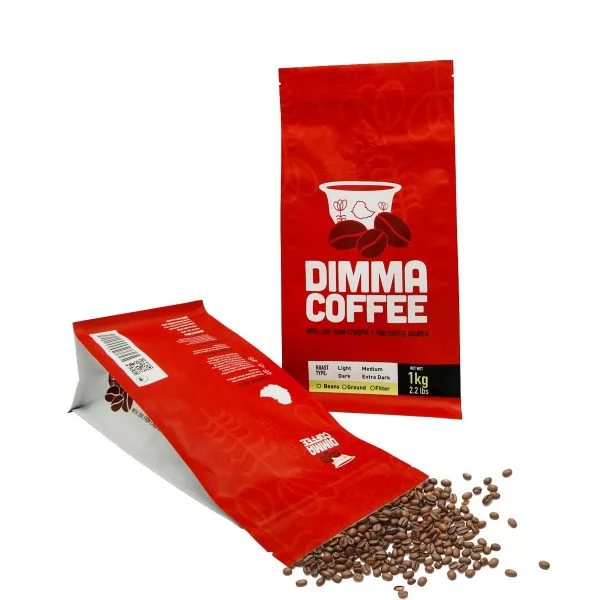
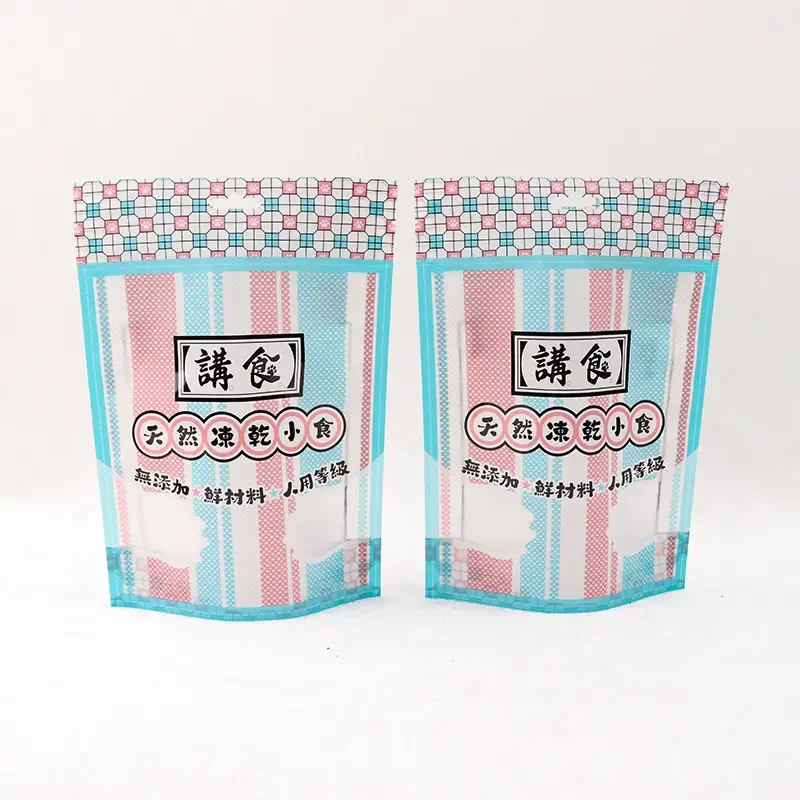
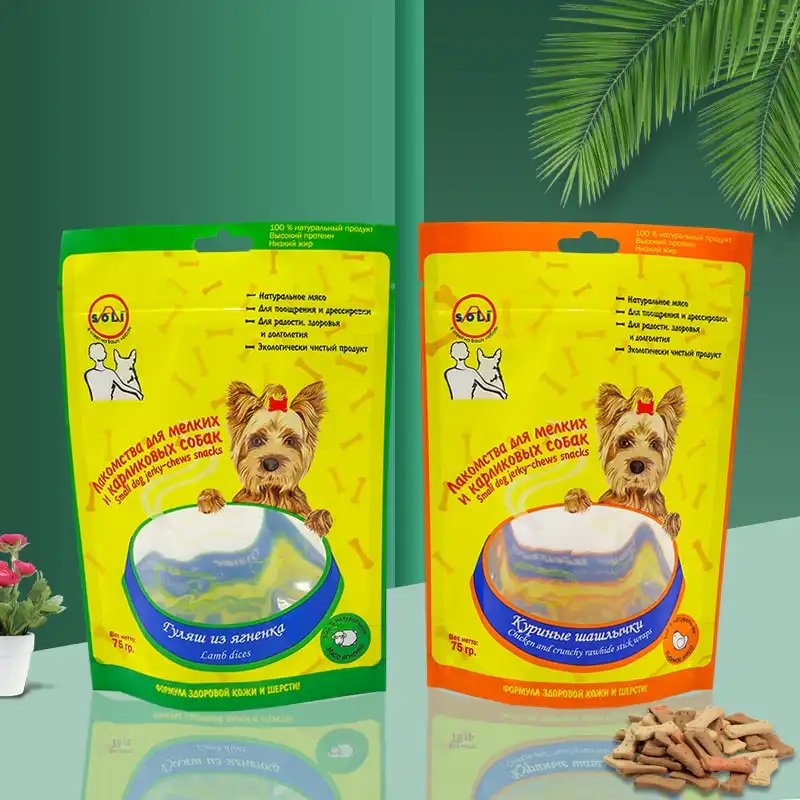
For lighter products, stand-up pouches with a bottom gusset stand tall on retail shelves. Add a resealable zipper and your customers can reclose between feedings. Resealable pet treat bags in this range convert browsers into buyers because freshness feels guaranteed.
5kg to 7.5kg: Flat-Bottom Pouches
This is where flat-bottom (box-style) pouches shine. They offer five printable panels, stand rock-steady, and stack efficiently. For premium positioning, this format gives you the most "shelf presence" per gram of material.
10kg to 15kg: Built for Strength and Stacking
At the heavy end, the conversation shifts to durability. Quad-seal and gusseted bags handle the weight, resist drop damage, and stack flat on pallets. We typically recommend reinforced seals and thicker film laminations here — a burst bag in transit costs far more than the film saved.
Material Matters: Protecting Freshness at Every Size
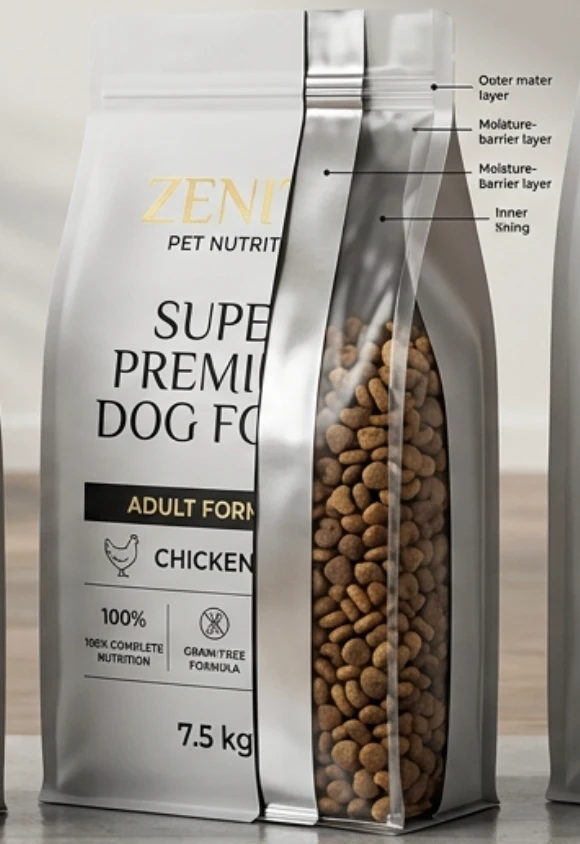
Dry pet food goes stale when oxygen and moisture sneak in. Fat in kibble oxidizes, and that's the rancid smell pet owners notice instantly. Bigger bags sit open longer at home, so your barrier layer becomes even more important as weight climbs.
A typical structure uses a printed outer layer, a barrier middle layer, and a food-safe sealant inner layer. Because we hold FDA and ISO 22000 certifications, we recommend matching the barrier grade to how long your product realistically stays in the bag after opening.
Common Structure Options
| Structure | Barrier Level | Best For |
|---|---|---|
| PET / PE | Moderate | Fast-turnover treats, small bags |
| PET / AL / PE | High | Premium kibble, long shelf life |
| Recyclable mono-PE | Moderate–High | Brands prioritizing recyclability |
| Kraft / PLA compostable | Moderate | Eco-positioned natural brands |
The Sustainability Question Pet Brands Keep Asking
Pet owners are reading ingredient panels and checking how packaging breaks down. A 2025 industry survey found the majority of pet shoppers now consider recyclability when choosing a brand. That demand is reshaping how thoughtful brands package products.
If green credentials matter to your audience, sustainable pet care packaging solutions are more viable than ever. Recyclable mono-material films and compostable kraft structures have closed much of the performance gap with traditional laminates.
Our in-house design team often helps brands who only have a rough idea — say, "we want something eco-friendly that still stands up" — turn it into a producible spec. We hold GRS certification for recycled-content materials, so claims you print are claims you can back.
For natural grooming lines, biodegradable pet grooming packaging materials and eco-friendly pet food packaging design can share a visual language, building a cohesive brand story across your whole catalog.
Printing and Branding: Where Small Choices Pay Off
Pet owners are emotional, deliberate shoppers. They want to see ingredient transparency, feeding guides, and a brand they trust. Your bag is the most-read piece of marketing you'll ever produce.
Custom pet product labels and clear feeding charts build confidence. A matte finish reads "premium," gloss reads "value," and a strategic clear window lets buyers see the actual kibble — which still drives purchases at the shelf.
Print Details Worth Planning Early
- Finish: matte, gloss, soft-touch, or spot-UV accents.
- Window: a die-cut clear panel to show product.
- Hang hole: euro-slot for peg displays on smaller bags.
- Tear notch + zipper: easy open, easy reseal.
Planning Your Order: A Simple Pre-Production Checklist
Before you request a quote from custom pet care product packaging suppliers, gather these details. Having them ready shortens lead time and prevents costly revisions.
- Net weight per bag (your 1kg–15kg tiers).
- Kibble or treat sample for density testing.
- Desired bag style and finish.
- Shelf-life target after opening.
- Sustainability goals (recyclable, compostable, recycled content).
- Print-ready artwork or a rough concept.
- Estimated annual volume across sizes.
In our 6,800㎡ cleanroom facility, every order runs through food-grade controls — important when your product goes straight into an animal's bowl. Tidy specs up front mean fewer surprises later.
Matching Sizes Across Your Product Line
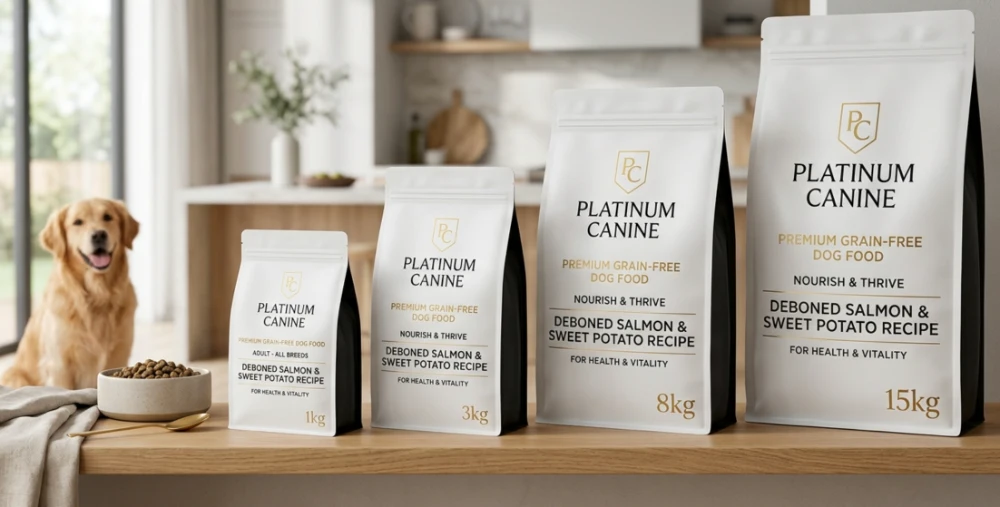
If you sell 1kg, 5kg, and 15kg versions of the same recipe, keep the visual proportions consistent. A family of bags that "looks related" builds brand recognition on a crowded shelf.
This is where supplier flexibility matters. Whether you need stand-up pouches, sustainable pet supply containers, or wholesale pet care packaging boxes for retail bundling, working with one source keeps colors, materials, and quality aligned across formats.
The same logic extends beyond food. Pet grooming product packaging — shampoo pouches, wipe refills — can echo your food-line design, so customers instantly recognize your brand wherever they meet it.
Quick Summary: Your Sizing Cheat Sheet
Let's bring it together. Bag size flows from weight and density, then style follows the use case:
- 1–3kg: stand-up pouches with reseal zippers.
- 5–7.5kg: flat-bottom pouches for shelf presence.
- 10–15kg: quad-seal or gusseted bags built for stacking and strength.
Always confirm dimensions with a real product sample, and match your barrier film to how long the bag stays open at home. Get those two right and the rest falls into place.
Have a sample and a target weight? The team at YLTPACK can run the math and prototype it for you. Reach us on WhatsApp at +86 182 1944 5665 or email [email protected] — share your specs and we'll suggest the right fit.
Frequently Asked Questions
What size bag do I need for 1kg of dog food?
A stand-up pouch around 180 × 280 mm with an 80mm bottom gusset suits most 1kg dry foods. If your kibble is air-puffed and low-density, size up slightly so the bag looks full rather than half-empty on the shelf.
Can one bag style work across all my weight tiers?
It can visually, but not structurally. Stand-up pouches are ideal up to about 3kg, while 10kg and 15kg products need stronger quad-seal or gusseted bags. Keep the artwork style consistent so the family looks unified even as formats change.
How do I keep large bags of kibble fresh after opening?
Choose a higher-barrier film structure and add a resealable zipper plus a tear notch. Bigger bags sit open longer at home, so freshness protection matters more as weight increases. Match your barrier grade to your real-world shelf life.
Are recyclable or compostable options available for heavy bags?
Yes. Recyclable mono-PE films now handle weights well into the double digits, and compostable kraft structures work for many natural brands. Share your weight and durability needs and we'll recommend a material that holds up while meeting your green goals.
How long does custom production usually take?
Lead time depends on artwork readiness, material, and order volume. Having your sample, dimensions, and print-ready files prepared in advance is the single biggest factor in speeding things up. Submitting clean specs from the start avoids revision delays.