Choosing the Right Bag for Your Dog Food: A Size-First Guide
If you've ever stared at a sample order wondering whether to go with a pouch, a flat-bottom bag, or a heavy-duty gusset sack, you're not alone. The format you pick shapes shelf appeal, shipping costs, and how fresh the kibble stays. Getting your custom pet food packaging right starts with one simple question: how much product goes inside?
Size changes everything — material thickness, closure type, even how the bag stands on a crowded shelf. Let's walk through it together, format by format, so you can match the right structure to your product weight with confidence.
Why Product Size Should Drive Your Packaging Decision
Here's something we see all the time: brands fall in love with a bag style they saw online, then discover it can't hold their 30 lb formula without splitting at the seams. Weight and volume aren't details to figure out later — they're the starting point.
A sample-size treat pack and a bulk feed sack live in completely different worlds. One needs charm and a tiny resealable strip; the other needs to survive a forklift. As a manufacturer that has produced packaging for 20+ years, we've learned that matching format to fill weight prevents the most expensive mistakes.
The Three Things Size Affects Most
- Material gauge: Heavier products demand thicker films and stronger seals.
- Bag structure: Standing, lying flat, or stacking depends on weight distribution.
- Closure choice: A zipper that works on 1 lb may fail on 20 lb.
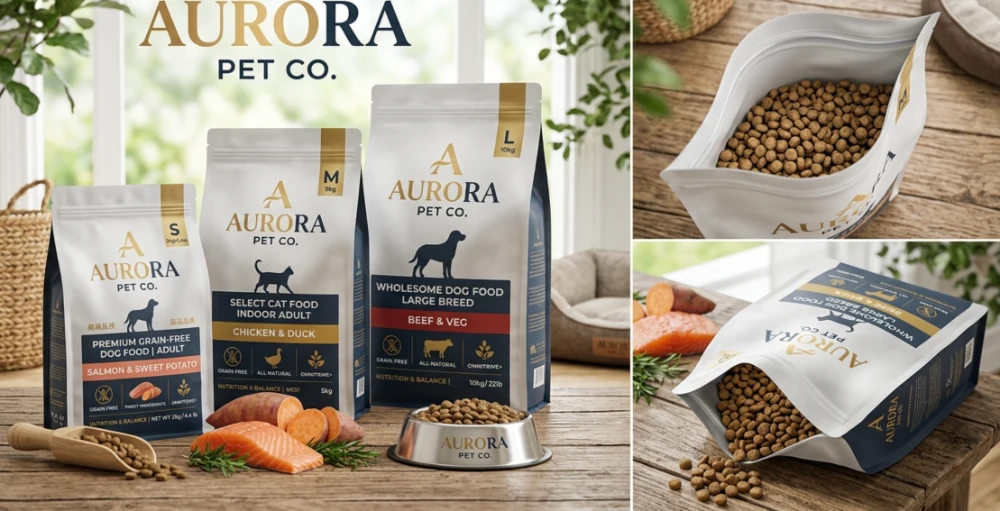
Small Sizes (Samples to 2 lb): Pouches Rule
For trial packs, single-serve treats, and small-breed formulas, flexible pouches are hard to beat. They're lightweight, ship cheaply, and give your artwork plenty of room to shine. Pet parents increasingly scan labels for ingredient transparency, so this surface becomes prime real estate for your sourcing story.
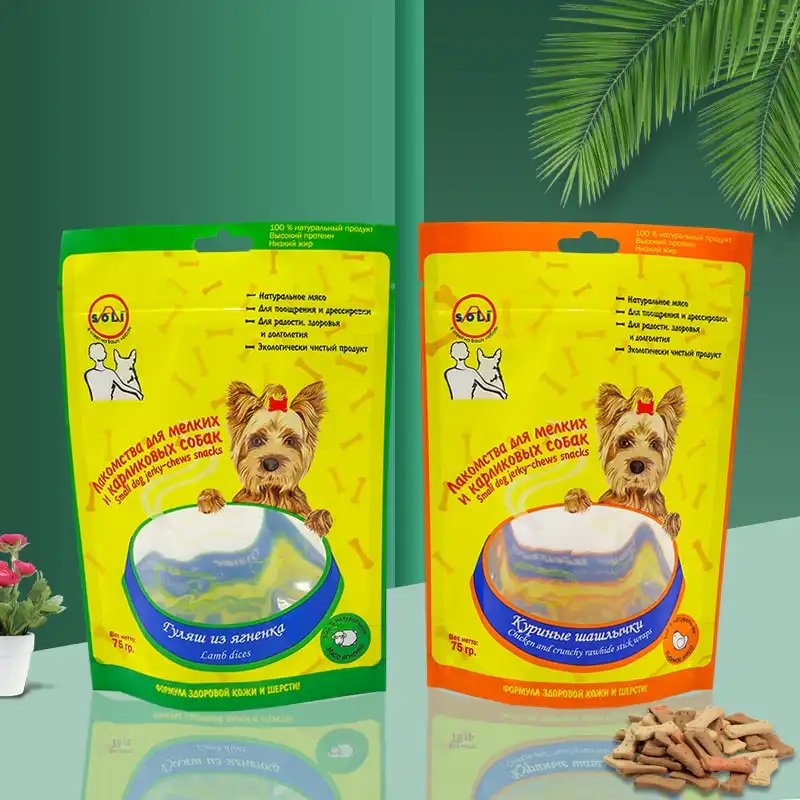
Stand-up pouches are the crowd favorite here. They sit upright on the shelf, hold a resealable zipper comfortably, and photograph beautifully — which matters more than ever for unboxing moments shared online.
Best Formats for Small Products
- Stand-up pouches: Ideal for 0.5–2 lb, great shelf presence.
- Flat bottom pouches: A premium upgrade with more facing space.
- Three-side seal sachets: Perfect for single-serve treat samples.
If you're launching a new line and want custom printed pet food pouches with logo placement that pops, this size range gives your design the most flexibility per unit cost.
Medium Sizes (3–10 lb): Balance Strength and Style
This is the sweet spot for most everyday retail products — think mid-size kibble bags and bulkier treat assortments. At this weight, you need a structure that stands proudly but won't buckle under a few pounds of pressure.
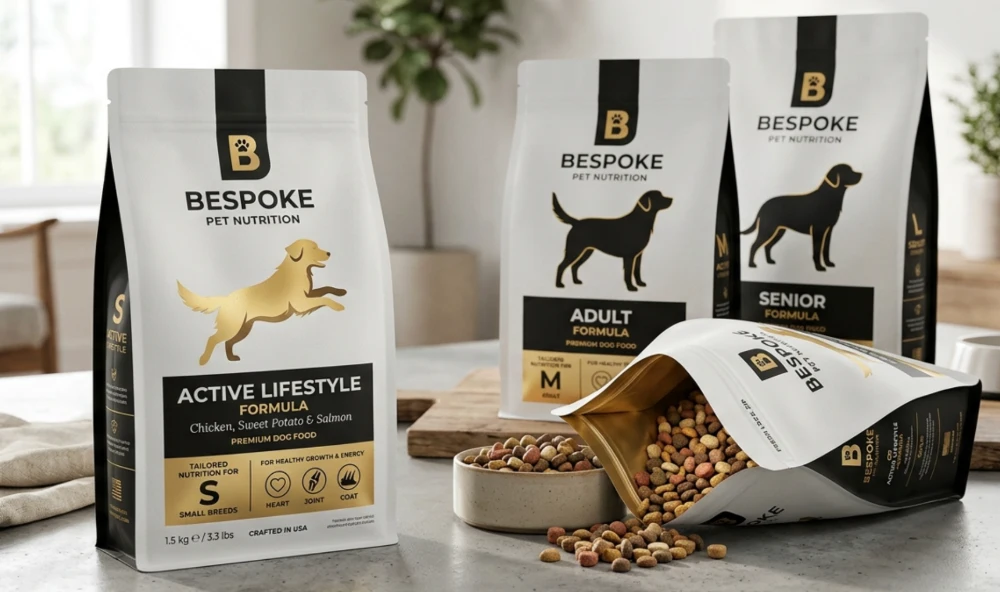
Flat-bottom (box-style) bags become the star here. They offer five printable panels, sit flat for stacking, and project a premium feel that shoppers associate with quality nutrition. Side-gusset bags are the value-minded alternative when budget matters more than shelf flair.
| Format | Best Weight Range | Standout Strength |
|---|---|---|
| Flat-bottom bag | 3–10 lb | Premium look, 5 print panels |
| Side-gusset bag | 3–8 lb | Cost-efficient, classic profile |
| Quad-seal bag | 5–10 lb | Sharp edges, strong stacking |
Don't Skip the Reseal
At this size, freshness is the buyer's top concern. A reliable resealable dog food packaging closure keeps kibble crunchy after opening and signals that you care about the product's quality long after purchase. A press-to-close zipper or a slider both work well in this weight class.
Large Sizes (15–40 lb): Built to Survive Shipping
Big bags face big challenges. They get dropped, stacked six high, and dragged across garage floors. The conversation shifts from looks to load-bearing strength — though both still matter.
Heavy-duty quad-seal and pinch-bottom bags shine here. Thicker laminate structures and reinforced seals carry the weight without the dreaded seam blowout. Because we hold FDA and ISO 22000 certifications, we recommend testing seal strength against your real shipping conditions, not just lab ideals.
What Large-Format Bags Need
- Reinforced seams: To handle drops and stacking pressure.
- Carry handles or perforations: Easier handling for heavy loads.
- Degassing or breathable options: For certain formulas that release gases.
In our 6,800㎡ cleanroom facility, we run drop and seal tests on heavier formats so brands don't discover weaknesses after a pallet arrives damaged.
Matching Material to Size and Goals
The bag shape is only half the story — what it's made of carries equal weight. Smaller treat packs can lean into recyclable mono-material films, while heavier sacks often need multilayer laminates for puncture resistance.
More shoppers now factor sustainability into their buying choices, with surveys through 2025 showing pet owners willing to pay more for greener options. If that's your audience, exploring eco-friendly pet food packaging early in development saves a costly redesign later.
| Material Type | Best For | Trade-off |
|---|---|---|
| Mono-material PE | Recyclable small/medium packs | Lower barrier than laminates |
| Kraft + PLA lining | Natural, eco-positioned brands | Higher cost |
| Multilayer laminate | Heavy bags, max freshness | Harder to recycle |
Common Mistakes Brands Make (and How to Dodge Them)
Working with brands across North America, we've found that the most common mistake is choosing a bag size before finalizing the formula's density. A fluffy air-puffed treat fills far more volume than dense kibble at the same weight.
Here's a quick checklist before you lock in a format:
- Confirm fill weight and volume — they're different.
- Test the closure with your actual product, not a generic sample.
- Plan artwork around the panel count of your chosen structure.
- Factor shipping and stacking into material thickness.
- Decide your sustainability stance before printing plates are cut.
Ordering in Quantity Without Overcommitting
One worry we hear constantly from newer brands: "What if I order thousands of bags and the design flops?" It's a fair concern. That's why flexible run sizes matter so much for testing the market.
Many founders look for low minimum order custom pet food packaging so they can validate a product line before scaling up. Our in-house design team often helps brands who only have a rough idea, turning a napkin sketch into print-ready files without forcing a giant first order.
When you're ready to scale, sourcing custom pet food packaging bags wholesale brings the per-unit economics down dramatically while keeping your branding consistent across sizes.
Finding a Supplier Who Understands Pet Food
Not every print shop knows that a high-fat formula needs a stronger oxygen barrier, or that pet parents read ingredient panels like detectives. Look for a partner who talks about your product, not just their machines.
As one of the eco friendly custom pet food packaging suppliers focused on this category, YLTPACK pairs source-factory pricing with design support — so whether you sell single-serve samples or bulk feed, the format fits the food. You can reach the team on WhatsApp at +86 182 1944 5665 or by email at [email protected] to talk through your specs.
Quick Reference: Match Size to Format
| Product Weight | Recommended Format | Priority |
|---|---|---|
| Sample – 2 lb | Stand-up / flat-bottom pouch | Shelf appeal |
| 3 – 10 lb | Flat-bottom or side-gusset bag | Balance look & strength |
| 15 – 40 lb | Quad-seal / pinch-bottom sack | Durability |
The Bottom Line
There's no single winner among bag types — the right one depends entirely on what's going inside. Start with weight and volume, layer in your freshness and sustainability goals, then choose a structure that supports both. When wholesale pet treat packaging needs to look great and survive the journey, that size-first approach keeps you out of costly redesigns.
Get those fundamentals right, and your packaging becomes a quiet salesperson on every shelf — protecting the product, telling your story, and earning repeat buyers.
Frequently Asked Questions
What's the most durable bag type for heavy 30–40 lb dog food?
Quad-seal and pinch-bottom bags with multilayer laminates handle this range best. They distribute weight across reinforced seams and resist seam blowout during stacking and shipping. Adding carry handles improves handling for end users too.
Can I get custom resealable dog food packaging bags in small quantities?
Yes. Many suppliers offer flexible run sizes so newer brands can test the market before scaling. Resealable zippers are available across pouch and bag formats, from tiny treat packs to mid-size kibble bags.
Are eco-friendly options strong enough for large bags?
Recyclable mono-materials work well for small and medium packs. For heavier formats, recyclable-ready laminates are improving fast, though pure mono-material at high weights still involves a barrier trade-off. Share your weight target so the structure can be matched accordingly.
How do I know what bag size matches my product?
Measure both fill weight and volume, since density varies wildly between dense kibble and airy treats. Then send a product sample so the bag dimensions and closure can be tested against the real thing, not a generic estimate.
Does the bag format really affect freshness?
Absolutely. Closure quality, barrier film, and seal integrity all influence how long kibble stays crunchy and aromatic. High-fat formulas especially benefit from strong oxygen barriers and a reliable reseal to slow spoilage after opening.