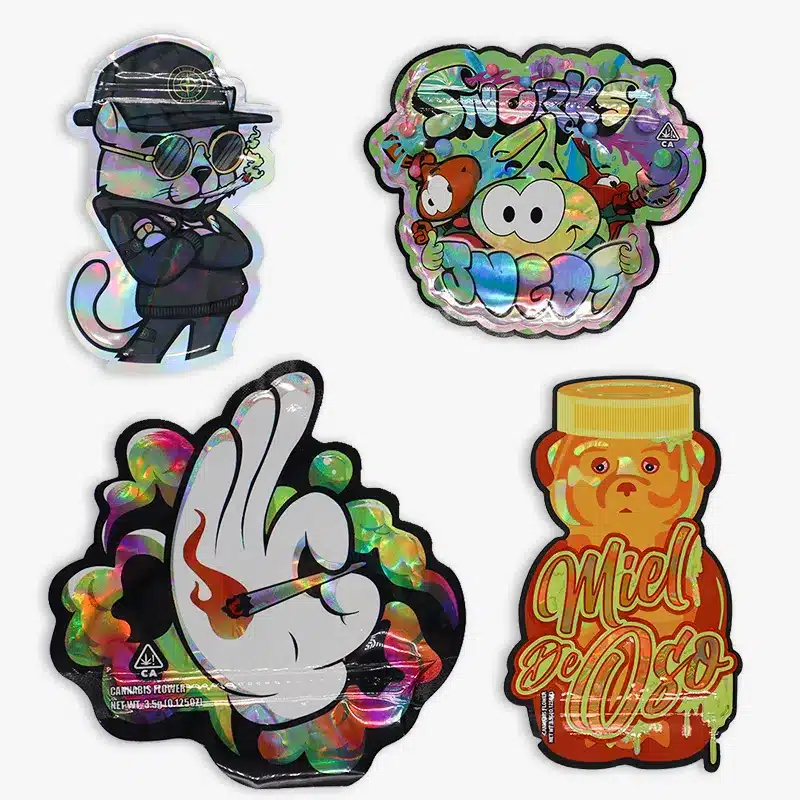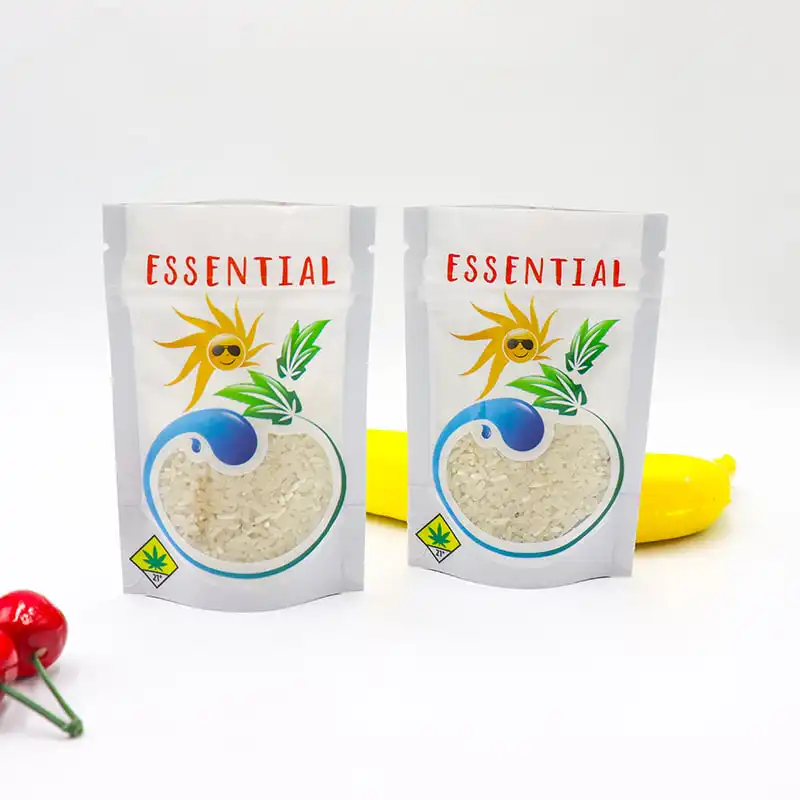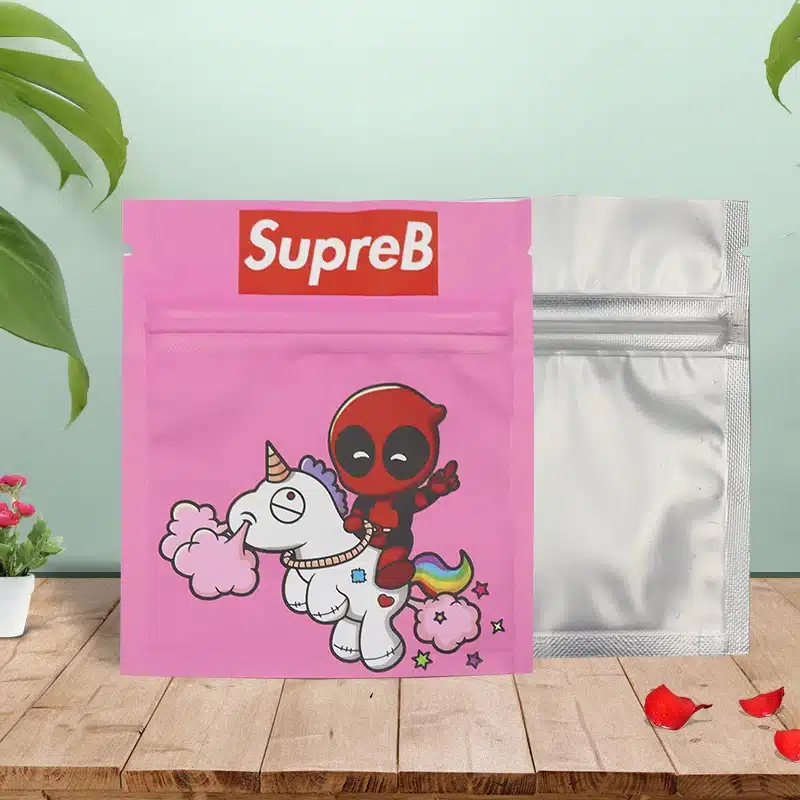
Many buyers assume a child-resistant zipper on a mylar pouch makes the bag certified. It does not. Certification attaches to the tested package as filled and closed, and a zipper alone carries none of it. So when you source child resistant mylar bags bulk, the order of decisions matters: compliance route first, then closure, barrier structure, size, print, minimums, QC and shipping.
Child-resistant mylar bags are flexible pouches with a metallized or foil barrier and a closure that has passed a recognised child-resistance protocol. Which standard applies depends on where the bags are sold. The test covers the finished package, not the zipper as a loose part.
Which Child-Resistant Standard Applies to Your Market?
The test applies to the finished package: the bag, the closure and the way it is opened. Start from where the bags will be sold, then work back to the protocol your buyer or regulator expects.
US: 16 CFR 1700.20 and state rules
In the United States the reference protocol is 16 CFR 1700.20, the Consumer Product Safety Commission's test method for special packaging under the Poison Prevention Packaging Act. In general terms, child panels and adults both try the package, to check that children struggle to open it while adults can. Flexible pouches are tested as filled and closed, because film, fill and closure behave as one system.
State cannabis regulations frequently add requirements of their own. Some name the protocol, some require a lab report, and some set rules on opaque packaging or re-closability. These rules change, so confirm the current text with your regulator or a testing lab before you lock a spec.
Canada, EU and other markets
Outside the US, people usually check the ISO 8317 family for re-closable packaging, EN 14375 for flexible non-reclosable packaging, and Canadian requirements that reference CSA standards. Which one a market accepts depends on the product, the category and the local authority. Do not assume a US report transfers.
Ask your regulator, your distributor or an accredited test lab which protocol applies, then put that name in the brief to the supplier.
Who holds the test report
Ownership varies. Sometimes the supplier holds a report for a stock bag build; sometimes the brand commissions the lab test on its own printed bag. Either way, the report is tied to one exact build: film structure, zipper or lock, bag dimensions and closure method.
Change any of those and the report may no longer cover the bag. A different film thickness, a new zipper supplier or a resized pouch can each trigger a retest. Ask for the report number, the lab name and the exact structure description, and compare them with your purchase spec.
Choosing the Closure: Child-Proof Zipper Mylar Pouch Supplier Questions
For a reusable closure, look at child-resistant zipper types. If the bag is used once, such as a single-serve pack or a heat-sealed exit bag, another format may fit better. A child proof zipper mylar pouch supplier should be able to say which closure each stocked or custom build uses, and which test report covers it.
The common mechanisms differ in how the user opens them. Press-to-close zippers need a press and a pinch at the same time. Slider closures use a travelling slider with a lock feature. Pinch-style locks require squeezing the tracks at set points before the profile separates. None is automatically better. What matters is that the mechanism passed the protocol in the structure you are buying, and that the adults among your customers can open it.
Zipper-based child-resistant pouches
The closure works through profile geometry and the effort needed to align it. Think of a lock that needs two hands and some coordination. On sheet samples, check how the track seats once closed and whether it is aligned across the full width. Also see whether the bag still shuts when the zipper carries a little product dust.
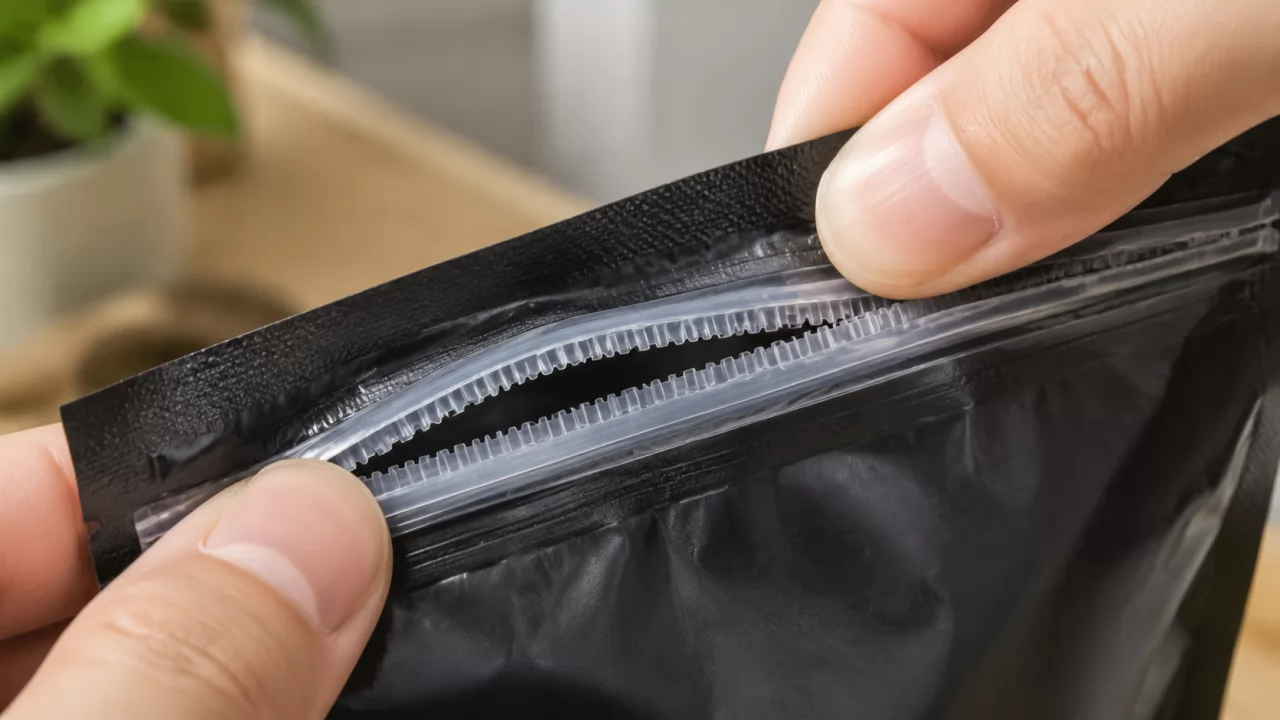
Zippers age. Repeated opening can loosen the grip, and powder or sticky residue in the track changes the feel. A closure that feels firm on day one may feel different after dozens of cycles.
Exit bags vs. retail pouches
Dispensary exit bags and shelf-ready retail pouches do different jobs. An exit bag leaves the store with the customer, so closure, opacity and size matter more than shelf display. A retail pouch has to stand up, show the brand and hold the product through shipping and handling.
Exit bags tend to be larger and simpler: often flat pouches with a child-resistant closure and a plain or lightly printed face. Retail pouches are usually stand-up or flat bottom formats with full print. Decide the bag's role before choosing the closure, because the test report will be written for that specific build.
Reusability and fatigue
Test by hand before you approve. Open and close a sample many times, with clean hands and with slightly dusty ones. Fill it and squeeze it. Tip it, drop it from table height and leave it under a light stack of cartons, and see whether the closure stays shut.
Give it to people who are not on your team too. If an adult tester struggles, your end customers will. Record what you see and send it back to the supplier with the sample reference.
Barrier Structure for Flower, Edibles and Concentrates
Barrier choice follows the product. A short decision path helps narrow it before you ask for quotes.
- If the product is dried flower, then prioritise moisture control, light blocking and odor containment.
- If the product is an edible, then prioritise oxygen and moisture barrier, food-contact documents and puncture resistance from the contents.
- If the product is a concentrate, then check for sticky residue, heat sensitivity and a seal that stays clean.
- If the fill has sharp edges, such as hard candy, then ask about puncture strength in the laminate.
- If shelf life is long, then lean toward foil laminate over thin metallized film.
Foil laminate uses a layer of aluminum foil for a near-complete barrier to light, oxygen and moisture. Metallized film uses a vacuum-deposited metal layer on PET or similar film. It is lighter and more flexible, and its barrier is good but typically lower than foil. Your product and target shelf life decide which one earns its cost.
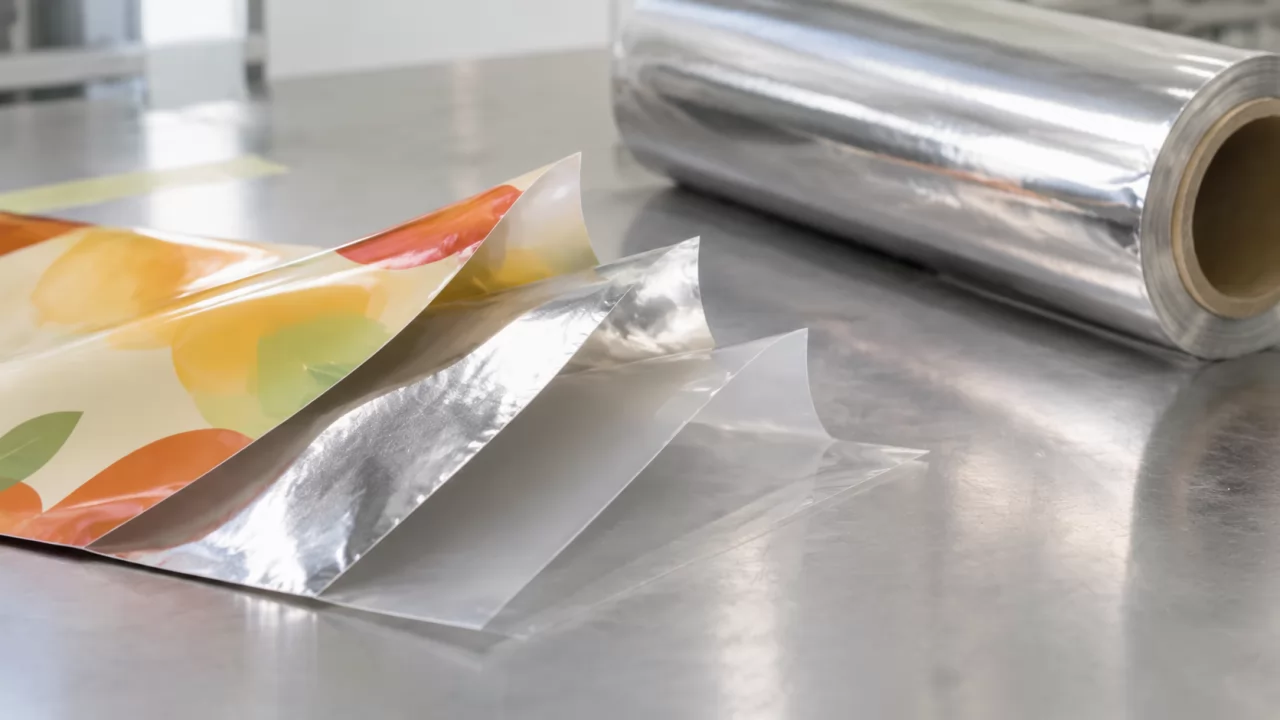
On end of life: mylar and foil structures are not recyclable. Compostable, mono-PE and recycled-content structures are separate requests with their own minimums and documents, so raise them in the brief only if you need that exact structure.
Smell-proof performance
Odor control comes from barrier layers and sealed seams. The zipper is the weak point, not the fix, because a profile track is not a hermetic seal. Ask the supplier how smell-proof performance was assessed on that structure, then seal a filled sample for a few days and check it yourself.
Food-contact considerations for edibles
Edibles raise the bar. The inner layer touches food, so ask for food-contact documents on the exact structure. For PE contact layers, test reports against US FDA 21 CFR 177.1520 are commonly requested; for the EU, migration testing under the food-contact framework. Say "tested to" in your own paperwork, not "approved".
Bag Style, Size and Fill Weight
Style follows how the bag is displayed, filled and carried. The table compares four common formats on the criteria that usually decide the choice.
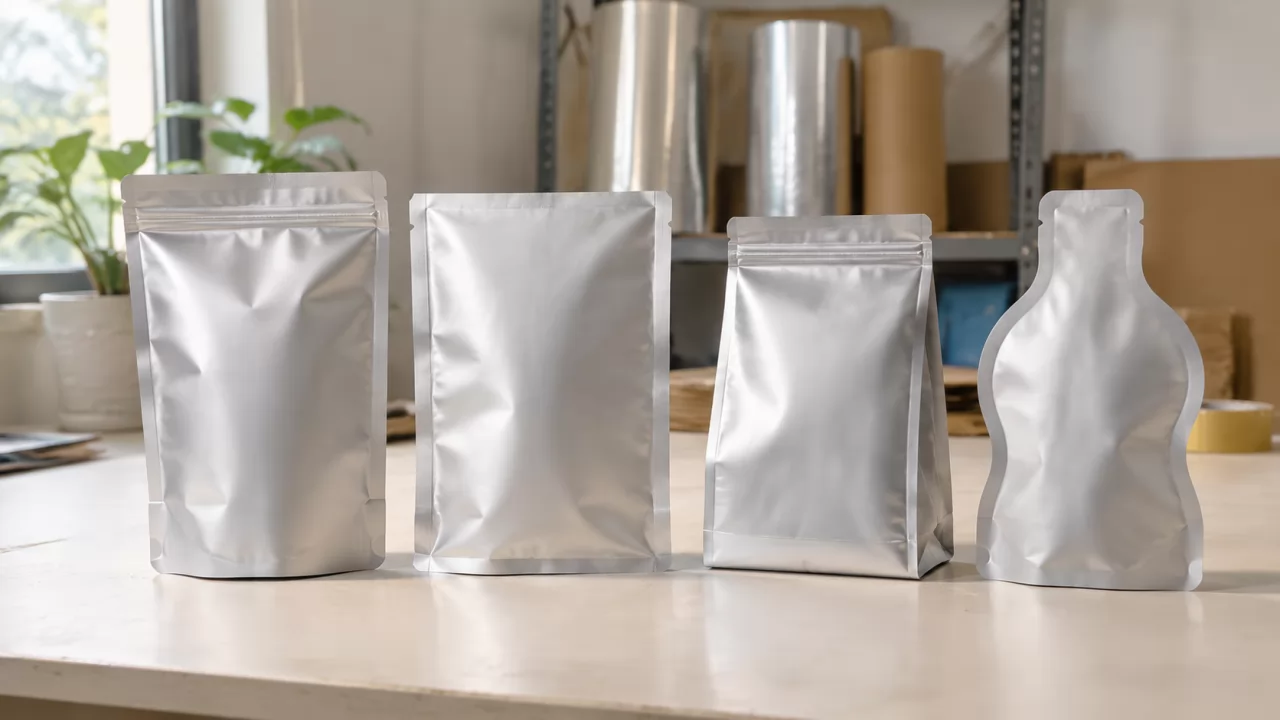
| Criterion | Stand-up | Flat pouch | Flat bottom | Die-cut shape |
|---|---|---|---|---|
| Typical use | Retail flower, edibles | Exit bags, samples | Premium retail | Brand-led candy, kids-look products |
| Shelf display | Stands, one print face | Lies or hangs | Stands, five print panels | Depends on shape |
| Closure options | Zipper, slider | Zipper, heat seal | Zipper, slider | Zipper where shape allows |
| Fill suitability | Light to medium | Light fills | Medium to heavier | Light fills |
| Best for | General retail | Dispensary exit use | Shelf impact | Distinct look |
For most retail programmes, stand-up pouches are the practical middle ground. Flat bottom adds complexity and cost but gives better shelf presence. Size the bag from the real fill, not the label weight, since density varies by product. Test a filled sample before approval.
Printing, Labeling and Dispensary Compliance Copy
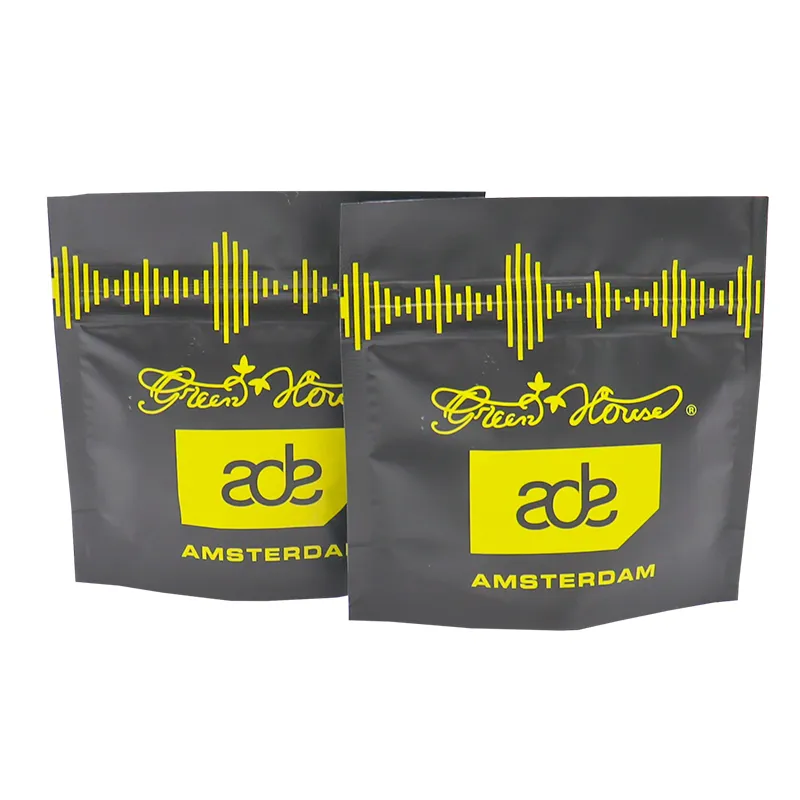
Digital printing suits several designs at small runs because it avoids cylinder setup. Gravure suits fewer designs at larger runs, where unit price falls with volume. Pick by design count and run size per design, not by the total across the order. Colour count and finishes also move the price: a matte or soft-touch finish, spot gloss or extra colours each add cost, and the quote should itemise them so you can drop what you do not need.
Plan label space early. Warning panels, universal symbols, batch fields and ingredient or THC statements need room, and some jurisdictions set minimum text sizes or panel placement. Leave a clear zone for a stick-on label or a printed field. Tamper-evident additions, such as a tear notch or a seal strip, are worth considering. Label rules vary by state and country, so check the current text locally before you finalise artwork.
Wholesale Child-Resistant Mylar Bags for Dispensaries: MOQ and Lead Time
Minimums depend on the print method and apply per design. The table shows the ordering path and what is fixed.
| Stage | What happens | Figure |
|---|---|---|
| Digital print order | Minimum per design | 1,000 pcs |
| Gravure print order | Minimum per design | 10,000 pcs |
| Artwork proof | You approve the proof | Starts the clock |
| Production | Printing, lamination, bag making | 7-15 days after approval |
| Shipping | Air, sea or express | Quoted with the order |
Only production time is fixed. Transit depends on the mode and destination, so no shipping time is promised up front.
Price follows material, size, print colours, quantity per design and extras such as zipper, valve or window. Digital printing allows several designs in one order with no cylinder cost, which suits launches and test runs. Gravure gives the lowest unit price on repeat orders.
Sampling, QC and Documents to Request
Run through this checklist before you release a deposit.
- Did the sample fit your product and feel right in the hand, including the closure?
- Did the seals and seams hold in a fill and leak check?
- Does the test report match the exact structure, closure and size you are buying?
- Do you have food-contact documents for the inner layer, if the bag holds edibles?
- Have you signed off the printed proof, including warning panels and colours?
- Is there a pre-shipment inspection, and what will it report?
Ask how inspection is done on the line. YLTPACK runs 11 quality checks before packing, and a comparable breakdown from any supplier shows where defects get caught.
Working with a Mylar Bag Manufacturer in China
A mylar bag manufacturer in China can supply custom printed mylar pouches with zipper, valve or window options. Ours are made in a cleanroom plant in Shenzhen, and a free sample of a similar bag is available; the buyer pays the courier. Incoterms offered are EXW, FOB, CIF or DDP, agreed on the proforma invoice. Payment is a 30% deposit to start production, with the 70% balance due before shipment.
FAQ
What is the MOQ for custom child resistant mylar bags?
Per design, 1,000 pcs for digital print and 10,000 pcs for gravure.
Does the zipper alone make a bag child-resistant?
No. The tested, filled package carries the result, so the report must match your exact bag build.
Can I mix several designs in one order?
Yes, with digital printing. The minimum applies to each design.
Are mylar bags recyclable?
No. Mylar and foil structures are not recyclable. A recyclable or compostable bag is a separate structure with a higher minimum of 30,000 pcs, and its documents should be requested for that exact build.
Next Step: Send a Brief for an Itemized Quote
Send the product and fill per bag, the bag type or a photo, size, quantity per design, number of designs, artwork or idea, extras, and the destination market, so the right child-resistant protocol can be matched. Write to [email protected] or WhatsApp +86 182 1944 5665. The quote comes back within one business day.