A great coffee bag does more than hold coffee. In commercial markets, it protects aroma, supports compliance, improves shelf impact, and directly affects repeat orders. For roasters, importers, and private-label buyers, the wrong bag can quietly raise complaints, returns, and packaging costs.
This guide explains how to make a coffee bag for bulk orders with a clear B2B focus. If you are sourcing custom printed coffee bag packaging for retail, wholesale, or export, the goal is simple: choose a structure that protects freshness, fits your filling line, and strengthens your brand without wasting budget.
Why the Right Coffee Bag Can Win or Lose a Sale
Coffee is highly sensitive to oxygen, moisture, light, and aroma loss. Freshly roasted beans also release CO2, which creates a unique packaging challenge that many standard flexible bags cannot handle well.
In real retail environments, packaging often decides the first sale before flavor decides the second. Buyers compare shelf appearance, label clarity, ease of opening, reseal performance, and whether the pack still feels premium after transport.
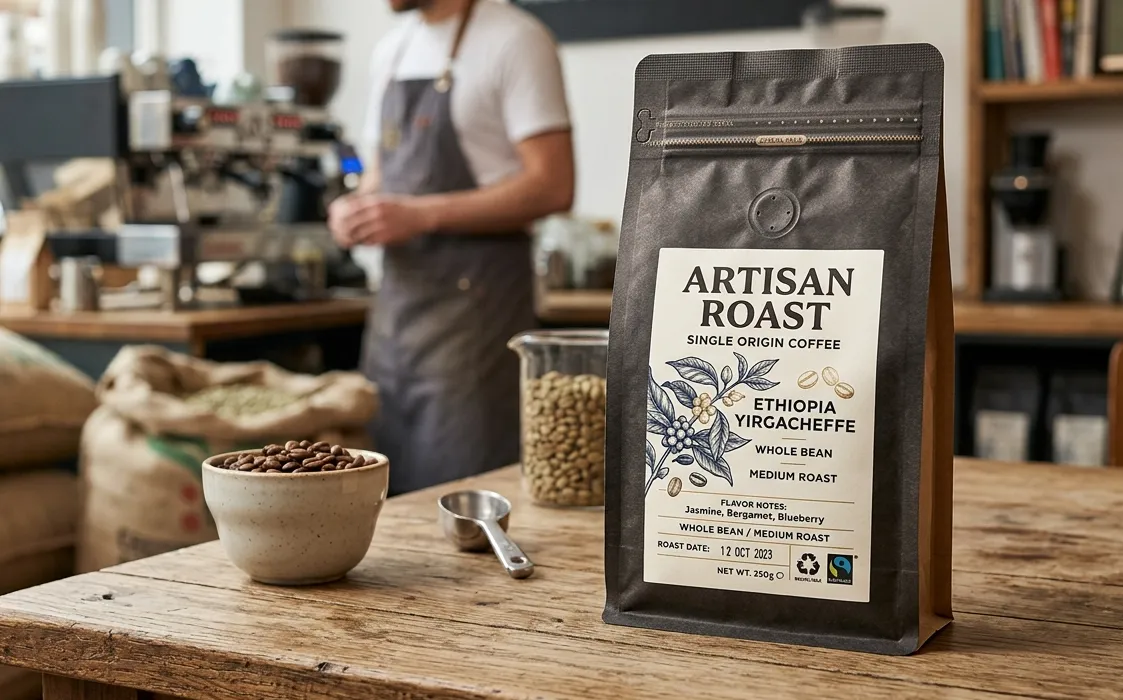
For B2B buyers, packaging also affects operational results. A poorly designed bag can reduce line speed, create seal failures, or increase shipping damage during palletized distribution.
The Main Problem: Most Coffee Bags Fail in Freshness, Branding, or Cost Control
Bulk buyers usually face the same trade-off: better barrier protection often costs more, while lower-cost materials may shorten shelf life or weaken brand perception. That is why many coffee bag projects underperform.
Common problems include the wrong valve choice, weak print registration, oversized bags, poor carton fit, and artwork that leaves no space for barcode or lot coding. On large production runs, small mistakes become expensive fast.
For example, a roaster exporting freshly roasted whole beans may need high oxygen barrier, a one-way degassing valve, and stable bottom geometry for shelf display. A fast-turn local ground coffee line may prioritize lower cost and efficient case packing instead.
How to Make a Coffee Bag Step by Step for Commercial Use
Define the Coffee Product and Shelf-Life Target
Start with the product itself. Whole bean coffee, ground coffee, roast level, residual gas release, distribution channel, and target shelf life all shape the packaging specification.
Whole beans typically need better aroma retention and often a valve after roasting. Ground coffee usually needs even stronger barrier protection because its larger surface area oxidizes faster.
Choose the Coffee Bag Format
The bag format affects filling efficiency, shelf impact, and freight density. In B2B procurement, format choice should match both the sales channel and packing equipment.
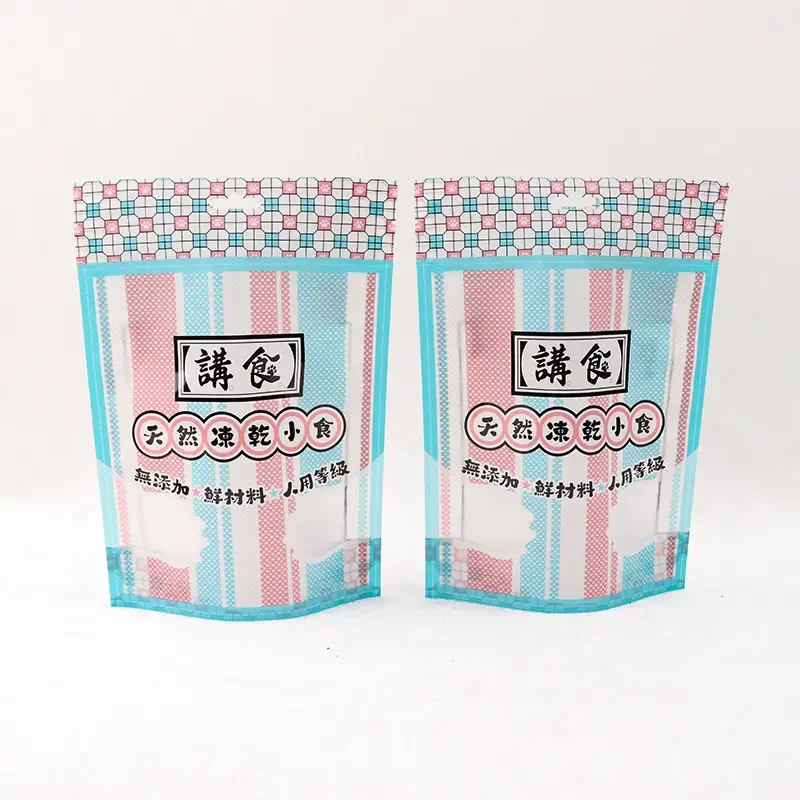
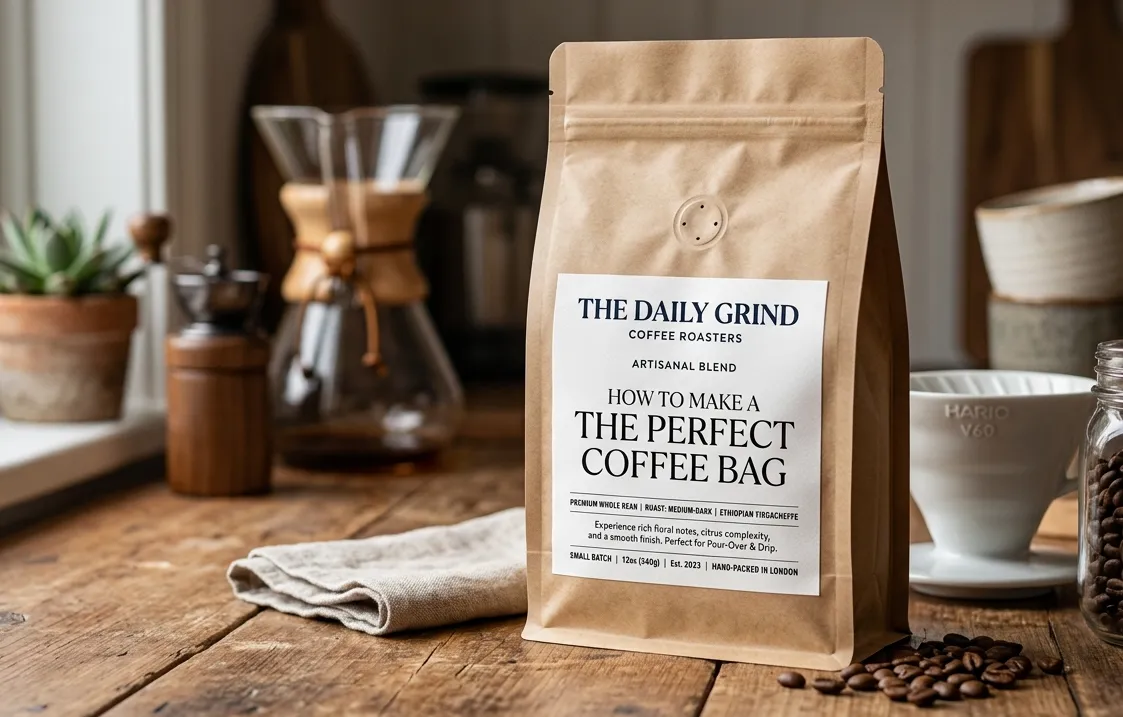
- Stand-up pouch: strong display impact for retail shelves
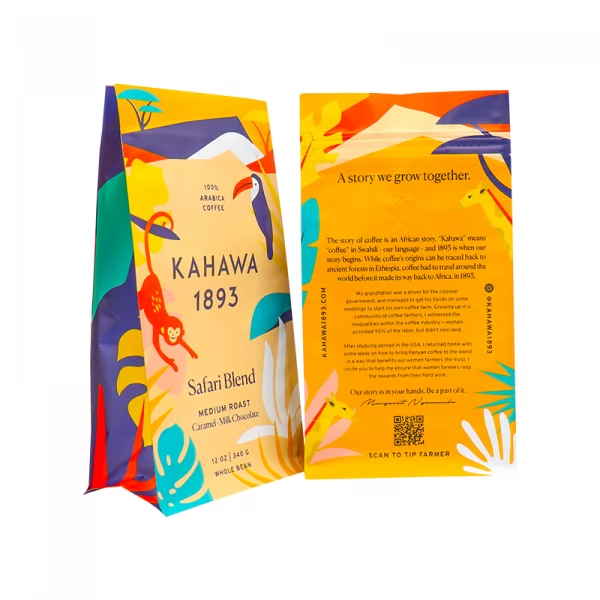
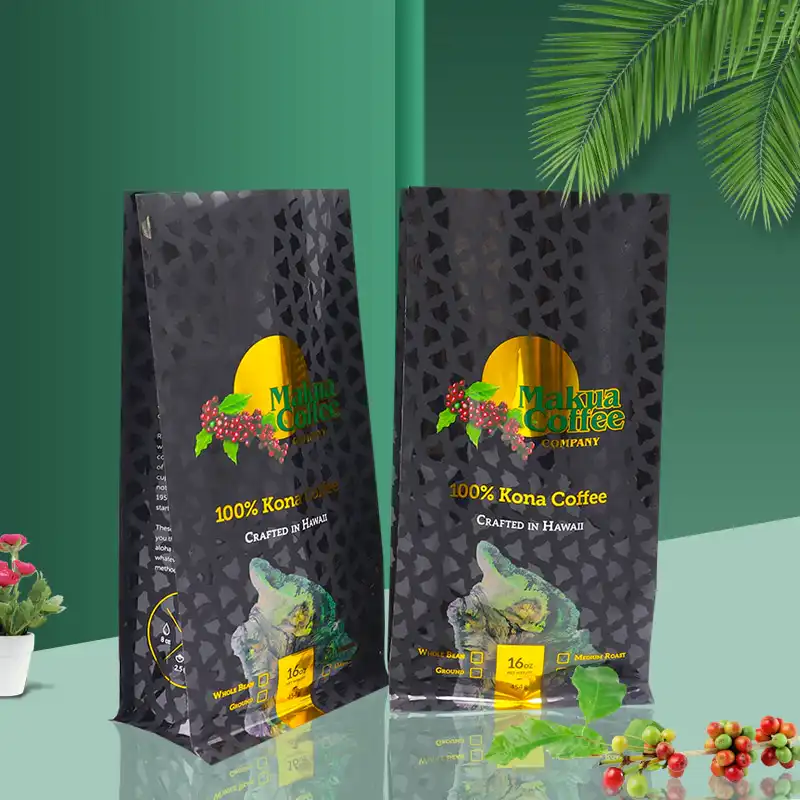
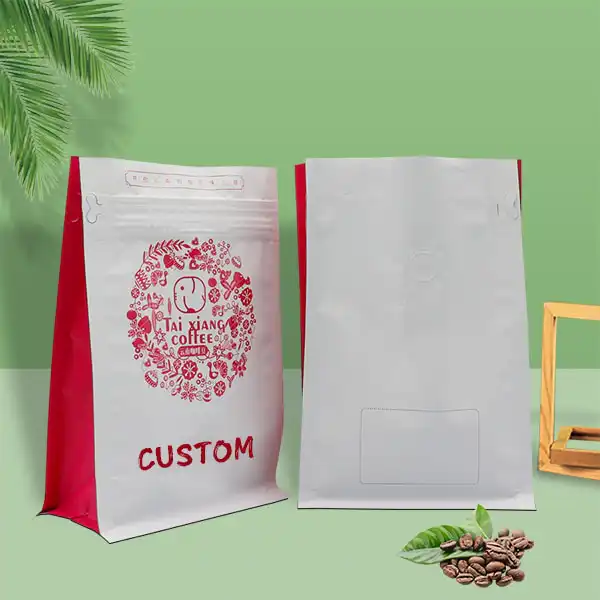
- Flat bottom bag: premium appearance and high stability
- Side gusset bag: efficient for traditional high-volume coffee packing
- Quad seal bag: strong structure for heavier fills and export use
Select the Barrier Material Structure
Material selection is where performance and cost are balanced. Commercial coffee bags often use laminated structures that combine printability, seal strength, and barrier protection.
Common layers include PET for stiffness and print support, PE for sealing, aluminum foil or metallized layers for barrier, and kraft paper for natural shelf appeal. The best structure depends on the real shelf-life target, not just the desired look.
Add a Degassing Valve if Needed
Freshly roasted coffee can release significant CO2 after packing. A one-way degassing valve lets gas escape while reducing oxygen entry, which helps prevent bag swelling and protects product quality.
Not every coffee product needs a valve. Instant coffee, some older-roast products, or short-cycle local programs may not require one, but freshly roasted whole bean coffee often does, especially for export timelines.
Decide on Closure and Convenience Features
Commercial buyers should choose features based on channel needs. Retail packs often use zippers or tear notches, while foodservice or wholesale packs may prioritize cost and filling speed.
- Zipper: reseal convenience for end users
- Tin tie: common on some traditional coffee formats
- Tear notch: easier opening
- Easy-open design: improves user experience
Build the Correct Bag Dimensions and Filling Specs
Bag width, bottom gusset, side gusset, seal area, and fill weight must match the product density and packing line. This is where experienced packaging suppliers add real value.
A bag that looks good on screen may still fail on the line if the fill funnel, sealing jaws, or case dimensions are wrong. Bulk orders should always be engineered around actual production and logistics conditions.
Create Custom Printed Coffee Bag Packaging Artwork
Artwork should support branding and compliance at the same time. A strong commercial layout includes logo placement, product identity, origin details, net weight, barcode area, ingredient or nutrition space where required, and a reserved zone for date or lot coding.
Print-ready files should also consider bleed, trapping, color consistency, and valve or zipper position. In B2B production, clean artwork setup reduces delays and color disputes.
Confirm Printing Method for Volume and Cost
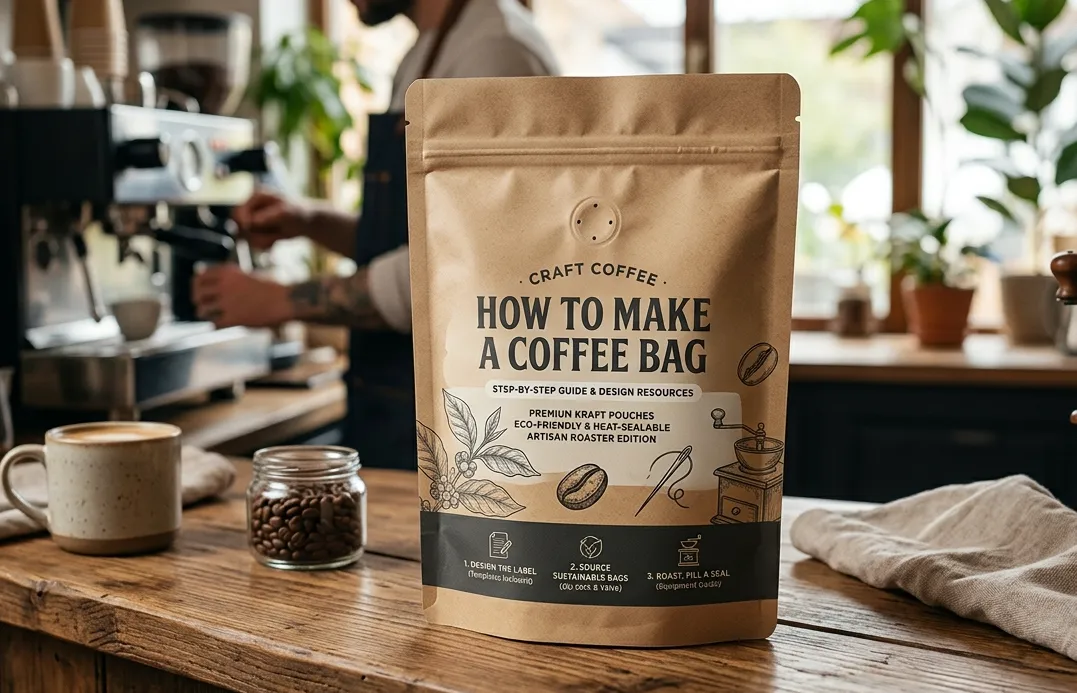
The two main methods are rotogravure printing and digital printing. Gravure is usually better for long runs and strong color consistency, while digital can support faster development and lower MOQ projects.
| Printing Method | Best For | MOQ | Lead Time | Cost Pattern |
|---|---|---|---|---|
| Rotogravure | Large-volume bulk orders | Higher | Longer setup | Lower unit cost at scale |
| Digital | Short runs and market testing | Lower | Faster | Higher unit cost |
Test Samples Before Mass Production
Sample validation is one of the most important steps in custom coffee packaging. Prototype testing helps confirm seal strength, print quality, valve function, size accuracy, and transit resistance.
Commercial buyers should test bags on their actual filling lines whenever possible. This reduces the risk of rejection, downtime, and rework after mass production starts.
Approve Production, Packing, and Delivery Plan
Before issuing a large PO, confirm quality standards, packaging method, carton count, palletization, lead time, and shipment terms. Good supply partners will also clarify traceability and batch control.
This matters especially for import programs, seasonal launches, and private-label coffee lines where delays can affect retail schedules.
Best Materials for Coffee Bag Manufacturing
Foil Coffee Bags
Foil laminates are still one of the most reliable choices for premium coffee and export programs. They provide strong protection against oxygen, moisture, and light, helping preserve aroma over longer distribution cycles.
Kraft Paper Coffee Bags
Kraft paper gives a natural look that many coffee brands like, but paper alone is not enough for roasted coffee protection. It is usually combined with an inner barrier layer to improve performance.
Recyclable Mono-Material Coffee Bags
Mono-material solutions, such as PE-based recyclable structures, are growing in commercial use. They can support sustainability goals, but buyers should validate barrier performance carefully before full conversion.
Compostable Coffee Bags
Compostable options can fit niche eco-focused product lines, but they are not automatically the best choice for every coffee program. Shelf-life limits, infrastructure, and cost must all be reviewed in advance.
Coffee Bag Formats Compared for Bulk Customization
| Bag Type | Best For | Key Advantage | Limitation | Common B2B Use |
|---|---|---|---|---|
| Stand-up pouch | Retail shelves | Strong display presence | Less boxy stacking | Specialty coffee brands |
| Flat bottom bag | Premium retail | High shelf stability | Higher cost | High-end roasted coffee |
| Side gusset bag | Traditional coffee packs | Efficient bulk filling | Less front panel area | Large-volume roasters |
| Quad seal bag | Heavy fills | Good structure and branding panels | More complex converting | Wholesale and export |
Material Structure Table for Coffee Freshness and Cost
| Material Structure | Barrier Level | Typical Use | Cost Level | Notes |
|---|---|---|---|---|
| PET/PE | Medium | Shorter shelf-life coffee | Low | Cost-effective for fast turnover |
| PET/AL/PE | Very high | Premium and export coffee | High | Excellent oxygen and light barrier |
| Kraft/VMPET/PE | High | Natural-look retail coffee | Medium | Good branding plus protection |
| MDO-PE/PE | Medium | Recyclable packaging programs | Medium | Sustainability-driven option |
| PLA-based compostable laminate | Low to medium | Niche eco lines | High | Requires careful shelf-life validation |
Common Mistakes When Making a Coffee Bag for Wholesale Orders
Choosing Material by Appearance Alone
A natural kraft look or premium matte finish may help shelf appeal, but appearance alone does not protect roasted coffee. If barrier performance is too weak, freshness drops and customer trust can follow.
Ignoring Filling Line Compatibility
Bag dimensions that do not match the filling machine can slow throughput and increase rejects. Seal area, valve position, and bag opening behavior all matter in large production runs.
Overlooking Labeling and Compliance Space
Many projects fail because the artwork leaves no clean space for barcode, date coding, regulatory information, or importer details. This can delay launch and force costly redesign.
Ordering Without Pilot Testing
Skipping pilot runs is risky. Small-scale validation helps identify sealing, registration, transport, and valve issues before they affect a container-level order.
How to Choose a Coffee Bag Supplier for Custom Bulk Production
Check Material and Printing Capabilities
Serious buyers should confirm whether the supplier can manage lamination, printing, bag converting, and feature integration consistently. Stable sourcing of valves, zippers, and barrier films matters for repeat orders.
Review Quality Control Standards
Ask about seal testing, dimensional tolerance, migration compliance, and traceability. A strong supplier should be able to explain its QC process clearly, not just promise good quality.
Compare MOQ, Lead Time, and Logistics Support
The right partner should fit your forecast, not force your inventory risk too high. Lead time, export experience, and delivery planning are especially important for seasonal coffee launches and international supply chains.
Request Samples and Performance Data
Real samples are essential. Buyers should review bag feel, print quality, seal performance, and if needed, test reports related to food-contact safety and production consistency.
YLTPACK is a packaging manufacturer established in 2005, focused on custom production based on customer requirements. The company offers free samples and holds certifications including ISO22000 and FDA, which can support commercial buyers seeking a more reliable sourcing process.
For bulk coffee bag projects, buyers can contact [email protected] to discuss specifications, structure selection, and custom printed coffee bag packaging options.
FAQ
How are coffee bags made commercially?
They are typically made by laminating barrier films, printing artwork, forming the bag shape, adding valves or zippers, and then sealing for bulk shipment. In B2B production, the process also includes specification review, sample approval, and quality checks before mass manufacturing.
What material is best for a coffee bag?
The best material depends on shelf-life target, channel, sustainability goal, and cost. For many roasted coffee programs, foil laminate structures remain a common choice because they provide strong oxygen, moisture, and light protection.
Do all coffee bags need a one-way degassing valve?
No. Freshly roasted whole bean coffee usually benefits most from a valve because it releases CO2 after packing, while some other coffee products may not require one depending on packing time and distribution cycle.
What is the best coffee bag style for retail shelves?
Flat bottom bags and stand-up pouches are often preferred for retail because they offer strong visibility, useful branding area, and good shelf presence. The final choice should still match filling efficiency and target price point.
Can custom printed coffee bag packaging be ordered in small MOQ volumes?
Yes. Some suppliers offer digital printing for lower MOQ projects, which is useful for new product launches or market testing, although the unit cost is usually higher than long-run gravure production.
How long does it take to produce custom coffee bags in bulk?
Lead time depends on the printing method, material structure, order quantity, and whether samples need approval first. Many bulk commercial orders take several weeks after artwork confirmation.
Are recyclable coffee bags suitable for roasted coffee?
They can be suitable for some programs, but the barrier level must be tested carefully. Buyers should validate shelf life, aroma retention, and machine performance before large-scale rollout.
Get the Right Coffee Bag Made for Your Brand
For coffee brands, roasters, importers, and private-label buyers, the best bag is not just attractive. It must protect freshness, run efficiently, support compliance, and make sense at scale.
If you are sourcing custom printed coffee bag packaging for bulk orders, a detailed spec review before production can save time and cost. YLTPACK can provide free samples, custom development based on your requirements, and support backed by ISO22000 and FDA standards.
To discuss your project or request a quote, contact [email protected].