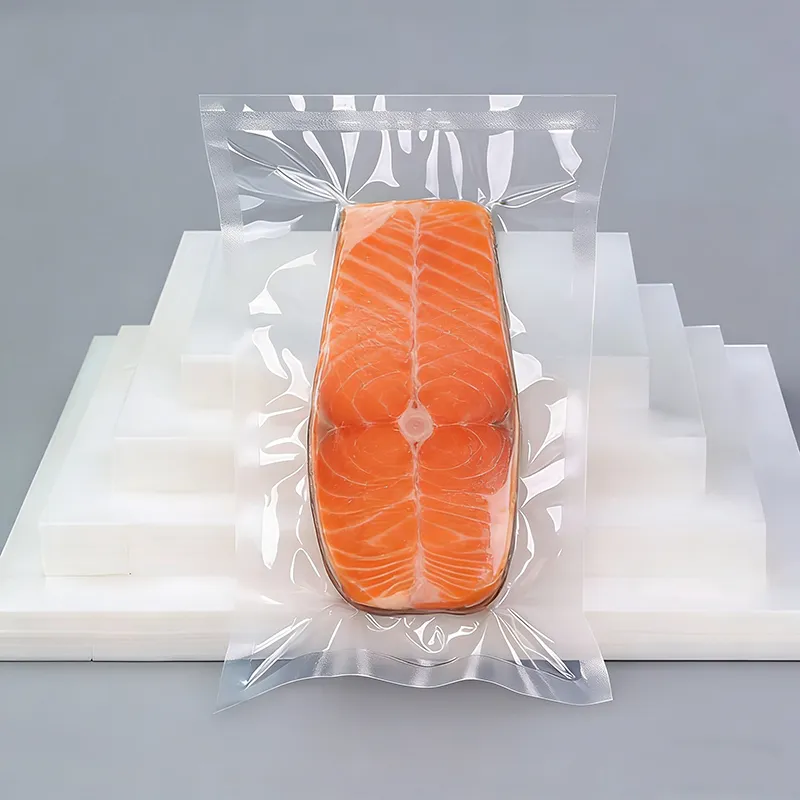
Imagine cutting your inventory spoilage rate by 70% and tripling product shelf life — without changing a single ingredient. That's the quiet power of vacuum sealing, and it's why bulk distributors, private-label brands, and food wholesalers are rethinking how they pack dry goods.
If you're sourcing packaging at scale, the question isn't whether vacuum sealing works. It's exactly how long your products will stay sellable — and what variables move that number up or down.
Quick Answer: Vacuum Sealed Dry Food Shelf Life at a Glance
Vacuum sealed dry food typically lasts 1 to 5 years in standard multilayer plastic bags. Add oxygen absorbers and a high-barrier film (like Mylar laminate), and certain staples — rice, beans, sugar — can stretch to 25–30 years.
The actual timeline depends on five things: bag material, oxygen absorber use, storage temperature, initial moisture content, and light exposure.
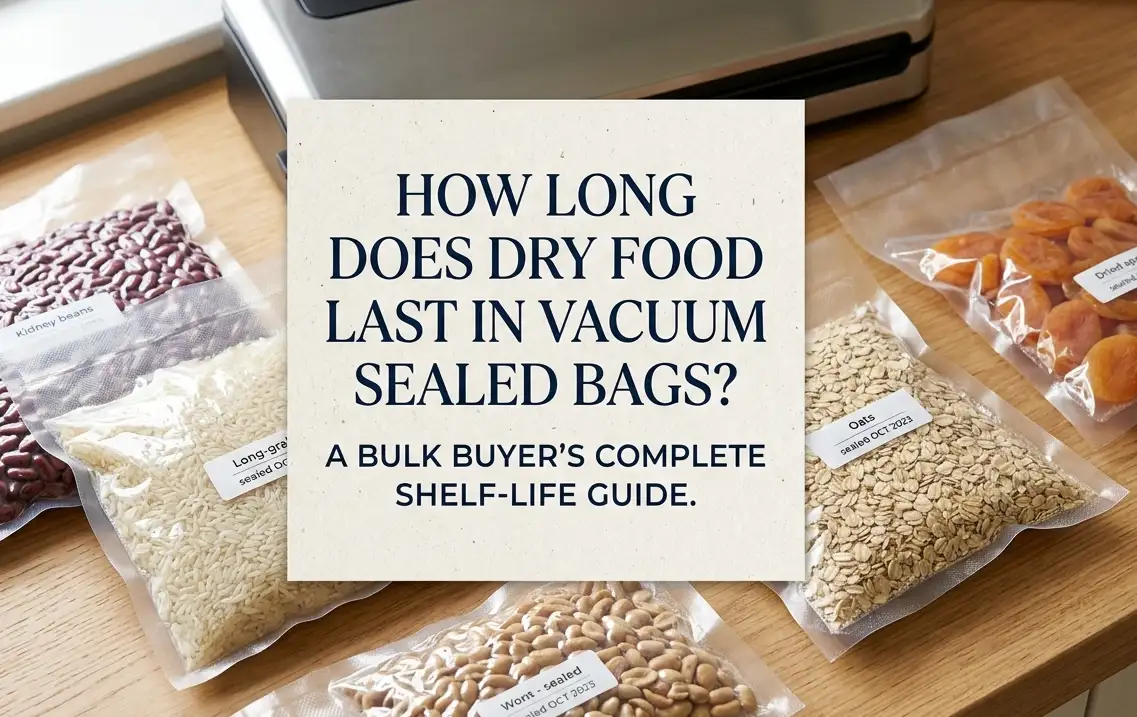
Comparison Table: Standard vs. Vacuum Sealed Storage
| Dry Food | Original Packaging | Vacuum Sealed | Vacuum + Oxygen Absorber |
|---|---|---|---|
| White Rice | 6–12 months | 1–2 years | 25–30 years |
| Pasta | 1–2 years | 2–3 years | 8–10 years |
| Flour (white) | 6–8 months | 1–2 years | 5–10 years |
| Dried Beans | 1–2 years | 2–3 years | 20–30 years |
| Sugar | 2 years | 5+ years | 10+ years |
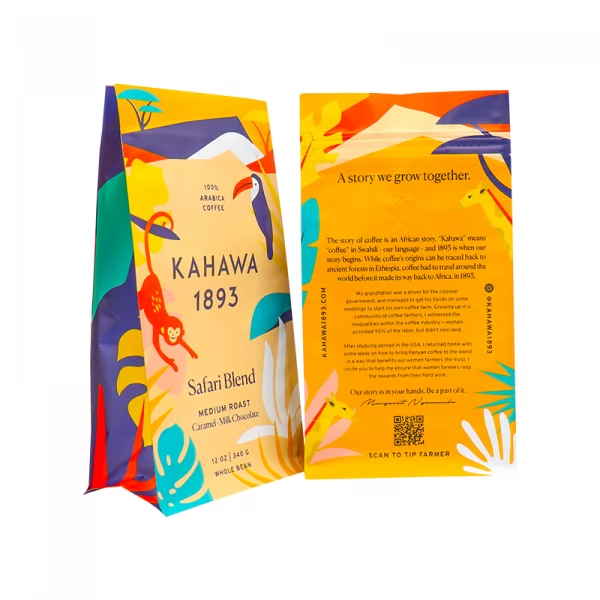
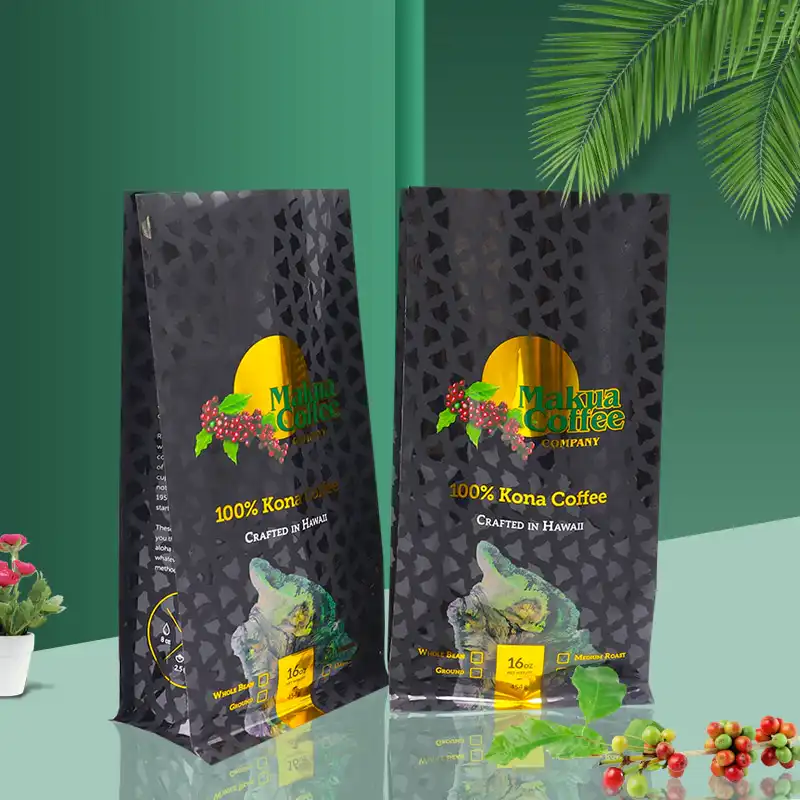
| Coffee Beans | 1–3 weeks (aroma) | 1–2 years | 2–3 years |
| Dry Pet Food | 12–18 months | 4–6 weeks after opening | 6–12 months |
How Vacuum Sealing Extends Dry Food Shelf Life
Spoilage in dry goods almost always traces back to three culprits: oxygen, moisture, and pests. Vacuum sealing tackles all three in one step.
By pulling air out of the bag, you slow oxidation, halt aerobic mold growth, and lock out the humidity that turns flour rancid or coffee stale. It's the most cost-efficient food preservation method for medium-term commercial storage.
The Science: Oxygen, Moisture, and Microbial Growth
Standard atmospheric air contains roughly 21% oxygen. Inside a properly vacuum sealed bag, that drops below 1% — and with an oxygen absorber, near 0%.
That matters because most spoilage organisms need oxygen to survive. Combined with a moisture content under 10% in the food itself, you've eliminated the conditions for microbial activity, rancidity, and insect hatching.
Shelf Life by Food Category
Grains, Rice, and Pasta
White rice, oats, and dry pasta are champions of long term food storage. With a vacuum + oxygen absorber combo, white rice routinely hits 25 years.
Brown rice is the exception. Its bran layer contains natural oils that go rancid in 1–2 years even when sealed — refrigeration helps, but it will never match white rice longevity.
Flour, Sugar, and Baking Staples
All-purpose flour vacuum sealed with an O₂ absorber lasts 5–10 years. Whole wheat flour, with higher oil content, tops out around 2–3 years before flavor degrades.
Sugar doesn't technically expire — but vacuum sealing prevents the rock-hard clumping that ruins commercial usability.
Legumes, Beans, and Lentils
Dried beans stay safe almost indefinitely when vacuum sealed with absorbers. After 10+ years they get harder and need longer cooking times, but nutritional value and food safety hold up well.
Coffee, Tea, and Spices
For coffee, there's a difference between shelf-stable and peak aroma. Vacuum sealed roasted beans stay safe for 1–2 years but lose flavor notes after 3–6 months.
Whole spices keep potency for 3–4 years sealed; ground spices degrade faster, around 1–2 years.
Snacks: Nuts, Seeds, Jerky, Dried Fruit
High-fat items require oxygen absorbers. Without them, almonds and walnuts go rancid within 6 months even sealed.
One almond exporter we worked with cut returns from a 9% oxidation-related rejection rate to under 1.5% by switching to 4-mil PA/PE bags with 300cc absorbers.
Pet Food and Animal Feed
Kibble's high fat content makes it spoilage-prone. Once opened, it goes stale in 4–6 weeks. Vacuum sealed retail packs hold 6–12 months — a strong selling point for pet food private labels seeking longer retail shelf life.
Key Factors That Affect Vacuum Sealed Shelf Life
1. Bag Quality and Material Thickness
Single-layer poly bags are cheap but porous to oxygen over time. Multilayer PA/PE (nylon/polyethylene) structures provide a true gas barrier.
- 3-mil: Short-term retail (under 12 months)
- 4-mil: Standard bulk distribution (1–3 years)
- 7-mil: Heavy or long-term storage (3+ years)
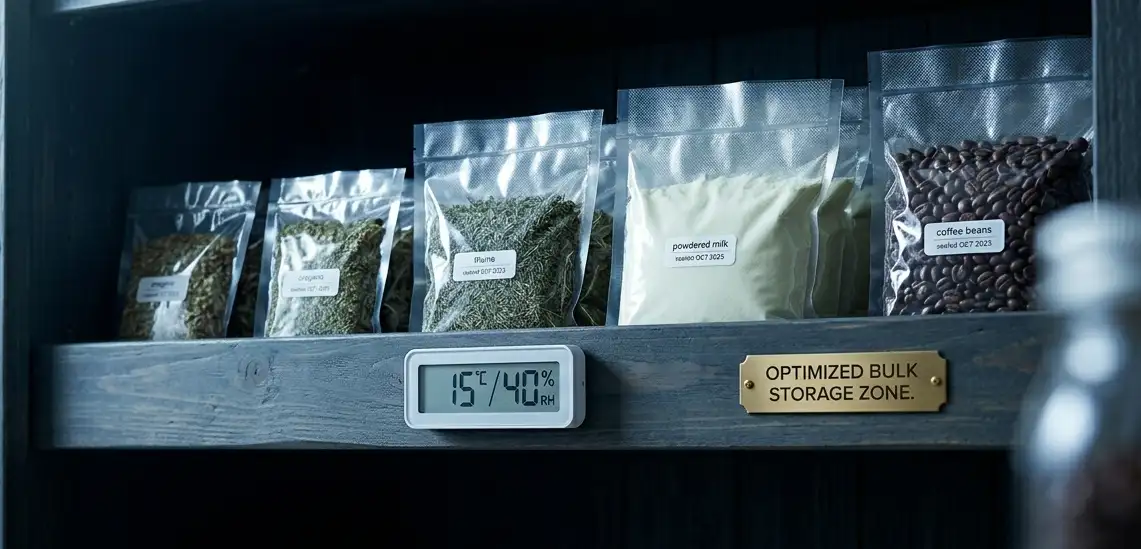
2. Use of Oxygen Absorbers for Dry Goods
Match absorber size to bag volume. A 100cc absorber suits a quart bag; a gallon needs 300–500cc; #10-can equivalents need 1500–2000cc.
Vacuum + absorber together typically extends shelf life 4–10x over vacuum alone.
3. Storage Temperature and Humidity
Every 18°F (10°C) increase roughly halves shelf life. Aim for 50–70°F with humidity under 15%.
4. Initial Food Quality and Moisture Content
Garbage in, garbage out. Sealing flour with 14% moisture invites mold even in a vacuum. Verify moisture is under 10% before sealing.
5. Light Exposure
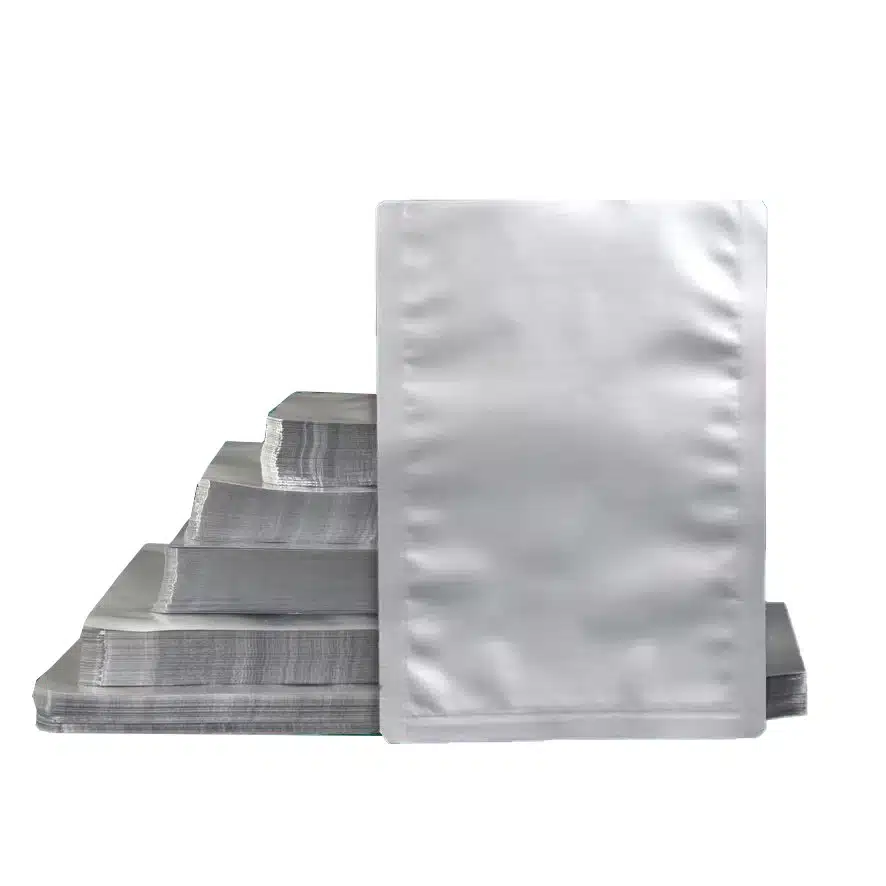
UV degrades fats and pigments. Metallized or opaque bags consistently outperform clear ones for long-term SKUs.
Storage Condition Impact on Shelf Life
| Condition | Shelf Life Multiplier |
|---|---|
| 50°F, dark, low humidity | 1.0x (baseline maximum) |
| 70°F, dark | 0.6x |
| 90°F, light exposure | 0.2x |
| Fluctuating temp/humidity | 0.3x |
Vacuum Sealed Bags vs. Mylar Bags vs. #10 Cans
Each option fits a different procurement profile. Cost, durability, and target shelf life dictate the choice.
Procurement Comparison Table
| Packaging | Avg. Shelf Life | Cost/Unit (Bulk) | Best For |
|---|---|---|---|
| Vacuum Sealed Bag | 2–5 years | $0.05–$0.30 | Retail, resale, fast turnover inventory |
| Mylar + Vacuum + O₂ Absorber | 20–30 years | $0.40–$1.20 | Emergency food, prepper brands |
| #10 Can | 25–30 years | $2.00–$5.00 | Premium long-storage SKUs |
Real-World Examples and Case Data
Case 1 — Bulk Rice Distributor: A Southeast Asian importer switched from woven polypropylene to 4-mil vacuum sealed bags. Inventory turn extended from 18 months to 36 months, cutting annual write-offs by $42,000.
Case 2 — Specialty Coffee Roaster: Adding one-way valve vacuum bags reduced freshness-related returns by 40% across a 12-month period.
Research Reference: A long-term storage study from Brigham Young University tested wheat, rice, and beans stored 30+ years in oxygen-free packaging. Most samples remained safe and palatable, confirming that with proper sealing and absorbers, dry staples can far outlast typical "best by" estimates.
Best Practices for Bulk Vacuum Sealing Operations
Choosing the Right Vacuum Bag Supplier
Verify food-grade certifications before placing orders. At minimum, look for FDA compliance and ISO 22000 — and ideally BRC for export markets.
YLTPACK, established in 2005, manufactures food-grade vacuum bags certified to ISO 22000 and FDA standards. We support custom sizing, printed branding, and offer free samples for qualified bulk buyers evaluating our materials.
Sealing Equipment for Commercial Volume
Chamber sealers are the workhorse for B2B operations — handling 200–600 bags per hour with consistent vacuum levels. External sealers suit small-batch or pilot runs but struggle with high throughput.
Quality Control Checklist
- Seal width minimum 8mm for bulk bags
- Burst pressure testing on random samples
- Vacuum retention check at 24 and 72 hours
- Dye penetration or water bath leak detection
- Oxygen level verification (target <1%)
Signs Vacuum Sealed Dry Food Has Gone Bad
A puffed or loose bag is the first red flag — it means the seal failed or microbial activity is producing gas. Either way, discard the product.
Other warning signs: rancid or sour smell on opening, visible mold, discoloration, or off-textures. Note that "best by" dates are quality benchmarks, not safety cutoffs — many sealed staples remain safe well past printed dates if stored correctly.
FAQ: Vacuum Sealed Dry Food Storage
Can vacuum sealed dry food last 25 years?
Yes — but only with oxygen absorbers inside high-barrier Mylar or laminate bags. Standard plastic vacuum bags alone typically max out at 3–5 years because oxygen slowly permeates the film.
Do I need oxygen absorbers if I vacuum seal?
For storage under 1 year, vacuum sealing alone is fine. For long term food storage of 5+ years, absorbers are essential — they remove residual oxygen the pump can't reach and counteract slow gas permeation through the bag wall.
How long does vacuum sealed flour last?
White flour lasts 1–2 years in plastic vacuum bags and 5–10 years with an oxygen absorber. Whole wheat flour lasts roughly half as long because of its oil content.
Can I vacuum seal dry pet food for resale?
Yes. Use food-grade multilayer bags, include manufacturing date and lot codes, and follow regional pet food labeling regulations (AAFCO in the U.S., FEDIAF in the EU).
What's the best bag thickness for bulk dry goods?
4-mil PA/PE is the sweet spot for most bulk operations. Step up to 7-mil for sharp-edged products (pasta, kibble) or storage beyond three years.
Does vacuum sealing kill bugs or eggs in flour and grain?
No. Vacuum sealing slows pest activity but doesn't kill embedded eggs. Freeze grain at 0°F for 4–7 days before sealing to eliminate any larvae or eggs.
Get a Wholesale Quote on Food-Grade Vacuum Sealed Bags
Whether you're packaging coffee, rice, pet food, or specialty snacks, the right bag spec is the difference between profitable inventory and costly returns.
YLTPACK has manufactured food-grade flexible packaging since 2005, serving bulk buyers across North America, Europe, and Asia. Every product is built to ISO 22000 and FDA standards and customized to your dimensions, thickness, and printed branding.
- Free sample pack for qualified bulk buyers
- Custom sizes, mil thickness, and printed branding
- Competitive MOQs and reliable lead times
- Technical support on absorber pairing and shelf-life testing
Email procurement inquiries to [email protected] and request your free sample today. Tell us your product, target shelf life, and order volume — we'll recommend the optimal bag spec and quote within 24 hours.