If your business buys food by the case, pallet, or container, poor storage is not a small mistake—it is a direct hit to margin, food safety, and customer trust. Vacuum sealed bags can extend shelf life, reduce freezer burn, protect product quality, and make bulk inventory easier to manage.
For food manufacturers, distributors, restaurants, catering companies, meal-prep brands, hotels, institutional kitchens, and wholesale buyers, vacuum sealing is more than packaging. It is part of a practical food preservation strategy that affects purchasing cycles, cold-chain performance, and waste reduction.
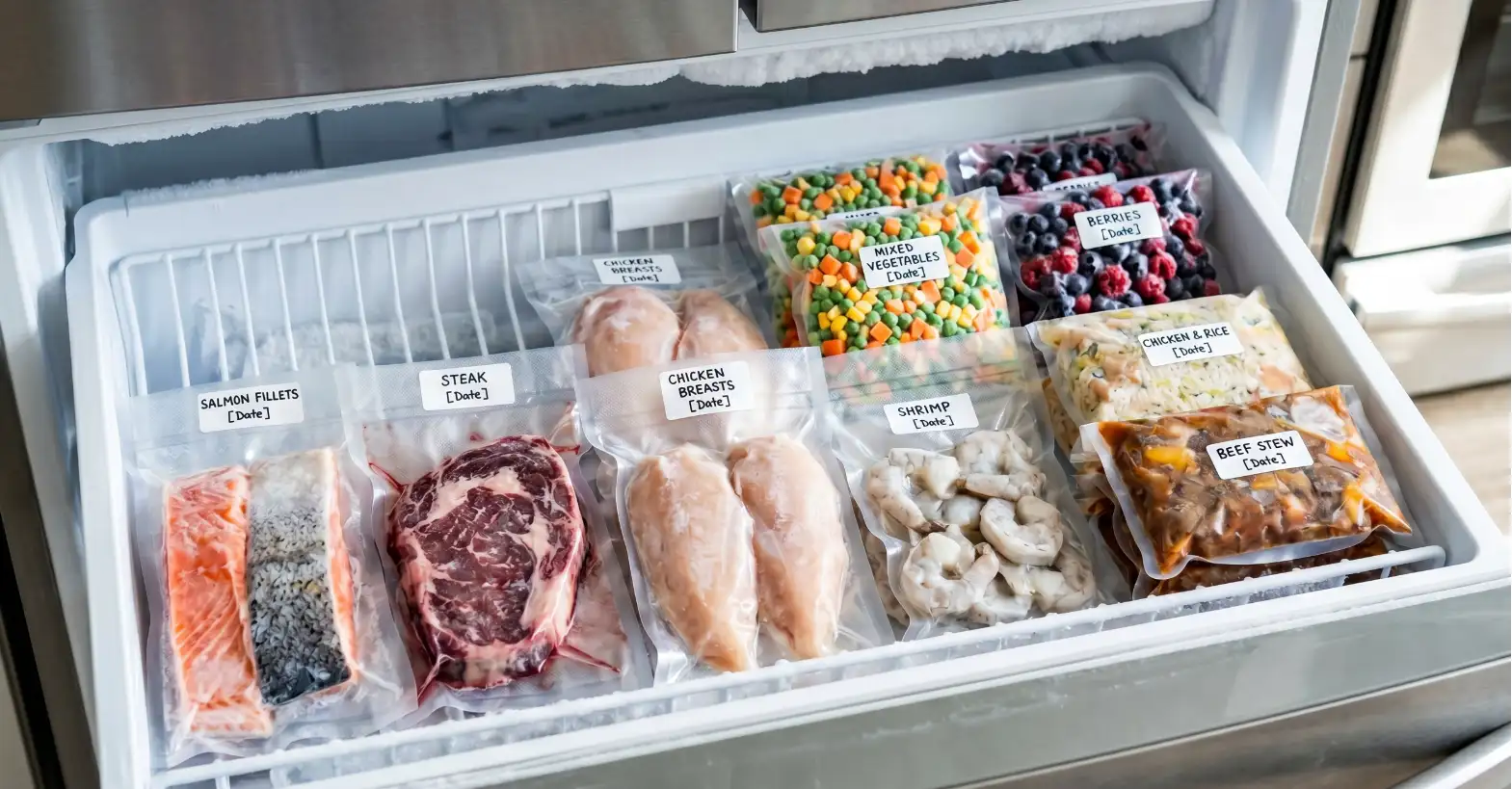
The Real Cost of Poor Food Storage at Scale
In bulk food operations, even a small percentage of spoilage can become expensive. A distributor storing thousands of pounds of frozen meat, seafood, cheese, or prepared meals needs packaging that protects inventory through receiving, storage, picking, transport, and final use.
According to widely referenced food waste data from the USDA and FAO, a significant share of food loss happens during storage, handling, and distribution. For commercial buyers, the problem is not only lost product value; it also includes labor, disposal, emergency reorders, customer complaints, and inconsistent product quality.
Why Shelf Life Matters for Bulk Buyers
Vacuum sealed food shelf life matters because it helps buyers plan larger orders with more confidence. Better packaging can support lower unit costs, fewer stockouts, more stable menus, and stronger inventory rotation.
For a restaurant group, central kitchen, or regional distributor, vacuum packing can also reduce packaging volume and freezer burn. That means cleaner storage, better portion control, and less product rejected before use.
Quick Answer
Vacuum sealed food can typically last 2 to 5 times longer than food stored in conventional packaging, depending on food type, storage temperature, moisture level, fat content, handling conditions, and bag material.
However, vacuum sealing does not make perishable food shelf-stable by itself. Meat, poultry, seafood, dairy, and prepared foods still require proper refrigeration, freezing, drying, curing, or commercial processing.
Vacuum Sealed Food Shelf Life at a Glance
The following table gives practical shelf life ranges for bulk procurement planning. Actual results depend on sanitation, product freshness at packing, seal quality, temperature stability, and local food safety requirements.
| Food Category | Normal Storage Shelf Life | Vacuum Sealed Shelf Life | Best Storage Method | Notes for Bulk Procurement |
|---|---|---|---|---|
| Fresh beef | 3 to 5 days refrigerated | 1 to 2 weeks refrigerated | Refrigeration or freezing | Useful for portion control and wholesale meat distribution |
| Frozen beef | 6 to 12 months | 2 to 3 years | Freezer storage | Reduces freezer burn in long term food storage |
| Fresh poultry | 1 to 2 days refrigerated | Up to 1 week refrigerated | Refrigeration or freezing | Requires strict cold-chain control |
| Frozen poultry | 9 to 12 months | 2 to 3 years | Freezer storage | Common for foodservice bulk purchasing |
| Fresh fish | 1 to 2 days refrigerated | 4 to 7 days refrigerated | Refrigeration or freezing | High-risk product; temperature control is critical |
| Frozen fish | 3 to 8 months | 1 to 2 years | Freezer storage | Vacuum packing helps preserve texture and reduce drip loss |
| Cheese | 1 to 4 weeks refrigerated | 4 to 8 months refrigerated | Refrigeration | Works well for hard and semi-hard cheeses |
| Dry rice | 6 to 12 months | 1 to 2 years | Cool dry storage | Longer with oxygen absorbers and moisture control |
| Coffee beans | 2 to 4 weeks after opening | 6 to 12 months | Cool dry storage or freezing | Protects aroma and oxidation-sensitive oils |
| Dehydrated foods | 6 to 12 months | 1 to 5 years | Cool dry storage | Best for emergency supply, industrial kitchens, and long term food storage programs |
What Is Vacuum Sealing and Why Does It Extend Shelf Life?
Vacuum sealing removes most air from the package before the bag is heat sealed. By reducing oxygen exposure, vacuum packing slows oxidation, moisture loss, freezer burn, and the growth of many spoilage organisms.
For bulk buyers, the main value is consistency. Products packed in high-quality vacuum sealed bags are easier to stack, label, freeze, transport, and rotate through inventory.
What Vacuum Sealing Can Help Prevent
- Freezer burn on meat, seafood, poultry, and prepared meals
- Oxidation and rancidity in fatty foods, nuts, coffee, and cheese
- Moisture loss during freezer storage times
- Flavor degradation caused by air exposure
- Cross-contamination during storage and transport
- Packaging volume waste in bulk storage areas
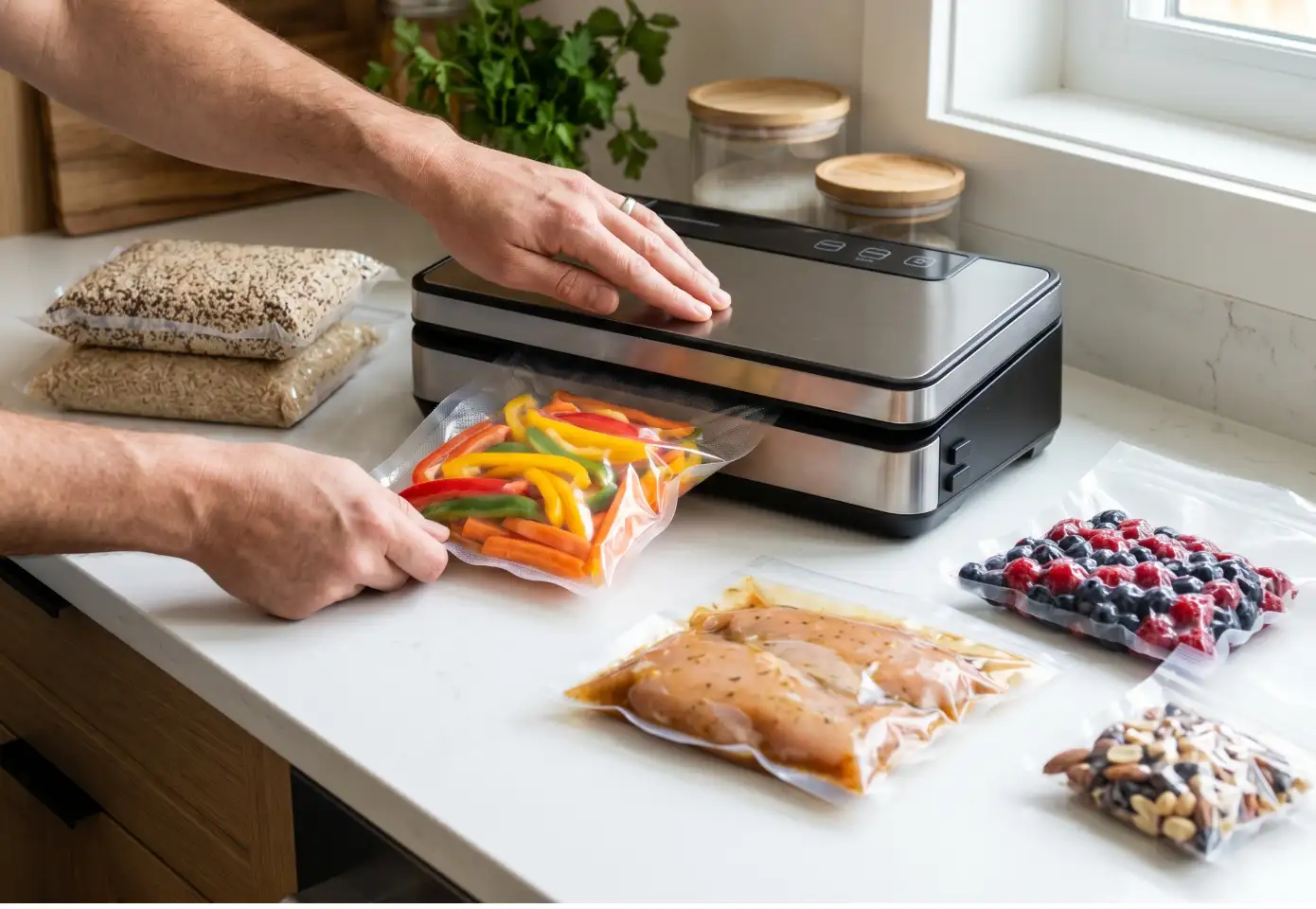
What Vacuum Sealing Cannot Prevent
Vacuum sealing does not sterilize food. It does not eliminate bacteria, pathogens, spores, or toxins that may already be present.
Perishable vacuum sealed food must still be stored at safe temperatures. Refrigerated foods should generally stay at 40°F or below, and frozen foods should remain at 0°F or below, following applicable food safety regulations and internal HACCP procedures.
Key Factors That Determine Vacuum Sealed Food Shelf Life
No packaging material can deliver the same shelf life for every food. Vacuum sealed food shelf life depends on the product, process, and storage environment.
Storage Temperature
Temperature is the most important factor in food preservation. A good vacuum seal helps, but unstable temperatures can quickly shorten shelf life and increase food safety risk.
| Storage Condition | Typical Temperature | Shelf Life Impact | Best Use Case |
|---|---|---|---|
| Room temperature | 68°F to 77°F / 20°C to 25°C | Suitable only for dry, shelf-stable foods | Rice, flour, coffee, dried fruit |
| Refrigeration | 32°F to 40°F / 0°C to 4°C | Extends short-term storage for perishables | Meat, cheese, prepared foods |
| Freezing | 0°F / -18°C or below | Best for long-term preservation | Meat, seafood, poultry, bulk meals |
| Deep freezing | -10°F to -20°F / -23°C to -29°C | Maximizes freezer storage times | Industrial and wholesale frozen inventory |
Food Moisture Content
High-moisture foods spoil faster and require refrigeration or freezing. This includes fresh meat, poultry, seafood, cooked meals, sauces, and soft cheeses.
Low-moisture foods such as rice, beans, pasta, dehydrated vegetables, and powdered ingredients are better suited for long term food storage. Even then, moisture control is essential because trapped humidity can cause clumping, mold, or quality loss.
Food Type and Fat Content
Fatty foods such as salmon, pork, nuts, seeds, and coffee can become rancid over time. Vacuum sealing slows oxygen exposure, but it does not stop natural quality changes forever.
For fatty products, freezing is often the best option for extended storage. Buyers should also evaluate oxygen barrier performance when selecting vacuum sealed bags for these items.
Packaging Quality
For commercial and bulk procurement, shelf life depends heavily on bag thickness, oxygen transmission rate, moisture barrier, seal strength, and puncture resistance. A weak bag can fail long before the food reaches its expected shelf life.
This is where working with a professional packaging supplier matters. YLTPACK, established in 2005, manufactures customizable food packaging solutions for bulk buyers and supports food businesses with ISO22000 and FDA-related compliance requirements.
Vacuum Sealed Meat Shelf Life
Meat is one of the most common categories for vacuum sealing because it is expensive, perishable, and highly sensitive to freezer burn. Proper vacuum packing helps preserve color, texture, flavor, and usable yield.
| Meat Type | Refrigerated Without Vacuum Seal | Refrigerated Vacuum Sealed | Frozen Vacuum Sealed |
|---|---|---|---|
| Beef steaks | 3 to 5 days | 1 to 2 weeks | 2 to 3 years |
| Ground beef | 1 to 2 days | Up to 1 week | 1 to 2 years |
| Pork chops | 3 to 5 days | 1 to 2 weeks | 2 to 3 years |
| Lamb | 3 to 5 days | 1 to 2 weeks | 2 to 3 years |
| Processed sausage | About 1 week | 2 to 3 weeks | 1 to 2 years |
Bulk Procurement Example
A restaurant group purchasing 500 kg of beef per month may hold part of its inventory for seasonal demand, banquet events, or menu planning. If the beef is frozen in poor packaging, freezer burn can reduce usable yield and make trimming necessary.
By using high-barrier vacuum sealed bags with strong seals and proper thickness, the same operation can reduce freezer burn losses, improve portion control, and keep product quality more consistent after 3 to 6 months of storage.
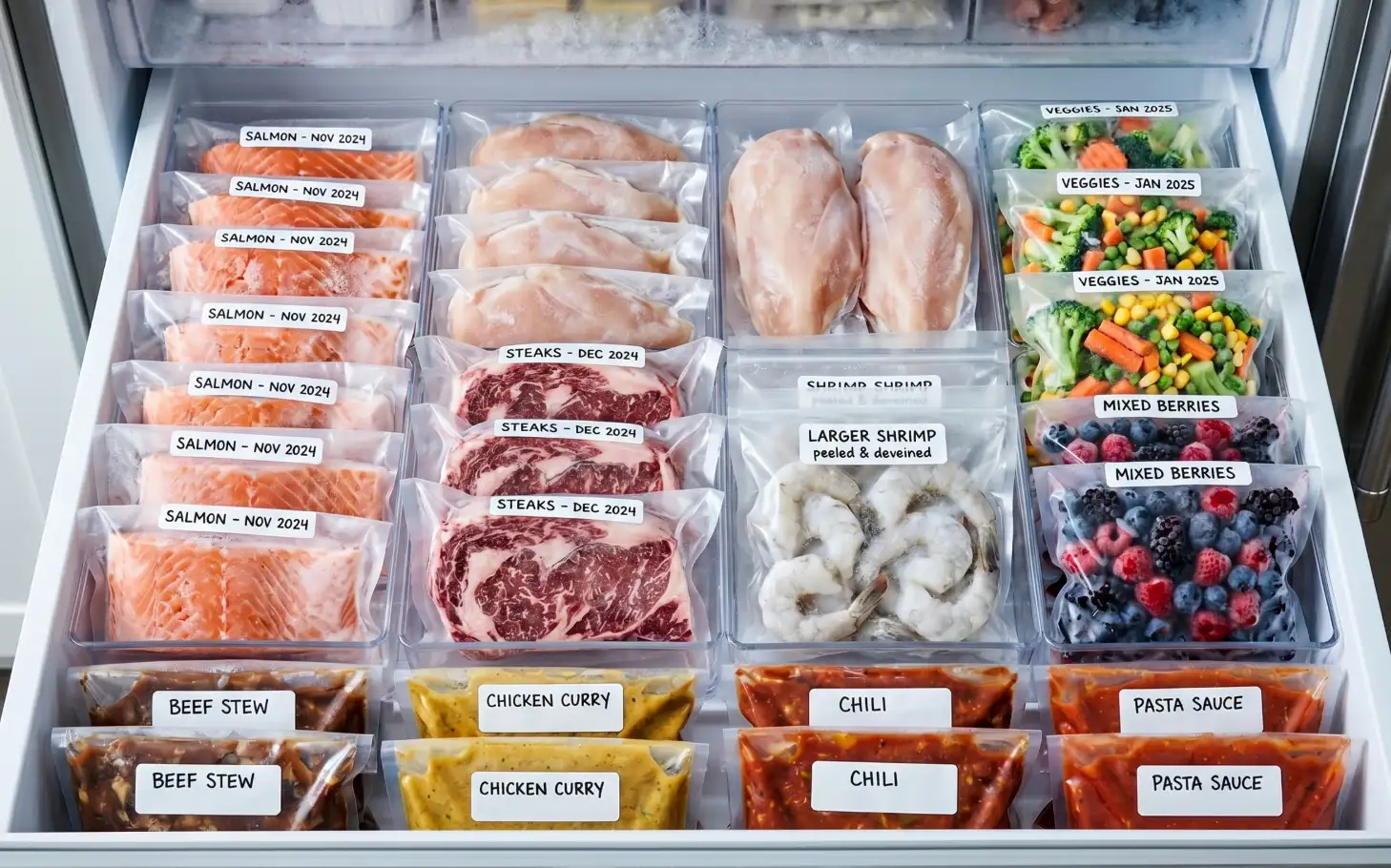
Operational Note
For wholesale meat storage, vacuum sealing should be combined with date coding, batch tracking, and FIFO inventory rotation. Businesses should also check that seals remain intact after freezing, handling, and case packing.
Vacuum Sealed Poultry Shelf Life
Poultry has a shorter refrigerated shelf life than many other proteins. For bulk buyers, vacuum sealing is useful, but it must be paired with strict cold-chain control.
| Poultry Type | Refrigerated Without Vacuum Seal | Refrigerated Vacuum Sealed | Frozen Vacuum Sealed |
|---|---|---|---|
| Chicken breast | 1 to 2 days | Up to 1 week | 2 to 3 years |
| Whole chicken | 1 to 2 days | Up to 1 week | 2 to 3 years |
| Turkey portions | 1 to 2 days | Up to 1 week | 2 to 3 years |
| Cooked poultry | 3 to 4 days | 1 to 2 weeks | 6 to 12 months |
Food Safety Warning
Vacuum sealed poultry must always be refrigerated or frozen. It should never be stored at room temperature unless it has been commercially processed and validated as shelf-stable.
For foodservice operations, poultry should be received cold, packed under sanitary conditions, labeled clearly, and stored immediately. Any temperature abuse can shorten shelf life and increase risk.
Vacuum Sealed Seafood Shelf Life
Seafood is highly perishable and often high value, making packaging performance especially important. Vacuum packing can help preserve appearance, reduce drip loss, and extend frozen storage times during distribution.
| Seafood Type | Refrigerated Without Vacuum Seal | Refrigerated Vacuum Sealed | Frozen Vacuum Sealed |
|---|---|---|---|
| White fish | 1 to 2 days | 4 to 7 days | 1 to 2 years |
| Salmon | 1 to 2 days | 4 to 7 days | 1 to 2 years |
| Shrimp | 1 to 2 days | 4 to 7 days | 1 to 2 years |
| Scallops | 1 to 2 days | 4 to 7 days | About 1 year |
| Smoked fish | 1 to 2 weeks | 3 to 6 weeks | 6 to 12 months |
Bulk Seafood Example
Seafood distributors often use vacuum packing for export cartons, retail-ready portions, and foodservice packs. The goal is not only longer shelf life, but also better visual quality when the product reaches the buyer.
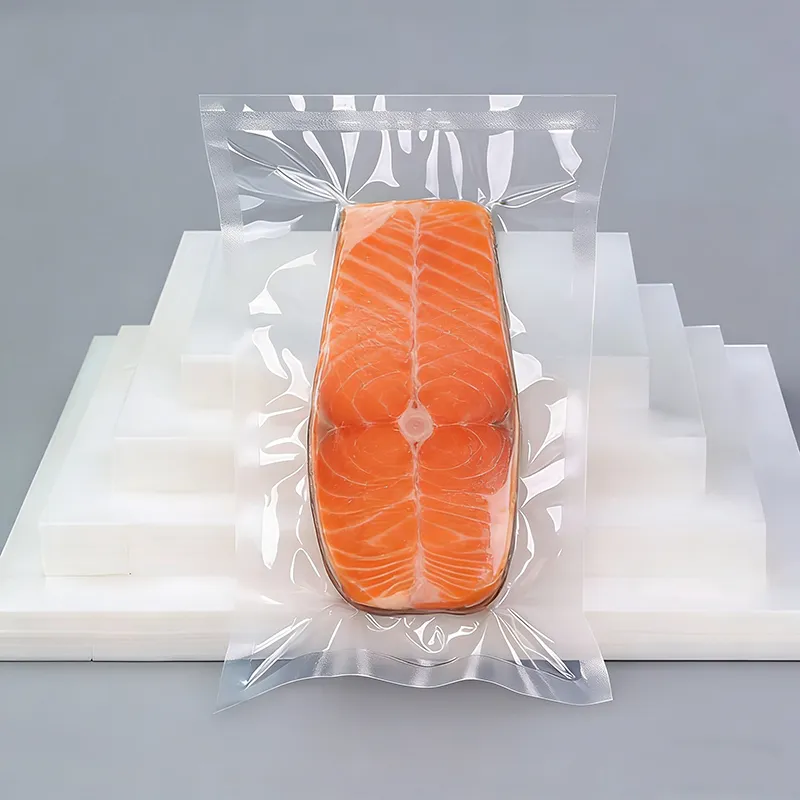
For example, frozen vacuum sealed salmon portions can better resist dehydration and surface ice crystals compared with loosely wrapped product. This supports more predictable freezer storage times and fewer quality claims.
Critical Note for Reduced Oxygen Packaging
Vacuum sealed fish requires strict temperature control because certain bacteria can grow in low-oxygen environments if the product is mishandled. Businesses should follow FDA seafood guidance, local regulations, and validated processing procedures.
Vacuum Sealed Cheese and Dairy Shelf Life
Cheese is well suited for vacuum sealing, especially hard and semi-hard varieties used by restaurants, hotels, distributors, and food processors. Vacuum sealed blocks help reduce mold growth, drying, and odor transfer.
| Product | Normal Refrigerated Shelf Life | Vacuum Sealed Refrigerated Shelf Life | Notes |
|---|---|---|---|
| Hard cheese | 4 to 6 weeks | 6 to 12 months | Excellent for wholesale blocks |
| Semi-hard cheese | 3 to 4 weeks | 4 to 8 months | Common for foodservice supply |
| Soft cheese | 1 to 2 weeks | 2 to 4 weeks | Higher spoilage risk |
| Butter | 1 to 3 months | 6 to 12 months | Can also be frozen |
| Powdered milk | 6 to 12 months | 1 to 2 years | Best with dry storage controls |
Best Commercial Use Case
Vacuum sealed cheese blocks are ideal for hotels, restaurants, catering operations, commissary kitchens, and distributors that buy in bulk but portion products over time.
For sliced or shredded cheese, buyers should evaluate whether vacuum sealing, modified atmosphere packaging, or resealable packaging better fits the distribution model and customer use pattern.
Vacuum Sealed Dry Goods Shelf Life
Dry goods are some of the best candidates for long term food storage when moisture is controlled. Vacuum sealing protects against oxygen exposure, pests, odor transfer, and warehouse contamination.
| Dry Food | Standard Shelf Life | Vacuum Sealed Shelf Life | With Oxygen Absorbers | Storage Recommendation |
|---|---|---|---|---|
| White rice | 6 to 12 months | 1 to 2 years | 5 to 10+ years | Cool, dry warehouse |
| Pasta | 1 to 2 years | 2 to 3 years | 5+ years | Avoid moisture |
| Flour | 6 to 8 months | 1 to 2 years | 2 to 5 years | Freeze first when pest risk is high |
| Beans | 1 to 2 years | 3 to 5 years | 10+ years | Best for long term food storage |
| Oats | 6 to 12 months | 1 to 2 years | 5+ years | Use moisture barrier bags |
| Sugar | Indefinite if dry | Indefinite if dry | Not required | Keep away from humidity |
Procurement Note
For bulk dry goods, vacuum sealing works best when combined with moisture control, pest prevention, palletized storage, and warehouse temperature monitoring. Products should be packed dry and stored away from direct sunlight and high humidity.
For very long storage programs, oxygen absorbers may be used with suitable barrier packaging. Buyers should confirm compatibility between the bag material, absorber, product moisture level, and target shelf life.
Vacuum Sealed Prepared Foods and Ready Meals
Meal-prep companies, central kitchens, catering operations, and institutional food programs use vacuum sealed bags to standardize portions and reduce spoilage. This is especially useful when production is centralized but meals are distributed to multiple locations.
| Prepared Food Type | Refrigerated Vacuum Sealed | Frozen Vacuum Sealed | Recommended Business Use |
|---|---|---|---|
| Cooked rice dishes | 3 to 7 days | 3 to 6 months | Meal-prep companies |
| Cooked pasta dishes | 3 to 7 days | 3 to 6 months | Catering and institutional kitchens |
| Cooked meats | 1 to 2 weeks | 6 to 12 months | Restaurants and commissaries |
| Soups and stews | About 1 week | 6 to 12 months | Central kitchen production |
| Sauced entrées | 5 to 10 days | 6 to 12 months | Ready-meal distribution |
Operational Example
A central kitchen producing 2,000 meals per week can use vacuum sealed bags to standardize portions, freeze backup inventory, and reduce last-minute production pressure. This can improve labor planning and help maintain consistent serving sizes across locations.
For ready meals, the bag must match the process. Some businesses need freezer-grade bags, while others need boilable, microwaveable, or retort-compatible structures depending on how the food will be stored and reheated.
Refrigerated vs Frozen Vacuum Sealed Food
Refrigeration is useful for short-term freshness, but freezing is usually the stronger option for bulk inventory planning. The right choice depends on product type, turnover speed, distribution distance, and customer expectations.
| Factor | Refrigerated Vacuum Sealed Food | Frozen Vacuum Sealed Food |
|---|---|---|
| Best for | Short-term storage | Long term food storage |
| Typical shelf life | Days to weeks | Months to years |
| Energy cost | Lower | Higher |
| Product quality | Fresh texture retained | Better for bulk inventory planning |
| Risk level | Higher if temperature fluctuates | Lower when continuously frozen |
| Best business fit | Restaurants, daily production, short distribution routes | Distributors, processors, exporters, emergency inventory |
Recommendation for Bulk Buyers
For large-volume inventory, freezing vacuum sealed food usually provides the best balance between shelf life, product quality, and waste reduction. This is especially true for meat, poultry, seafood, prepared meals, and seasonal purchasing.
Refrigerated vacuum sealed storage is better when the product will move quickly and freshness is the top priority. In both cases, the cold chain must be monitored from packing to final use.
How Vacuum Sealed Bags Affect Shelf Life
The bag is not just a container. In commercial food preservation, the bag material directly affects oxygen exposure, moisture loss, puncture risk, seal integrity, and product presentation.
| Bag Feature | Why It Matters | Recommended for Bulk Use |
|---|---|---|
| Thickness | Helps prevent punctures, pinholes, and leaks during storage and transport | 3 to 5 mil or higher depending on product weight and edges |
| Oxygen barrier | Slows oxidation, rancidity, and color changes | High-barrier PA/PE or multilayer film |
| Moisture barrier | Prevents dehydration and freezer burn | Required for frozen foods and long freezer storage times |
| Heat seal strength | Prevents package failure after vacuum packing, freezing, and handling | Critical for distribution and export |
| Food-grade certification | Supports compliance and buyer confidence | Mandatory for commercial food packaging |
| Puncture resistance | Protects bone-in meat, frozen blocks, hard cheeses, and sharp dry goods | Use stronger structures for heavy-duty applications |
| Customization | Improves fit, branding, labeling, and production efficiency | Custom size, thickness, print, and material structure |
Why Bulk Buyers Should Not Choose Bags by Price Alone
A low-cost bag that leaks, tears, or loses vacuum can cost far more than it saves. Failed packaging can cause freezer burn, product returns, shorter shelf life, and slower production.
For wholesale food operations, the better question is total cost per usable pound or unit. A stronger vacuum sealed bag can protect inventory value, reduce waste, and support more reliable fulfillment.
Best Practices for Commercial Vacuum Sealed Food Storage
Vacuum sealing works best as part of a controlled storage system. The following practices help bulk buyers get more consistent shelf life and better food safety performance.
- Pack fresh product quickly: Vacuum sealing cannot restore food quality that has already declined.
- Control temperature: Keep refrigerated foods cold and frozen foods continuously frozen.
- Use the right bag structure: Match the bag to the food type, storage method, and handling conditions.
- Check seal quality: Weak seals can fail during freezing, stacking, or transport.
- Label every pack: Include product name, pack date, batch code, expiration guidance, and storage instructions.
- Use FIFO rotation: First in, first out reduces expired inventory and quality claims.
- Avoid overfilling: Leave enough seal area for a clean, strong heat seal.
- Separate high-risk foods: Store raw meat, poultry, seafood, and ready-to-eat products safely to reduce cross-contamination.
Choosing Vacuum Sealed Bags for Wholesale and Industrial Use
Bulk buyers need packaging that performs consistently across production, storage, and logistics. The best vacuum bag for a steak processor may not be the best option for coffee, rice, seafood, or ready meals.
Before ordering, define your product category, storage temperature, target shelf life, equipment type, pack size, transportation method, and compliance needs. This makes it easier to choose the right film structure and avoid overpaying for features you do not need.
What to Ask Your Packaging Supplier
- Is the material food-grade and suitable for direct food contact?
- What certifications and compliance documents are available?
- What thickness and barrier level are recommended for my product?
- Can the bag withstand freezing, boiling, reheating, or sharp edges if required?
- Can the size, thickness, structure, and printing be customized?
- Are free samples available for production testing?
- What is the lead time for bulk orders and repeat purchasing?
Why Work with YLTPACK for Vacuum Sealed Bags?
YLTPACK was established in 2005 and serves food businesses that need reliable, customizable packaging for bulk procurement. The company supports customers with food-grade packaging solutions designed for storage, distribution, retail, and foodservice applications.
YLTPACK can customize vacuum sealed bags according to customer requirements, including size, thickness, material structure, and printing needs. The company has ISO22000 and FDA-related certifications, helping commercial buyers meet quality and compliance expectations.
Free samples are available so buyers can test bag fit, sealing performance, puncture resistance, clarity, and storage behavior before placing a bulk order.
Procurement tip: Always test vacuum sealed bags with your actual product, sealing machine, storage temperature, and handling process before scaling to full production.
FAQ
How long can vacuum sealed food last?
Vacuum sealed food typically lasts 2 to 5 times longer than food in conventional packaging. Dry goods may last months or years, while refrigerated perishables usually last days to weeks and frozen foods can last months to several years.
Does vacuum sealing make food shelf-stable?
No. Vacuum sealing alone does not make perishable food shelf-stable. Meat, poultry, seafood, dairy, and prepared foods still need refrigeration, freezing, or validated commercial processing.
How long does vacuum sealed meat last in the freezer?
Vacuum sealed meat can often last 1 to 3 years in the freezer when stored at 0°F or below. Quality depends on product freshness, bag barrier performance, seal strength, and temperature stability.
How long does vacuum sealed fish last?
Fresh vacuum sealed fish usually lasts 4 to 7 days under refrigeration and 1 to 2 years when frozen properly. Seafood requires careful temperature control because it is highly perishable.
Can vacuum sealed dry goods be used for long term food storage?
Yes. Rice, beans, pasta, oats, dehydrated foods, and powdered ingredients can benefit from vacuum sealing. For very long storage periods, moisture control and oxygen absorbers may also be needed.
What are the best vacuum sealed bags for bulk food storage?
The best bags depend on the product, but bulk food storage usually requires food-grade multilayer bags with strong oxygen and moisture barriers, reliable heat seal strength, and enough thickness to resist punctures.
Should bulk buyers refrigerate or freeze vacuum sealed food?
Refrigeration is best for short-term storage and fast-moving inventory. Freezing is better for long term food storage, especially for meat, poultry, seafood, and prepared meals.
Can YLTPACK customize vacuum sealed bags for my business?
Yes. YLTPACK can customize vacuum sealed bags based on your product type, size, thickness, material structure, printing requirements, and storage conditions. Free samples are available for testing.
Final Takeaway
Vacuum sealing is one of the most practical ways to improve food preservation, extend freezer storage times, and protect bulk inventory. For commercial buyers, the real value comes from matching the right bag material with the right food, storage method, and operational process.
If your business buys, stores, processes, or distributes food at scale, do not treat vacuum sealed bags as a generic supply item. The right packaging can reduce waste, protect margins, and help your products arrive in better condition.
Request Free Samples from YLTPACK
Need vacuum sealed bags for bulk food storage, wholesale distribution, meal production, or long term food storage? YLTPACK can help you choose and customize the right packaging for your product.
Established in 2005, YLTPACK provides customizable food packaging solutions with ISO22000 and FDA-related certifications. Free samples are available for qualified buyers.
Contact YLTPACK today at [email protected] to request free samples, discuss your packaging requirements, and get a bulk quotation.