Why Vacuum-Sealed Shelf Life Is a Million-Dollar Question for Bulk Buyers
A mid-sized catering company in Chicago was quietly bleeding $12,000 every month. The culprit? Spoiled prepped meals sitting in walk-in fridges three days past their edible window. After switching to multilayer vacuum pouches, that loss dropped to under $1,500 within a single quarter.
This isn't an isolated story. According to USDA guidance and multiple commercial kitchen studies, vacuum sealing can extend cooked food shelf life by 3 to 5 times compared with conventional storage — and that multiplier is exactly why procurement managers are rethinking their packaging specs.
This guide delivers what bulk buyers actually need: exact storage timelines, bag material benchmarks, food safety protocols, and sourcing criteria that hold up under audit.
Quick Answer — Vacuum-Sealed Cooked Food Shelf Life at a Glance
Vacuum-sealed cooked food typically lasts 7–14 days in the refrigerator (≤4°C/40°F), 1–3 years in the freezer (≤-18°C/0°F), and should not be stored at room temperature unless processed through retort sterilization. Exact durations depend on food type, bag barrier quality, and cooling protocols before sealing.
Shelf Life Comparison: Vacuum Bags vs. Standard Storage
| Cooked Food Type | Standard Fridge | Vacuum-Sealed Fridge | Vacuum-Sealed Freezer |
|---|---|---|---|
| Cooked beef & pork | 3–4 days | 10–14 days | 2–3 years |
| Cooked poultry | 3–4 days | 8–12 days | 1–2 years |
| Cooked seafood | 1–2 days | 5–7 days | 1–2 years |
| Cooked rice & pasta | 3–5 days | 10–14 days | 1–2 years |
| Soups & sauces | 3–4 days | 7–10 days | 1–2 years |
| Cooked vegetables | 3–7 days | 10–14 days | 2–3 years |
Key Factors That Determine Vacuum-Sealed Cooked Food Shelf Life
"How long does vacuum sealed food last in fridge?" has no single answer — the correct response depends on four variables that bulk buyers must control at the spec sheet level.
Storage Temperature
Refrigeration at or below 4°C (40°F) slows microbial growth dramatically. Freezer temperatures of -18°C (0°F) or colder halt spoilage almost entirely. The "danger zone" between 4°C and 60°C allows pathogens to double every 20 minutes — even inside a vacuum pouch.
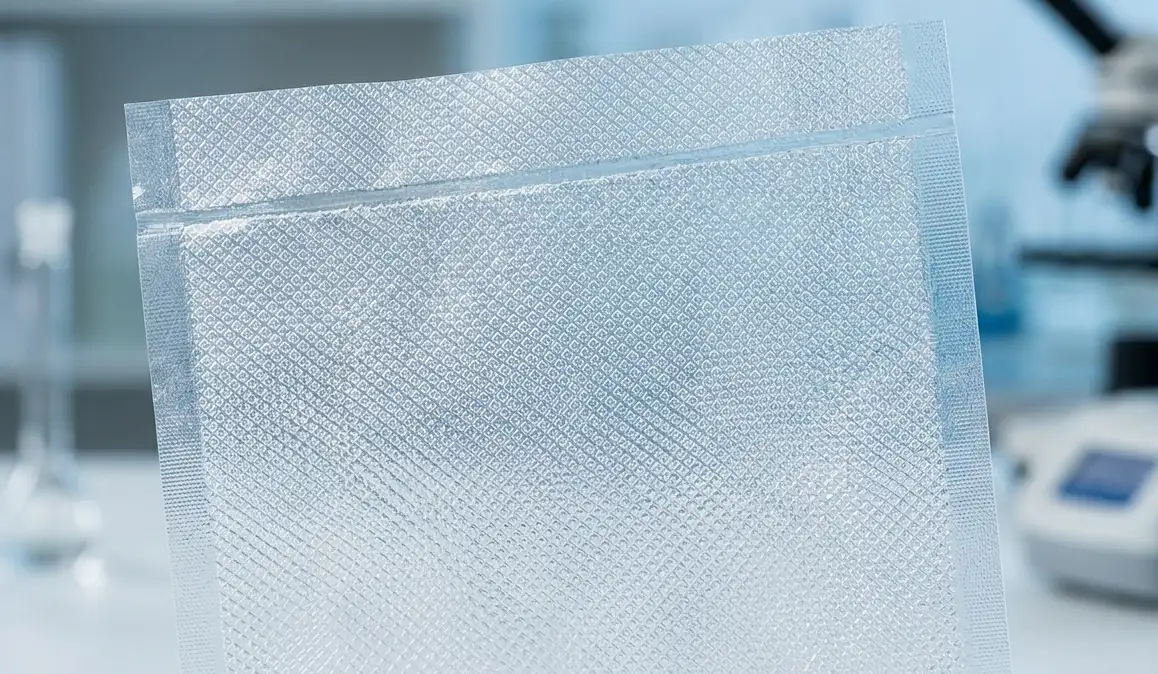
Vacuum Bag Material & Barrier Properties
Two numbers define a bag's real shelf-life impact: Oxygen Transmission Rate (OTR) and Water Vapor Transmission Rate (WVTR). Lower is better.
| Bag Structure | Typical OTR (cc/m²/24h) | Best Use Case |
|---|---|---|
| PA/PE (standard nylon) | 40–60 | Short-term chilled storage |
| EVOH multilayer | 1–3 | Extended refrigerated & frozen meals |
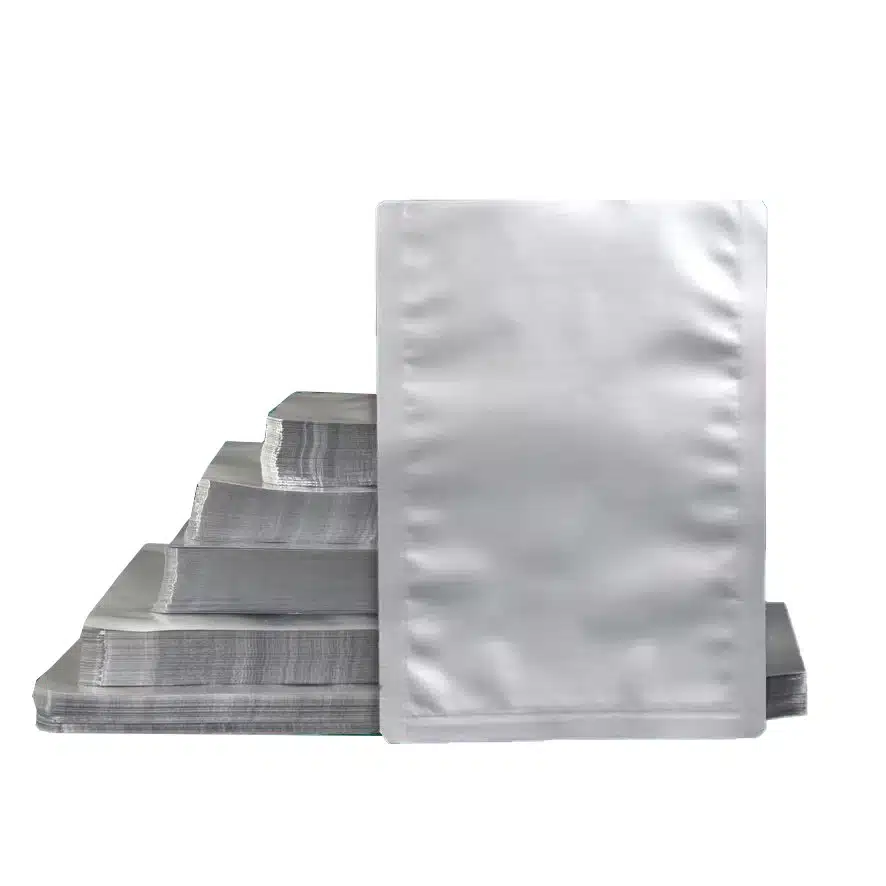
| Aluminum-laminated | <0.1 | Long-term frozen, retort, light-sensitive |
Initial Food Quality & Cooling Process
Cooked food should be cooled to below 4°C within 90 minutes before sealing. Sealing warm food traps residual heat and condensation — a perfect environment for spoilage organisms, even in a low-oxygen pouch.
Cross-contamination during bulk portioning is the silent shelf-life killer. Dedicated handling zones and sanitized sealing jaws are non-negotiable.
Seal Integrity & Vacuum Level
Commercial vacuum lines should hit 99.9% vacuum (-29.5 inHg) with seal widths of 8–10mm. Narrower seals fail under freezer stress and shipping vibration, turning a 30-day product into a 5-day liability.
Vacuum-Sealed Cooked Food Shelf Life by Storage Method
Refrigerator Storage Time for Vacuum-Packed Meals
Refrigerated vacuum-packed meals reliably hold 7–14 days when initial bacterial load is low and the cold chain is unbroken. A California meal-prep brand documented an average of 12.3 days of usable shelf life across 50,000 sealed portions using 5-layer co-extruded pouches.
Freezer Storage — Maximizing Preservation Duration
Freezer storage in high-barrier vacuum bags extends usable life to 1–3 years depending on fat content and protein structure. Internal testing across frozen ready-meal exporters shows vacuum sealing reduces moisture loss by roughly 50% versus standard freezer bags, eliminating most freezer burn complaints.
Sous Vide & Pasteurized Vacuum-Packed Foods
When vacuum packaging is combined with in-pouch pasteurization (typically 70–75°C core temperature for defined holding times), refrigerated shelf life can reach 30–45 days. This is the backbone of modern chilled ready-meal programs for airlines, hotels, and retail private label.
Room Temperature — Why It's Not Recommended
Vacuum sealing creates a low-oxygen environment that can favor Clostridium botulinum growth in low-acid foods. Unless the product is processed in a retort pouch under validated heat sterilization, ambient storage is unsafe — full stop.
Real-World Data — Case Studies from Bulk Buyers
Case Study 1: Hotel Chain Central Kitchen
A four-property hotel group centralized banquet prep and moved from single-layer LDPE bags to 7-layer EVOH vacuum pouches. Food waste dropped 40% in six months, and menu flexibility improved because prepped components held for two weeks instead of three days.
Case Study 2: Frozen Ready-Meal Exporter
A Southeast Asian exporter shipping to the Middle East extended declared shelf life from 6 months to 18 months after upgrading to 7-layer co-extruded bags with aluminum-oxide coating. Customs rejection rates from pouch leakage fell below 0.3%.
Case Study 3: Meal-Kit Subscription Service
At 100,000+ orders per month, a subscription brand calculated that every extra day of shelf life saved roughly $0.02 per unit in returns and re-shipments — a $24,000 monthly swing driven purely by packaging choice.
ROI Table for B2B Buyers
| Packaging Type | Cost per Unit | Avg Shelf Life | Spoilage Rate | Annual Savings (per 100k units) |
|---|---|---|---|---|
| Standard PE bag | $0.04 | 4 days | 8% | Baseline |
| 3-layer vacuum bag | $0.09 | 14 days | 2.5% | $18,000 |
| 7-layer EVOH vacuum bag | $0.15 | 30+ days | 0.8% | $42,000 |
Choosing the Right Vacuum Bag for Bulk Cooked Food Procurement
Bag Specifications Checklist
- Thickness: 90–120 microns for standard commercial use; 150+ microns for retort or heavy sous vide cycles.
- Heat resistance: 100°C for pasteurization, 121°C for retort sterilization.
- Puncture resistance: Critical for bone-in cuts and frozen transport.
- Certifications: FDA, EU 10/2011, BRC, LFGB, ISO 22000.
Bag Types Compared
| Bag Type | Best For | Shelf Life Boost | Relative Price |
|---|---|---|---|
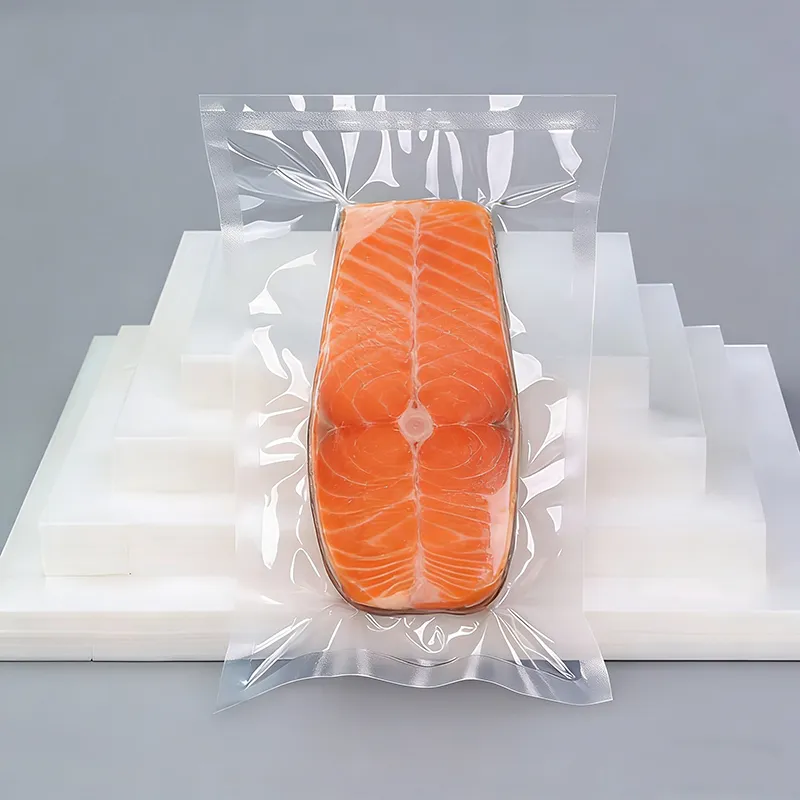
| Smooth chamber bags | Sous vide, ready meals | High | $$ |
| Embossed channel bags | Light commercial & home | Medium | $ |
| Retort pouches | Shelf-stable cooked foods | Very High | $$$ |
| Aluminum foil laminated | Long-term frozen, light-sensitive | Very High | $$$ |
MOQ, Lead Time & Customization
Industry-standard MOQs range from 10,000 to 50,000 pieces. Typical production lead time is 15–25 days, and most serious suppliers offer 1–8 color gravure printing, custom sizing, tear notches, hang holes, and oxygen-absorber compatibility.
Food Safety & Compliance for Vacuum-Packed Leftovers Freshness
Any bulk cooked-food program should operate inside a documented HACCP plan aligned with ISO 22000. Critical control points include post-cook cooling, sealing temperature validation, and metal-detection pass-through.
Labeling matters as much as the bag itself. Production date, lot number, and a clear "use by" (safety) or "best before" (quality) date reduce regulatory risk and consumer confusion.
For low-acid cooked foods — meats, poultry, soups, legumes — botulism prevention hinges on two rules: keep it refrigerated below 4°C, or process it through validated retort. There is no middle ground.
Why Buyers Choose YLTPACK for Vacuum-Sealed Cooked Food Packaging
Founded in 2005, YLTPACK manufactures high-barrier vacuum bags for cooked-food processors, central kitchens, and private-label brands across 40+ countries. Every structure is produced under ISO 22000 and FDA compliance, and fully customized to the client's food type, shelf-life target, and branding.
- Free samples and OTR/WVTR test reports available on request.
- Custom sizing, thickness (70–200 microns), and up to 10-color gravure printing.
- Dedicated R&D support for sous vide, retort, and frozen applications.
- Factory audits welcome — transparency is part of the service.
FAQ — How Long Does Vacuum Sealed Food Last in Fridge & Beyond
How long does vacuum sealed cooked food last in the fridge?
Most cooked items hold 7–14 days at or below 4°C when sealed in high-barrier multilayer bags. Seafood is shorter (5–7 days); dense cooked meats and vegetables sit at the upper end.
Can vacuum sealing replace freezing for long-term storage?
No. Vacuum sealing slows spoilage but does not stop it. For shelf life beyond two weeks, combine vacuum packaging with freezing (-18°C) to reach 1–3 years.
What's the difference between vacuum sealing and retort packaging?
Vacuum sealing requires refrigerated or frozen storage. Retort packaging uses pressurized heat sterilization (121°C) in specially engineered pouches, producing shelf-stable products that can sit at ambient temperature for 12–24 months.
Do vacuum-sealed bags prevent botulism?
They reduce oxygen availability but do not eliminate botulism risk — in fact, low-oxygen environments can favor C. botulinum in low-acid foods. Refrigeration or full retort processing is mandatory.
What thickness of vacuum bag is best for cooked food bulk packaging?
90–120 microns is the commercial standard for chilled and frozen cooked food. Sous vide and retort applications require 150 microns or thicker with heat-resistant structures.
Can I get custom-printed vacuum bags for my brand?
Yes. Most reputable manufacturers, including YLTPACK, offer 1–10 color printing, custom die-cut shapes, and tailored sizing with MOQs starting around 10,000 pieces.
Source High-Barrier Vacuum Bags for Your Cooked Food Line
Every extra day of shelf life is margin you're leaving on the table. If you're packaging cooked meat, ready meals, sous vide products, or frozen entrées at scale, the right vacuum bag specification is the single highest-ROI decision you can make this quarter.
YLTPACK offers free samples, complimentary OTR/WVTR test reports, and a custom quotation within 24 hours. Our team will review your food type, target shelf life, and cold-chain conditions to recommend the exact structure your line needs.