Two RFQs landed the same morning. The first said "stand-up pouch, 10,000 pcs" and stopped there. The second named the product, fill weight, shelf life and filling method. Only the second came back with a structure that ran clean first time — how to choose the right packaging bag is a question about what goes inside and how it gets there, not about a bag name.
How to Choose the Right Packaging Bag: Start From the Product, Not the Bag Shape
Start from the product, not the bag. How to choose the right packaging bag comes down to five inputs: what goes in, the fill weight, what the contents react to (moisture, oxygen, light, fat), how the bag is filled and sealed, and how often the customer reopens it. Only liquids and heat-treated fills narrow the field faster.
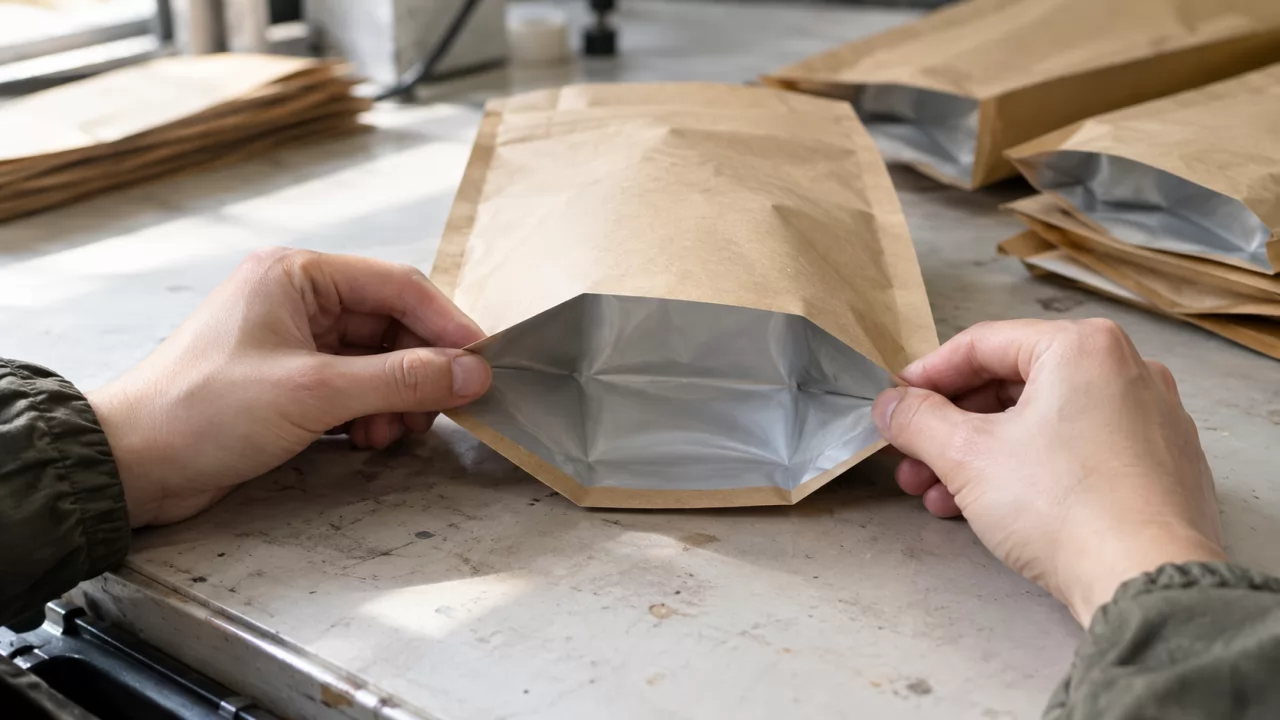
A flexible pouch is a laminate — two or more films bonded together, printed, then shaped into a bag. Each layer has a job. The outer film carries the print and takes scuffing; the middle layer blocks moisture, oxygen or light; the inner sealant touches the product and welds shut under heat. When two quotes for the same "stand-up pouch" sit far apart, the gap is usually that middle layer.
The formats are a short list: stand-up pouch, flat bottom pouch, spout pouch, ziplock bag, retort pouch, die-cut fancy shape, and roll stock film for form-fill-seal lines. The usual mistake is starting from a photo of another brand's bag and asking for the same. What works is sending the product and the fill first and letting the format follow. A bag copied from someone else's SKU carries someone else's fill weight, barrier and filling line behind it.
Stand-Up Pouch vs Flat Bottom Pouch: Shelf Looks Are the Smaller Difference
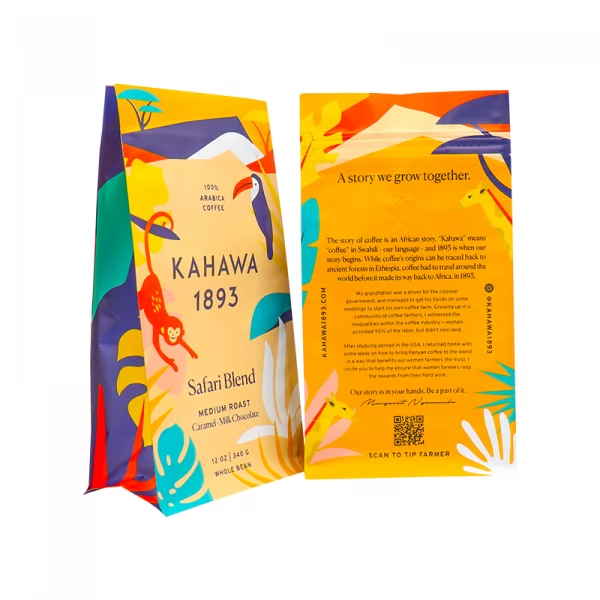
Both stand on a shelf. That is roughly where the similarity ends. A stand-up pouch has a folded bottom gusset that opens into an oval footprint. A flat bottom pouch is built around a rectangular base with four side panels, closer to a paper bag with a sealed floor.
What actually separates them is fill volume per unit of shelf width, how much weight the bag carries before it slumps, printable area, how easily your filler handles it, and cost per unit. A flat bottom puts more fill into a squarer footprint and gives you front, two sides and back as continuous print panels. You pay for that film. A stand-up pouch uses less material for the same fill weight and usually runs faster through a filling line.
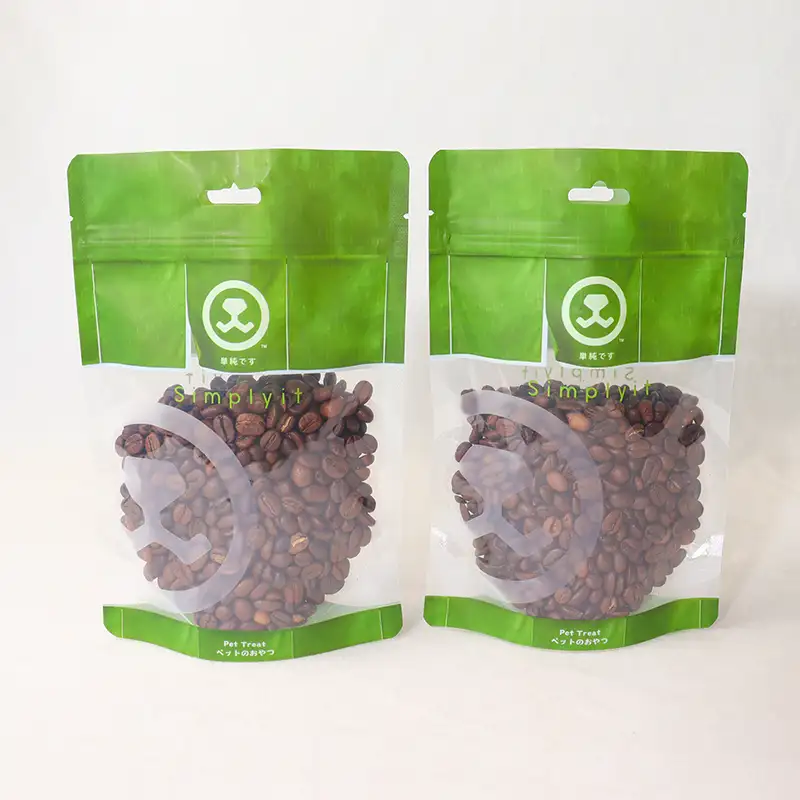
One stand-up spec buyers rarely ask about: gusset depth and bottom seal width decide whether the bag stands after the product settles. On dense fills — granola, powders, pet treats — a shallow gusset with a tall fill is the standard cause of a pouch that will not sit up. Ask for a filled sample, not a flat one.
Side-by-side comparison of the common bag formats
| Format | Typical products | Filling | Reclose | Main cost driver |
|---|---|---|---|---|
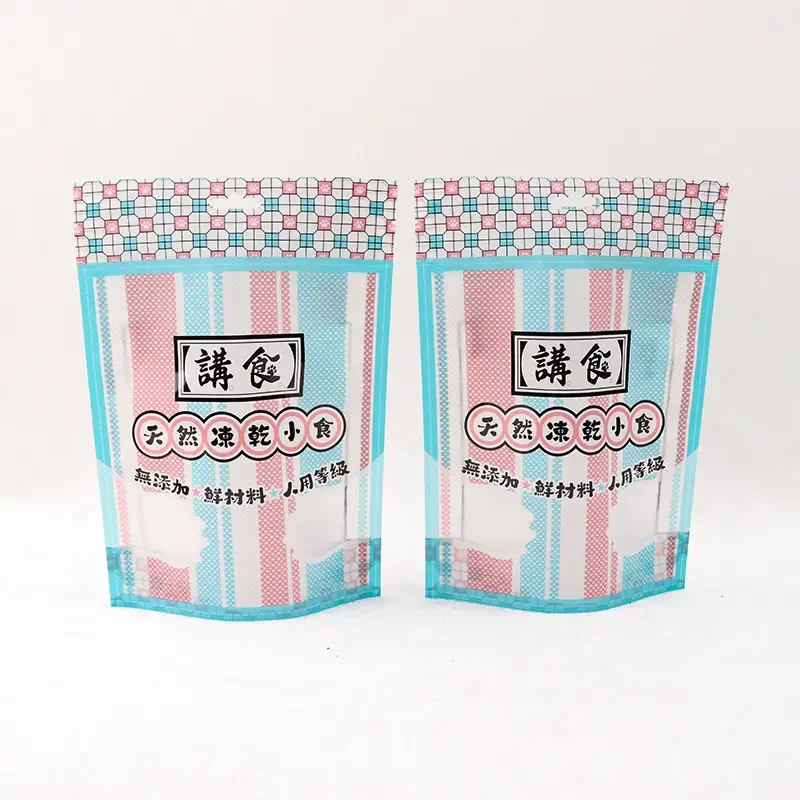
| Stand-up pouch | Snacks, granola, powders, pet treats | Pre-made bag, filled from the top | Zipper or slider optional | Film area; number of print colors |
| Flat bottom pouch | Coffee, specialty dry food, pet food | Pre-made, top fill, squarer base | Zipper or tin tie | More panel film per fill |
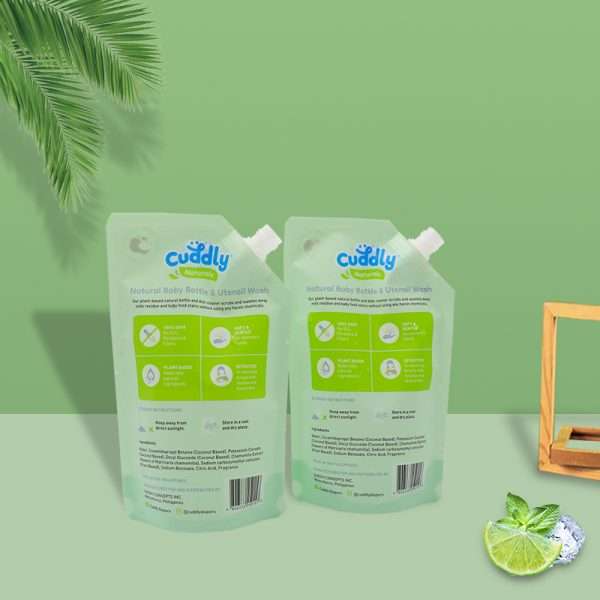
| Spout pouch | Sauces, drinks, detergent, refills | Through the spout or the top, then capped | Spout cap | Fitment and leak testing |
| Ziplock bag | Dry food, frozen food, accessories | Hand or semi-automatic | Press-to-close or slider | Zipper type and bag style |
| Retort pouch | Ready meals, pet food, rice | Filled, sealed, then retorted | Usually none | Retort-grade film and seal layers |
| Roll stock film | Any product on an FFS line | Formed, filled, sealed on your machine | Depends on your line | Film width, structure, weight ordered |
Read the table by filling method first. Cold top-fill leaves a real choice between stand-up and flat bottom; a spout, a retort process or a form-fill-seal machine settles the format before the artwork gets a vote.
When a flat bottom earns its higher unit cost
Fresh coffee is the clearest case. A flat bottom takes a degassing valve well — a one-way valve that lets carbon dioxide out of the roasted beans and keeps oxygen from coming back in — holds its shape as the beans settle, and prints across four panels without a curved gusset breaking the layout. Larger fills, roughly 500 g and up, benefit the same way: a squared base carries the weight and the bag still stands square in a retail block. Specialty dry food and pet food in that weight band behave alike. Below it, and for anything sold mainly online or out of a display carton, a stand-up pouch usually wins on cost per unit and fill speed.
Thicker Film Does Not Mean Better Barrier
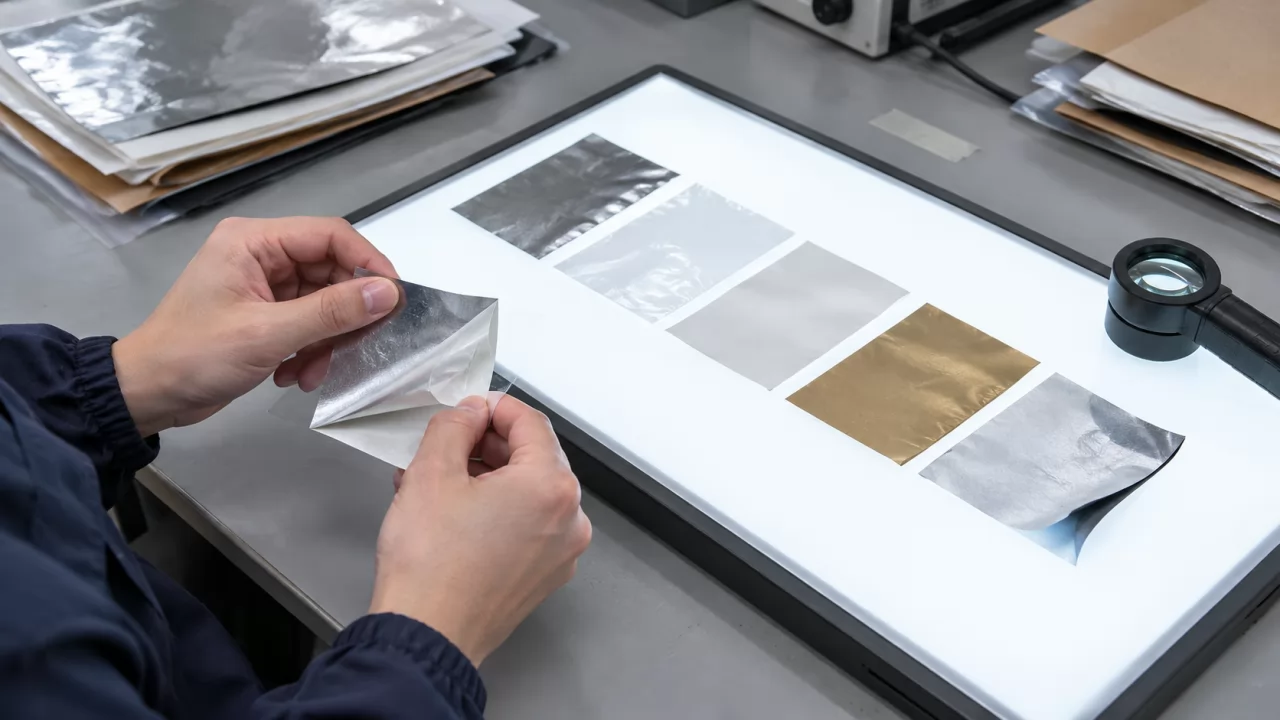
Gauge is the easiest number to compare and the least useful one. Barrier comes from which materials sit in the laminate, not from total thickness. Two films at the same micron count can differ several times over in how fast moisture or oxygen crosses them, because a thick sealant layer adds drop strength and puncture resistance while doing very little against water vapour.
Request the structure layer by layer — outer film, barrier layer, sealant, each with its own micron figure — rather than one total. For oxygen-sensitive goods ask for oxygen transmission rate (OTR); for powders and dry goods, water vapour transmission rate (WVTR). Aluminium foil, metallized film and EVOH-based or coated films are the layers doing the blocking. Without those figures, "high barrier" is a word on a page, not a specification.
Which Type of Pouch Is Best for My Product? Match the Filling Line and the Use
No single pouch is best. The right one is what your filler can run and what the customer can open, pour and close: match the viscosity, the process temperature, the fill weight and the filling method, then choose the laminate that holds the shelf life you promised. Format first, structure second.
- If the product pours, squeezes or refills then a spout pouch, with a leak test on the batch before it ships.
- If it is cooked or sterilized in the bag then a retort pouch rated for your process temperature, confirmed in writing.
- If the bag is opened and closed many times then a ziplock or slider, on whichever body shape suits the fill.
- If you fill on a form-fill-seal machine then roll stock film, not finished pouches.
- If the fill is heavy and the shelf is the sale then a flat bottom pouch.
Liquids, sauces and refills need a spout and a leak test
A spout pouch is a pouch with a welded plastic fitment and a screw cap, filled through the spout or from the top and then sealed. The fitment and the weld around it are where failures happen, so the test matters more than the description: ask for a leak test on the production lot by compression or vacuum decay, and ask what happens to a filled bag dropped on its corner. Thin sauces and detergent refills are unforgiving — a weak seal shows up on a pallet in a warehouse, not on the line.
Cooking or sterilizing in the bag means a retort-rated structure
Retort pouches are filled, sealed, then heated under pressure to sterilize the contents in pack. Processes typically run around 121 °C and some go higher, so the structure has to be rated for the temperature yours actually reaches, held for the time you hold it. Confirm that in writing, and ask about seal strength after retort plus whether your retort is steam or water-immersion — a structure cleared for one is not automatically cleared for the other. Ready meals, rice and wet pet food are the usual candidates.
Auto filling changes the question from bag to roll stock
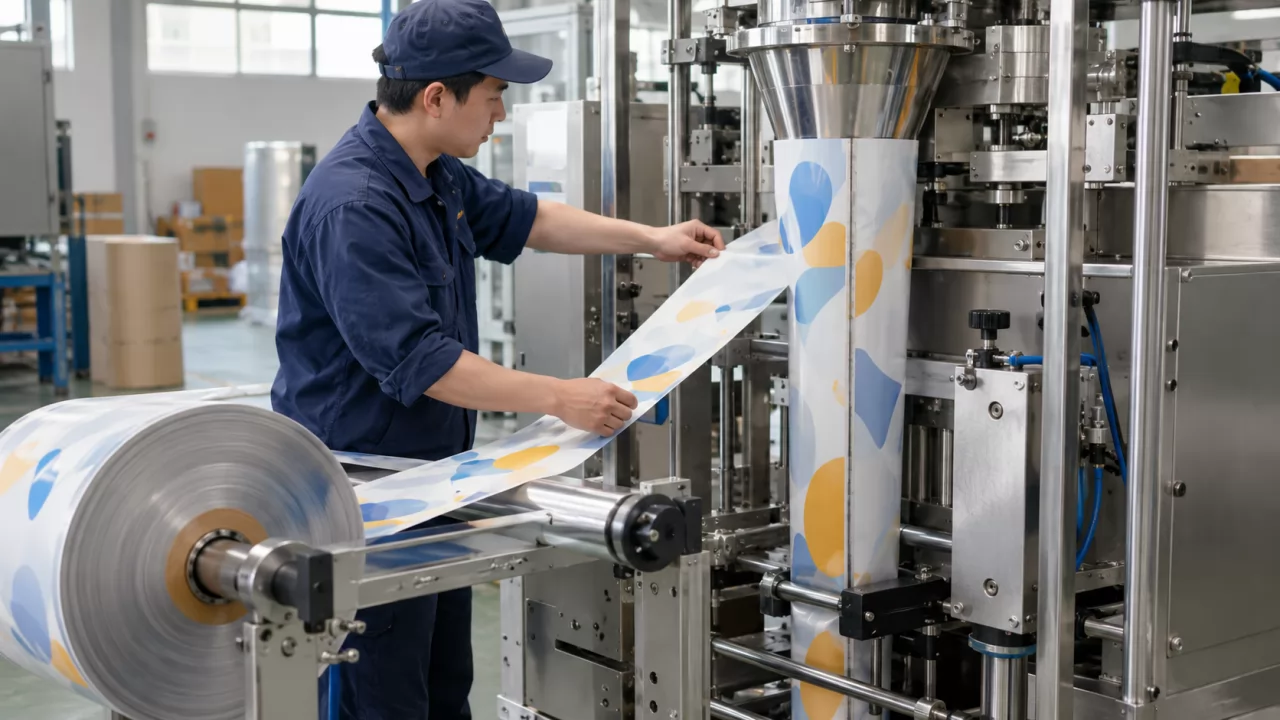
If you run a form-fill-seal line you are not buying pouches. You are buying printed film on a roll that your machine forms, fills and seals in one pass. Specify film width, core diameter, unwind direction, which face is sealant, whether the machine is vertical or horizontal, and the finished bag dimensions. A wrong unwind direction is a wasted pallet, and no photo of the bag will tell a supplier about it.
If two formats still look workable, send the product, the fill weight and the filling method. Our team will put one recommendation in writing and price each option so you can compare, with a quote inside one business day and a free sample to check the fit before you commit.
Your Order Quantity Picks the Print Method, and the Print Method Sets the Unit Price
Print method is not a taste decision. Digital printing carries no plate cost, so it suits launches, test runs and several designs in one order, from 1,000 pieces per design. Gravure engraves a cylinder per color per design — money up front, then a lower cost per bag across long runs, starting at 10,000 pieces per design. The number of colors is a line item on the quote, not a rounding error.
Eco structures move the floor again. Compostable, mono-PE and recycled-content films start at 30,000 pieces, because those substrates cost more and waste more on setup. Roll stock is priced by weight, from 100 kg. Confirm the minimum for each design before the artwork is finalized: a design approved at 3,000 pieces that turns out to need 10,000 on gravure means reworking either the print method or the order.
Production, once the artwork proof is signed, runs 7-15 days. That is the fixed part. Freight is quoted with the order and varies by mode and destination, so any date you give a retail buyer should carry the shipping leg separately from the production leg.
Four Questions Buyers Ask Before the First Order
Can I get a sample before I commit to a structure?
Yes. Similar bags in stock sizes are free, and you pay the courier only. Ask for the closest stock structure to your spec, fill it with your own product, then check the seal, the standing and the fill level before artwork is approved.
Is the film safe for direct food contact in my market?
Yes, if the food-contact documentation travels with the film. PE sealant film tested to FDA 21 CFR food-contact requirements covers the US side; for the EU, ask for the declaration of compliance under Regulation (EC) 1935/2004. Read the structure named on the report against the structure on your specification.
Should I choose a foil bag or a kraft bag for dry goods?
Foil, if the product is fat-sensitive or needs a long shelf life. Aluminium foil laminate blocks light, oxygen and moisture; kraft paper alone does not. Kraft laminates get chosen when the paper look carries the brand, and they still need a barrier film inside if the fill is hygroscopic. Neither is recyclable by default, so check the structure before printing any claim on it.
What information does a supplier need to quote accurately?
Seven items: product and fill weight per bag, bag type or a reference photo, size if known, quantity per design, number of designs, extras (zipper, valve, window, spout, hang hole), and the target market. Artwork can wait.
Send Your Product Brief, Not a Bag Name
A brief that produces a workable pouch has eight parts, and not one of them is a format: product, fill per bag, size if known, quantity per design, number of designs, artwork or a rough idea, extras, target market. Each part moves the structure or the price. Fill weight and market decide the laminate. Quantity and design count decide the print method. Extras add tooling and time. A brief missing any of it comes back as questions, which costs a day before the quoting has even started.